


Understanding the 20 kVA Inverter with Battery Price: An Investment in Energy Independence
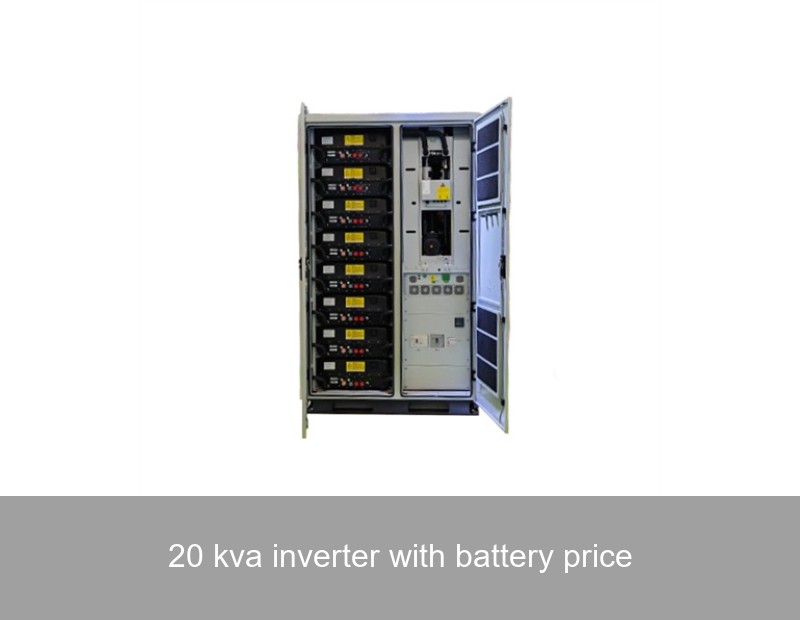
If you're searching for a "20 kVA inverter with battery price," you're likely at a crucial decision point for your business, farm, or large home power system. It's a common starting point, but here's a reality we see every day at Highjoule: focusing solely on the upfront equipment cost is like buying a car based only on the sticker price, ignoring fuel efficiency, maintenance, and reliability. The true value lies in understanding what that price represents—a long-term investment in resilience, operational continuity, and energy cost control. A 20 kVA (kilo-volt-ampere) system is a robust solution, often the sweet spot for small-to-medium commercial operations, agricultural facilities, or large residential estates seeking to manage peak loads, ensure backup power, or integrate solar energy efficiently.
Decoding the "20 kVA Inverter with Battery" System
Let's break down what you're actually considering. A 20 kVA system is designed for significant power demands.
- The Inverter (20 kVA): This is the brain and muscle. It converts DC (Direct Current) electricity from batteries or solar panels into the AC (Alternating Current) that powers your equipment. A 20 kVA rating means it can deliver a continuous power output of approximately 16 kW (assuming a 0.8 power factor), enough to run heavy machinery, multiple refrigeration units, office IT infrastructure, or a full household with essential loads simultaneously.
- The Battery Bank: This is the fuel tank. Its capacity, measured in kilowatt-hours (kWh), determines how long your system can run during an outage or off-grid. The "price" is heavily influenced by the type (e.g., Lithium Iron Phosphate/LFP vs. traditional lead-acid), total kWh capacity, and expected cycle life.
- The Balance of System (BOS): This includes critical components like battery management systems (BMS), safety disconnects, monitoring software, and installation hardware. A high-quality BOS is non-negotiable for safety and performance but is often where cost-cutting can dangerously occur.

Image Source: Unsplash - Professional installation is key to system performance and safety.
What Truly Drives the 20 kVA Inverter with Battery Price?
When you receive quotes, the variation can be staggering. Here’s why:
| Price Factor | Low-Cost System Impact | High-Value System (Like Highjoule) Impact |
|---|---|---|
| Battery Chemistry | Lead-acid: Lower upfront cost, shorter lifespan (3-5 years), lower depth of discharge. | LFP (LiFePO4): Higher upfront cost, 10+ year lifespan, deeper discharge, safer, minimal maintenance. |
| Inverter Topology & Features | Basic off-grid or hybrid function, lower efficiency (92-94%), limited grid-support features. | Advanced hybrid/multi-mode, high efficiency (97%+), grid-forming capability, seamless solar integration, smart grid readiness. |
| System Intelligence & Software | Basic monitoring, limited remote control, no predictive analytics. | AI-driven energy management, remote diagnostics, OTA updates, detailed load profiling for optimization. |
| Installation & Service | Possibly subcontracted, variable quality, limited warranty support. | Certified installer network, comprehensive commissioning, extended warranty, and proactive service plans. |
According to a 2023 NREL report on storage costs, while hardware costs are falling, the "soft costs" of installation, permitting, and customer acquisition remain significant. A reputable provider like Highjoule bundles expertise into these areas, ensuring compliance with local codes in the US and Europe, which is critical for safety and insurance.
A Real-World Case: Cost vs. Value in Action
Consider a dairy farm in Bavaria, Germany. Their challenge was twofold: unpredictable grid outages risking milk spoilage and soaring energy costs. They evaluated two quotes for a 20 kVA solar-integrated battery system.
- Quote A (Lowest Price): €28,000. Used generic LFP cells with a basic BMS and a standard inverter. 2-year installer warranty.
- Quote B (Highjoule Solution): €35,500. Featured Highjoule's HPS-20 Hybrid Power System with UL1973 & IEC62619 certified battery packs, a grid-forming inverter with 98% efficiency, and the Highjoule Energy OS for intelligent load scheduling.
The farm chose Quote B. Within the first year, the intelligent system's peak shaving capability reduced their grid demand charges by 30%. During a 12-hour winter outage, the system seamlessly powered critical cooling and milking equipment, preventing an estimated €15,000 in lost product. The projected 10-year total cost of ownership (TCO), factoring in energy savings, durability, and avoided losses, made the Highjoule system 25% more economical than the cheaper alternative. This aligns with findings from the Lazard Levelized Cost of Storage analysis, which emphasizes that upfront capital cost is just one component of the lifetime value equation.
The Highjoule Approach: Intelligent Power, Predictable Value
At Highjoule, we engineer systems where every component is optimized to work together for the long haul. For a 20 kVA application, our HPS Series is not just an inverter and a battery box; it's an integrated energy resilience platform.
- Core Product: The Highjoule HPS-20 system combines a high-efficiency, multi-mode inverter with our modular, rack-mountable LFP battery units. You can start with a base capacity (e.g., 20 kWh) and easily expand as your needs grow.
- Proprietary Intelligence: The Energy OS is the differentiator. It doesn't just react; it learns your load patterns, forecasts weather and solar production, and automatically decides the most economical way to use grid power, solar, and battery storage—saving you money every single day.
- Global Service Assurance: Founded in 2005, our experience across continents means we understand the specific grid standards and incentive programs in California, Texas, the UK, and the EU. Our systems are built to meet and exceed these regional requirements.

Image Source: Unsplash - Example of a modern, modular LFP battery storage system.
Making the Right Choice for Your Investment
So, how should you navigate the "20 kVA inverter with battery price" question? Shift the conversation from cost to value. Prepare to discuss:
- Your Specific Load Profile: What exactly needs power, and for how long during an outage?
- Future Goals: Are you planning to add solar now or later? Do you expect your energy needs to increase?
- Financial Drivers: Is your primary goal backup power, reducing demand charges, participating in a utility VPP, or a combination?
Ask potential providers for a detailed Total Cost of Ownership (TCO) analysis and a clear explanation of their system's intelligence and warranty terms. A credible provider should offer this transparency.
What specific energy challenge is driving your search for a 20 kVA solution today, and how can we help you model its long-term financial and operational impact for your location?
 Inquiry
 Online Chat