


Understanding the True 200 Watt Solar Panel with Battery Price: A Smart Energy Investment
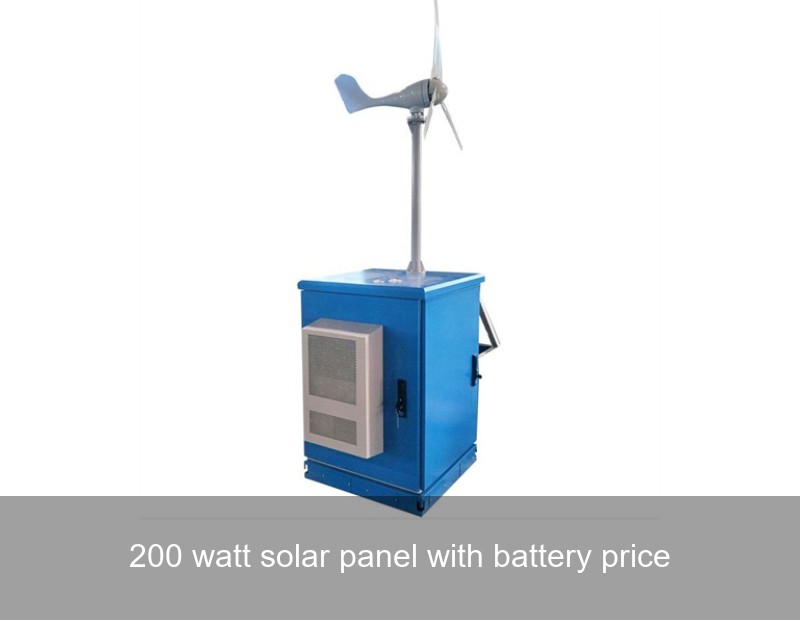
If you're looking into a 200 watt solar panel with battery price, you're likely aiming for energy independence for a cabin, RV, boat, or a critical home backup system. It's a fantastic starting point! But here's the thing many discover: the upfront 200 watt solar panel with battery price is just one piece of the puzzle. The real value lies in understanding the total system cost, long-term performance, and the intelligence that turns sunlight into reliable, usable power. As energy costs fluctuate and grid reliability becomes a growing concern, especially in Europe and the US, making an informed decision is more crucial than ever. Let's demystify what goes into that price tag and how to ensure your investment pays off for years to come.
Table of Contents
The Phenomenon: Why a Simple "200 Watt Solar Panel with Battery Price" Search Can Be Misleading
You search for a price, and you're met with a dizzying array of options: standalone panels, all-in-one kits, different battery types (lead-acid vs. lithium), and a plethora of inverters and charge controllers. The initial quote for a basic kit might seem attractive, but it often excludes essential components, professional installation, or assumes ideal conditions that rarely exist. The real cost is in the system's ability to deliver power when you need it—on a cloudy day, at night, or during a winter storm. A system that underperforms or fails prematurely effectively has a much higher "cost per reliable watt" over its lifetime.

Image: A complete solar-plus-storage system requires harmonious integration of components. Source: Unsplash
Breaking Down the Costs: Anatomy of a 200W Solar & Battery System
To move beyond a headline price, let's itemize a typical, reliable system for a European or US market:
| Component | Function | Estimated Cost Range (USD/EUR) | Key Considerations |
|---|---|---|---|
| 200W Solar Panel(s) | Converts sunlight to DC electricity | $150 - $400 | Monocrystalline (higher efficiency, better for limited space) vs. Polycrystalline. Tier-1 manufacturer warranty (25+ years). |
| Battery Storage | Stores energy for use when sun isn't shining | $200 - $1,500+ | This is the most variable cost. Lead-acid is cheaper upfront but has shorter life. Lithium-ion (like LiFePO4) costs more initially but offers 3-5x longer cycle life, deeper discharge, and requires no maintenance. |
| Charge Controller | Regulates voltage from panel to battery, preventing damage | $20 - $200 | MPPT (Maximum Power Point Tracking) controllers are 10-30% more efficient than PWM, especially in cool or cloudy weather, justifying their higher cost. |
| Inverter | Converts battery DC power to AC for household appliances | $100 - $600 | Pure sine wave inverters are essential for sensitive electronics (laptops, tools). Rated by continuous and surge wattage. |
| Mounting, Wiring, Safety Gear | System integration and protection | $100 - $300 | Often overlooked. Includes cables, connectors, fuses, breakers, and mounting hardware. Critical for safety and performance. |
| Installation (if professional) | Expert setup and commissioning | $300 - $1,000+ | Ensures optimal angle, safe electrical work, and system validation. Often required for warranty and insurance. |
Total Realistic System Price Range: A quality, DIY-friendly 200W solar panel with a modest lithium battery system often starts around $1,000 to $2,500. For a professionally installed, high-end system with significant storage capacity, the price can reach $3,500 or more.
The Data: How Efficiency and Longevity Define True Cost
The numbers tell a compelling story. Let's compare two battery options over a 10-year period for our 200W system:
- Lead-Acid Battery (Flooded): Upfront cost: ~$300. Usable capacity (50% Depth of Discharge): ~1kWh. Cycle life (to 50% DOD): ~1,200 cycles. Likely needs replacement in 3-5 years.
- Lithium Iron Phosphate (LiFePO4) Battery: Upfront cost: ~$900. Usable capacity (80% DOD): ~1.6kWh. Cycle life (to 80% DOD): ~3,500-6,000 cycles. Can last 10+ years.
While the lithium option triples the initial battery cost, its lifetime cost per kilowatt-hour stored is dramatically lower. It also provides more usable energy daily, requires zero maintenance, and operates safely. According to a report by the National Renewable Energy Lab (NREL), the levelized cost of storage (LCOS) for lithium-ion has fallen sharply, making it the dominant technology for new installations.

Image: Modern LiFePO4 battery systems, like those from Highjoule, offer compact, safe, and long-lasting storage. Source: Unsplash
Case Study: Reliable Off-Grid Power for a Mountain Cabin in Bavaria, Germany
Consider the real-world example of the Schmidt family's holiday cabin near Garmisch-Partenkirchen. Their goal was year-round weekend usability without relying on a noisy, polluting diesel generator.
- Challenge: Intermittent grid connection, harsh alpine winters with low solar irradiance, and power needs for lighting, a small fridge, a water pump, and communications.
- Solution: A 200W monocrystalline solar array was installed on a south-facing, steep-angle roof for snow shed. The core of the system was a Highjoule HomeSmart 2.4kWh LiFePO4 battery paired with an integrated MPPT charge controller and a 1,200W pure sine wave inverter.
- Outcome & Data: Even with only 2-3 peak sun hours in December, the system maintains essential loads. The Highjoule battery's high round-trip efficiency (over 95%) and low self-discharge ensure maximum energy retention. The built-in battery management system (BMS) protects against deep discharge in low-light periods. Over the first 18 months, the system provided 98% availability, eliminating generator use entirely and saving an estimated €450 in fuel and maintenance costs. The Schmidts now monitor and optimize their energy usage via the Highjoule app.
This case highlights that the successful 200 watt solar panel with battery price investment wasn't about the cheapest kit, but about the right, intelligent storage solution for a challenging environment.
Beyond the Basics: The Highjoule Advantage in Intelligent Energy Management
At Highjoule, we believe the true value of a solar and battery system isn't just in the hardware—it's in the intelligence that orchestrates it. While a basic setup can work, our solutions are designed for optimal performance, longevity, and seamless integration.
For applications suited to a 200W solar input, such as our off-grid cabins or critical backup circuits, our Highjoule HomeSmart series shines. These aren't just battery boxes; they are all-in-one energy storage systems with built-in advanced features:
- Ultra-Safe LiFePO4 Chemistry: Non-toxic, stable, and with a lifespan exceeding 6,000 cycles, it's the heart of a long-term investment.
- Integrated Smart Inverter/Charger: Combines MPPT solar charging, a grid/generator charger, and a pure sine wave inverter in one compact unit, simplifying installation and improving communication between components.
- Adaptive Energy Management Software: The system learns your usage patterns and automatically prioritizes solar charging, adjusts discharge rates to protect battery health, and can be configured for various modes (e.g., maximize self-consumption, backup priority).
- Remote Monitoring & Control: The Highjoule mobile app gives you real-time insights into energy production, storage levels, and consumption, allowing for adjustments from anywhere.
This intelligent approach means your system automatically works harder to save you money and protect itself, delivering a lower true cost of ownership over its decades-long service life.
Making the Right Choice: Key Questions to Ask Before You Buy
So, how do you translate the 200 watt solar panel with battery price into a wise purchase? Ask yourself and your provider these questions:
- What is my daily energy consumption in watt-hours (Wh)? (List your appliances and their usage hours). A 200W panel produces roughly 600-1000Wh per day, depending on location. Your battery must store enough for your nighttime/cloudy day needs.
- What battery chemistry and warranty are offered? Demand clear specifications on cycle life, depth of discharge, and operating temperature range.
- Is the system scalable? Can you easily add more panels or battery capacity in the future if your needs grow?
- What intelligence does the system have? Can it be monitored? Does it have smart features to optimize performance and lifespan?
- What does the total installed price include? Get a detailed, line-item quote covering all components, labor, permits, and after-sales support.
As you evaluate your path to energy independence, we leave you with this: Is your primary goal the lowest possible entry price today, or the highest possible reliability and savings over the next decade? The answer to that question will guide you to the perfect system for your needs. We invite you to explore how Highjoule's smart storage solutions can transform your solar investment from a simple purchase into a resilient, long-term energy partner.
 Inquiry
 Online Chat