


How Much Does a Solar Panel Cost in Chile? A Complete Investment Guide
If you're a homeowner or business leader in Chile, you've likely asked yourself: "¿Cuánto cuesta un panel solar en Chile?" It's the crucial first question on the journey to energy independence. The answer, however, is more nuanced than a simple price tag. It's about understanding the total investment, the long-term savings, and the technology that turns sunlight into a reliable asset. With Chile's exceptional Atacama Desert offering some of the highest solar irradiance on the planet, the potential is staggering. But to unlock it, you need a clear breakdown of costs, components, and the intelligent systems that ensure every peso is well spent.
Table of Contents
- The Real Cost: More Than Just the Panels
- Key Factors Influencing Your Solar Panel Price in Chile
- Understanding System Types: From Grid-Tied to Energy Independence
- A Chilean Case Study: Real Data from a Commercial Installation
- Beyond the Panels: The Critical Role of the Battery Storage System
- The Highjoule Advantage: Intelligent Storage for the Chilean Sun
- Your Path to Solar Power in Chile
The Real Cost: More Than Just the Panels
When considering solar, it's vital to look at the total system cost. A single panel's price is just one piece of the puzzle. A complete, operational photovoltaic (PV) system includes:
- Solar Panels (Modules): The most visible component, converting sunlight into DC electricity.
- Inverter(s): The brain of the system, converting DC power from the panels into usable AC power for your home or business.
- Mounting Structure & Hardware: The robust framework that securely attaches your panels to the roof or ground.
- Electrical Components & Wiring: All necessary cabling, connectors, and safety devices (like isolators).
- Battery Storage System (Optional but increasingly critical): Stores excess energy for use at night or during grid outages.
- Installation & Labor: Professional design, permitting, and installation by certified technicians.
- Monitoring System: Software and hardware to track your system's performance and savings in real-time.
In Chile, as of 2024, the average price for a complete residential grid-tied system (without batteries) ranges from $1,200 to $1,800 USD per installed kilowatt (kW). A typical 5kW home system might thus have a gross cost between $6,000 and $9,000 USD. Commercial and industrial systems benefit from economies of scale, often coming in at a lower cost per kW.
Key Factors Influencing Your Solar Panel Price in Chile
Why such a range? Several local and technical factors directly impact the final figure for your project:
- System Size & Energy Needs: A larger system costs more upfront but delivers greater long-term savings. Your installer will analyze your electricity bills to size it correctly.
- Panel Quality & Efficiency: High-efficiency monocrystalline panels (22%+ efficiency) cost more per panel than polycrystalline, but you'll need fewer of them to meet your energy goal, which can save on roof space and balance-of-system costs.
- Installation Complexity: A simple, accessible tile roof is easier than a metal roof with special clamps or a complex ground-mount system requiring extensive trenching.
- Location & Accessibility: Installation costs can vary between regions like Santiago, Valparaíso, or remote areas in the north.
- Inclusion of Energy Storage: Adding a battery system represents a significant additional investment but transforms your solar array into a true 24/7 power solution.

Credit: Photo by Andreas Gücklhorn on Unsplash - A well-installed rooftop solar system maximizes energy capture.
Understanding System Types: From Grid-Tied to Energy Independence
The configuration you choose is a major cost driver. Let's compare the three main types:
| System Type | Key Components | Approx. Cost Impact (vs. Grid-Tied) | Best For |
|---|---|---|---|
| Grid-Tied (On-Grid) | Panels, Grid-Tie Inverter, Net Metering | Base Cost | Users seeking to reduce bills while staying connected to the reliable grid. |
| Hybrid (Grid-Tied + Battery) | Panels, Hybrid Inverter, Battery Bank | +40% to +100% | Maximizing self-consumption, providing backup during outages, and leveraging time-of-use tariffs. |
| Off-Grid | Panels, Charge Controller, Off-Grid Inverter, Large Battery Bank, Often a Backup Generator | +100% to +200% | Remote locations without grid access, requiring complete energy autonomy. |
The trend in Chile, especially for businesses and homeowners seeking resilience, is decisively moving toward hybrid systems. Why? Because they allow you to store the abundant midday solar energy and use it during the expensive evening peak hours, a concept known as energy arbitrage. This is where the true financial magic happens, and it's powered by advanced battery storage.
A Chilean Case Study: Real Data from a Commercial Installation
Let's move from theory to practice. Consider a mid-sized winery in the Colchagua Valley. Facing rising electricity costs for irrigation and production, they installed a 100kW solar PV system coupled with a Highjoule HJ-Commercial-150 battery energy storage system (BESS).
- Challenge: High daytime energy demand for cooling and processing, with even higher evening rates for lighting and security.
- Solution: A hybrid system designed to cover 85% of their annual consumption. The Highjoule BESS was programmed to store excess solar generation from midday and discharge it during the 6 PM to 11 PM peak tariff window.
- Results (12-month period):
- Total system cost: ~$140,000 USD.
- Annual electricity bill savings: $28,000 USD.
- Simple payback period: ~5 years.
- Increased resilience: The winery can now operate critical loads for over 8 hours during a grid outage, protecting valuable inventory.
This case highlights that the question of "cuanto cuesta" is effectively answered by "cuanto ahorra" (how much it saves). The battery storage was not just an added cost; it was the key to maximizing the return on the solar panel investment.
Beyond the Panels: The Critical Role of the Battery Storage System
Think of solar panels as excellent harvesters of energy. But without a smart storage system, a significant portion of that harvest can go to waste—fed back to the grid at low rates or, in some cases, curtailed. A battery storage system is your modern, high-tech cellar.
For the Chilean market, with its stable grid but variable time-of-day pricing, the value of storage is in optimization. According to a 2023 IEA report on energy storage, pairing solar with batteries can increase the self-consumption of solar electricity from 30-50% to over 80%. This directly translates to higher savings and a faster payback on your total system cost.
The Highjoule Advantage: Intelligent Storage for the Chilean Sun
This is where Highjoule's expertise becomes pivotal. As a global leader with nearly two decades of experience, we don't just sell batteries; we deliver integrated, intelligent energy solutions. For clients in Chile and worldwide, our systems ensure the solar energy you produce works hardest for you.
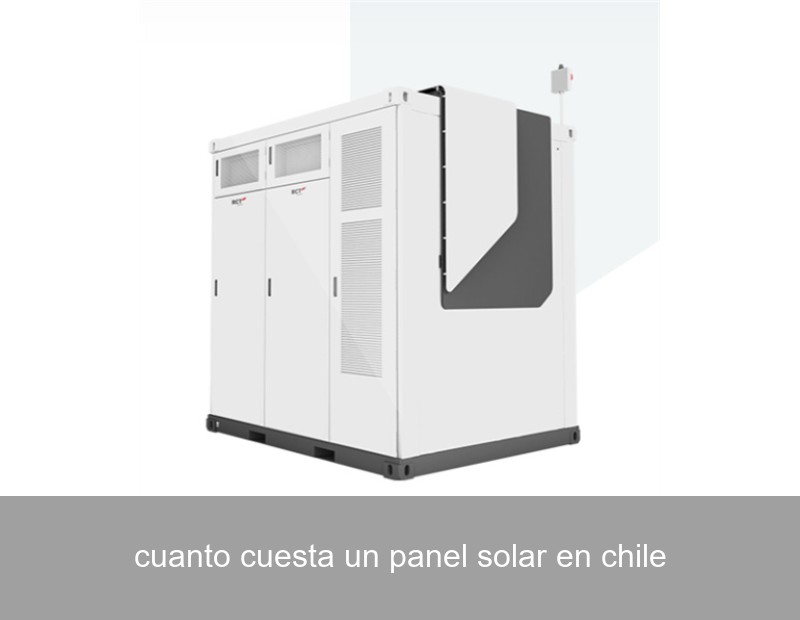
Our HJ-Commercial and HJ-Residential series battery storage systems are built with longevity, safety, and smart management in mind. They feature:
- Advanced Lithium Iron Phosphate (LFP) Chemistry: Offers superior safety, a longer lifespan (typically over 6,000 cycles), and excellent performance in a wide range of Chilean climates.
- Integrated Energy Management System (EMS): The true intelligence. Our EMS learns your consumption patterns, weather forecasts, and utility tariffs to automatically optimize charge/discharge cycles for maximum economic return.
- Scalable Design: Start with what you need and easily expand your storage capacity as your needs grow, protecting your initial investment.
- Remote Monitoring & Control: Manage and monitor your entire solar-plus-storage system from anywhere via a user-friendly app, giving you complete visibility over your energy production, consumption, and savings.
By integrating a Highjoule BESS, the effective "cost" of your solar panel system is transformed. It shifts from being a static bill-reducer to a dynamic, revenue-protecting asset. You're not just buying equipment; you're investing in a smarter, more resilient energy infrastructure for your property.

Credit: Photo by American Public Power Association on Unsplash - A modern battery energy storage system (BESS) installation.
Your Path to Solar Power in Chile
So, ¿Cuánto cuesta un panel solar en Chile? As we've seen, the final number for your project depends on your ambition. A basic grid-tied system offers solid savings, but a hybrid system with intelligent storage from a provider like Highjoule unlocks the full potential of Chile's solar bounty, delivering greater energy security and a stronger financial return.
The most important step is to get a personalized assessment. Reputable installers in Chile will provide a detailed quote that breaks down all these cost components. Ask them not only for the price but for a 10-year financial projection that includes estimated savings with and without storage. This will clearly show the value of the integrated solution.
Given Chile's solar potential and evolving energy landscape, what specific energy challenge—be it unpredictable bills, grid reliability concerns, or a sustainability goal—is driving you to consider solar power today?
 Inquiry
 Online Chat