


Understanding the 20kW Solar System Price in South Africa: A Comprehensive Guide for Homeowners and Businesses
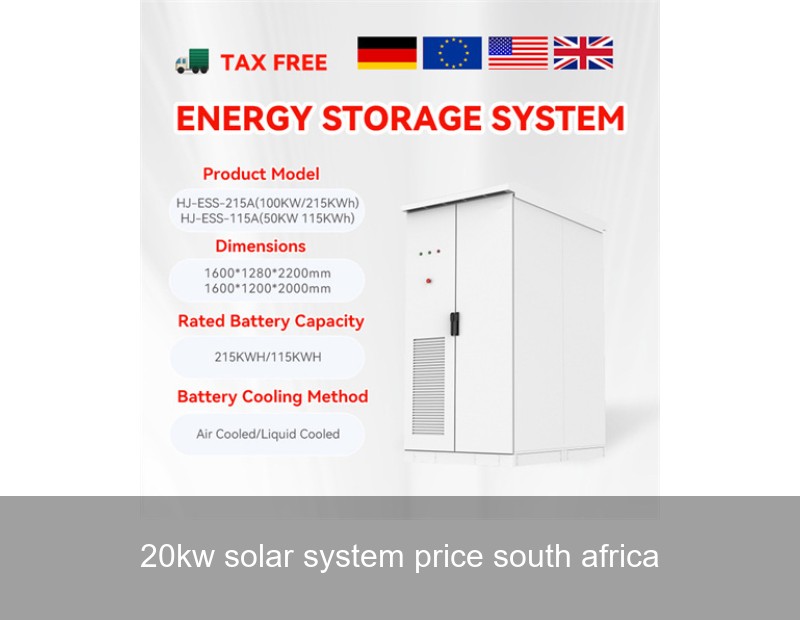
Thinking about harnessing South Africa's abundant sunshine with a 20kW solar system? You're not alone. With rising electricity costs and persistent load-shedding, more South Africans are looking to solar power for energy independence. But the first question on everyone's mind is: "What is the 20kW solar system price in South Africa, and what exactly am I paying for?" This guide will demystify the costs, break down the components, and show you how to think about value beyond just the initial price tag. As a global leader in advanced energy storage, Highjoule has been empowering customers worldwide since 2005, and we understand that a smart investment in solar is about long-term performance and reliability, not just the lowest upfront cost.
Table of Contents
The 20kW Solar System Price Breakdown: What You're Really Paying For
As of 2024, a complete, high-quality 20kW grid-tied solar system in South Africa can range from R300,000 to R550,000+. Why such a wide range? Think of it like buying a car. The base model and the luxury variant both have four wheels and an engine, but their performance, comfort, and longevity differ greatly. Your solar system is a 20+ year investment, and the components matter.
A typical 20kW system price includes:
- Solar Panels (PV Modules): Usually 50-60 panels, depending on wattage. Tier-1 monocrystalline panels are the standard for efficiency and durability.
- Inverters: The brain of the system. You might need multiple units. Quality here dictates efficiency and how well it handles South Africa's grid fluctuations.
- Mounting Structure & Installation: Engineering-grade racking for your specific roof type and professional installation are non-negotiable for safety and performance.
- Balance of System (BOS): Cabling, DC combiner boxes, AC distribution units, and safety disconnects.
- Monitoring System: Allows you to track production and consumption in real-time.
- Battery Storage (Optional but Highly Recommended): This is a game-changer for load-shedding and maximizing self-consumption.
Key Factors Influencing Your Solar Investment
Several variables directly impact your final 20kW solar system price in South Africa:
- Component Quality: Premium European or American inverters (like those we integrate at Highjoule) and Tier-1 panels cost more but offer better efficiency, longer warranties, and proven reliability.
- System Design Complexity: A simple, north-facing tin roof is easier and cheaper to install on than a complex tile roof with multiple angles.
- Energy Storage Integration: Adding a battery system like Highjoule's HPS Series increases the initial cost but transforms your system from a cost-saver to a true power resilience solution.
- Installation Partner: A certified, experienced installer ensures your system is optimized and compliant, protecting your warranty.
Real-World Impact: A Case Study from Johannesburg
Let's move beyond theory. Consider a medium-sized manufacturing workshop in Johannesburg. Facing 4-6 hours of daily load-shedding (Stage 4-6), they were losing production time and risking equipment damage from unstable grid power.
The Solution: They installed a 20kW solar PV system coupled with a Highjoule HPS-20 battery energy storage system (BESS). The system was designed not just to offset grid consumption but to provide seamless backup power for critical machinery during outages.
| Metric | Result |
|---|---|
| Total Solar Generation | ~34,000 kWh |
| Grid Electricity Savings | R 85,000 |
| Production Hours Saved from Load-Shedding | Over 1,200 hours |
| Estimated Payback Period | 5.2 years |
| Carbon Footprint Reduced | ~30 metric tons of CO2 |
This case illustrates that the true "price" of a system must be measured against the "cost" of doing nothing—continued revenue loss, operational instability, and rising Eskom tariffs. The integration of smart storage was the key differentiator.
Looking Beyond Panels: The Critical Role of Energy Storage
For most South African energy users today, a solar-only system only solves half the problem. It generates power when the sun shines, but what about during evening peak demand or load-shedding? This is where the conversation shifts from solar system price to comprehensive energy solution value.
A battery storage system like Highjoule's HPS Series allows you to:
- Achieve Energy Independence: Store excess solar energy for use at night or during outages.
- Maximize Self-Consumption: Use more of your own cheap solar power, reducing reliance on the grid.
- Provide Seamless Backup: Our systems are designed with advanced inverter technology to provide sub-20ms switchover, meaning your lights won't even flicker during a grid failure.
- Optimize for Time-of-Use Tariffs: In some markets, you can store energy when it's cheap and use it when it's expensive.
When evaluating your 20kW solar system price in South Africa, factoring in storage from the start often leads to a more optimized and cost-effective design than adding it later.
Highjoule's Smart Solutions for the South African Market
At Highjoule, we don't just sell components; we provide intelligent, integrated power solutions. For a South African homeowner or business considering a 20kW system, our approach ensures every rand is invested wisely.
Our products relevant to this scale include:
- Highjoule HPS Commercial & Industrial BESS: Scalable, containerized or rack-mounted solutions perfect for backing up a 20kW load. They feature lithium iron phosphate (LFP) batteries, known for safety and long cycle life, and our proprietary energy management system (EMS) for optimal performance.
- Highjoule HPS Residential Series: For larger homes or small businesses, these sleek, wall-mounted units integrate seamlessly with solar inverters to provide whole-home or critical load backup.
- Highjoule Energy Management Platform: The software brain that monitors weather, energy prices, and consumption patterns to automatically decide when to charge from solar, discharge to power your home, or even participate in future grid services.
Our global experience since 2005, especially in markets with unstable grids, directly informs the robust design of our products for South African conditions. We focus on durability, cybersecurity, and providing partners with the training and tools for flawless installation.

Image Source: Unsplash (Representative image of a commercial solar installation)
Making the Right Decision for Your Energy Future
So, how should you approach finding the right 20kW solar system price in South Africa?
- Audit Your Needs: Don't just size a system based on your roof space. Analyze your hourly load profile. When do you use power? What are your critical loads during load-shedding? This will determine the optimal solar-to-storage ratio.
- Prioritize Quality and Warranty: Look for products with proven track records and long warranties (10+ years on inverters, 25+ on panels, 10-year on batteries). Highjoule systems are built to these standards.
- Choose an Accredited Partner: Work with a South African Sustainable Energy Council (SA-SEC) accredited service provider. They have the expertise to design, permit, and install a safe, compliant, and high-performing system. Highjoule works with a network of such certified partners across the country.
- Think Long-Term: Calculate Total Cost of Ownership (TCO), not just upfront price. A slightly more expensive, efficient system with storage will likely pay for itself faster and provide more value over 20 years than a bare-bones setup.
For authoritative information on solar potential and policies, you can refer to resources like the South African Department of Energy or international bodies like the International Energy Agency (IEA).

Image Source: Unsplash (Representative image of professional energy system installation)
Your Next Step
Now that you understand the factors behind the 20kW solar system price in South Africa, what specific energy challenge is pushing you to explore solar—is it the unpredictability of load-shedding, the relentless increase in your monthly electricity bill, or a commitment to a more sustainable operational footprint for your business?
 Inquiry
 Online Chat