


Understanding the 24V Lithium Battery 50Ah: Your Guide to Reliable Power Storage
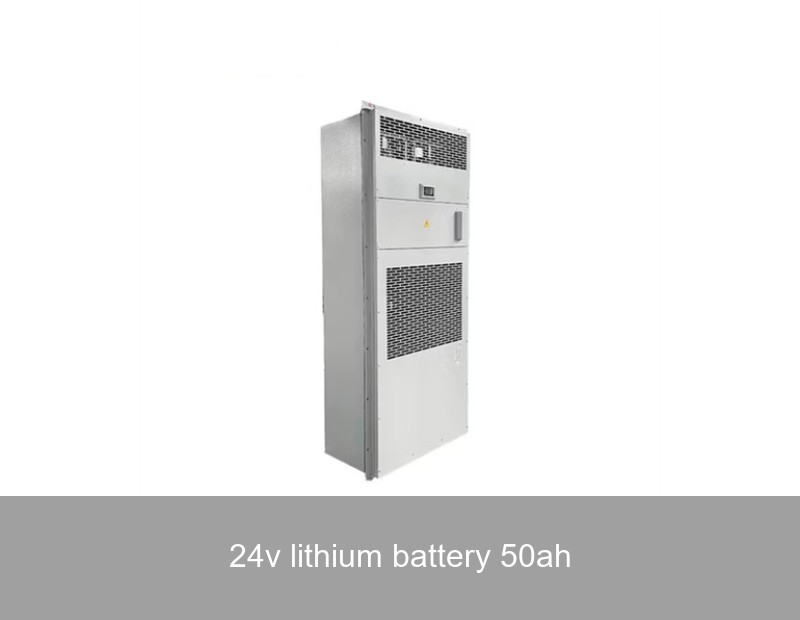
Have you ever wondered what powers the quiet revolution in off-grid living, modern RVs, or backup solar systems? Often, the answer lies in a compact, powerful unit: the 24V lithium battery 50Ah. This specific energy storage configuration is becoming the unsung hero for applications requiring a balance of voltage, capacity, and efficiency. Unlike older battery technologies, a 24V 50Ah lithium-ion battery offers a lighter weight, longer lifespan, and deeper usable energy, making it a cornerstone for sustainable power solutions. In this article, we'll demystify this key component, explore its ideal applications, and show how choosing the right technology partner, like Highjoule, can make all the difference in your energy independence journey.
Table of Contents
- What is a 24V 50Ah Lithium Battery?
- Why Choose Lithium Over Traditional Batteries?
- Key Applications: Where Does It Shine?
- A Real-World Case Study: Powering a German Micro-Business
- Choosing the Right Battery System: Beyond the Spec Sheet
- Highjoule's Role: Intelligent Systems for Complex Needs
- Future Trends and Your Next Steps
What is a 24V 50Ah Lithium Battery?
Let's break down the name. 24V (Volts) represents the electrical pressure of the system. Many commercial and residential renewable energy systems operate at 24V for optimal efficiency, reducing energy loss over wires compared to lower voltages. 50Ah (Amp-hours) is the capacity. Think of it as the fuel tank size; it indicates the battery can deliver 50 amps of current for one hour, or 5 amps for 10 hours, before needing a recharge. Combined, a 24V 50Ah lithium battery provides 1.2 kilowatt-hours (kWh) of usable energy (24V x 50Ah = 1200Wh). However, with lithium's near 100% depth of discharge capability, you can access almost all of that energy, unlike lead-acid which restricts you to using only half.

Image: Modern lithium battery systems offer compact, modular designs. Source: Unsplash
Why Choose Lithium Over Traditional Batteries?
The shift from lead-acid to lithium-ion, particularly LiFePO4 (Lithium Iron Phosphate), is not just a trend—it's a fundamental upgrade. Here’s a simple comparison:
| Feature | 24V 50Ah LiFePO4 Battery | 24V 50Ah Sealed Lead-Acid (SLA) Battery |
|---|---|---|
| Cycle Life | 3,000 - 7,000 cycles (to 80% capacity) | 300 - 500 cycles |
| Weight | Approx. 10-15 kg | Approx. 25-30 kg |
| Usable Capacity | >95% (Nearly all 1.2 kWh) | ~50% (Only about 0.6 kWh) |
| Charging Speed | Fast, can accept high current | Slow, must be charged in stages |
| Maintenance | Virtually none | May require watering/equalizing |
The data is clear: lithium offers longevity and true performance. While the upfront cost is higher, the total cost of ownership over 10+ years is significantly lower. You're buying a decade of reliable service, not a component you'll replace every 2-3 years.
Key Applications: Where Does It Shine?
A single 24V 50Ah battery is a versatile building block. Its real power is realized when used in series or parallel within a larger Battery Energy Storage System (BESS). Here are its most common applications:
- Solar Energy Storage: It's the perfect storage unit for small to mid-sized residential solar panel arrays. It captures excess solar generation during the day for use at night, maximizing self-consumption.
- Marine & RV Power: Its light weight and high efficiency are game-changers for boats and recreational vehicles, powering appliances without the bulk and fumes of older batteries.
- Uninterruptible Power Supplies (UPS): Provides critical backup for telecom equipment, small server racks, or home offices, with a near-instantaneous switchover during grid outages.
- Microgrids & Off-Grid Systems: Multiple 24V 50Ah modules can be combined to form the storage backbone of a community or industrial microgrid, enabling energy independence from the main utility grid.
A Real-World Case Study: Powering a German Micro-Business
Let's look at a concrete example from Bavaria, Germany. A small, family-owned dairy farm with a 10kW rooftop solar installation faced a challenge: their peak energy production at midday didn't match their high consumption during morning and evening milking and cooling. They were exporting energy to the grid at low rates and buying it back at high rates.
The Solution: They installed a modular battery storage system using a cluster of eight 24V 50Ah LiFePO4 battery modules, configured to create a 48V 200Ah system (roughly 10kWh of storage). This was integrated with a smart inverter and energy management system.
The Data-Driven Outcome (12 Months Post-Installation):
- Self-Consumption Rate increased from 35% to 82%.
- Grid energy purchases during peak hours fell by over 70%.
- The system provided full backup power during two grid outages, preserving milk refrigeration.
- Projected payback period is under 7 years, thanks to Germany's high electricity prices and intelligent energy arbitrage.
This case shows that a well-designed system using reliable 24V building blocks isn't just about backup—it's an economic engine for sustainability.
Choosing the Right Battery System: Beyond the Spec Sheet
Selecting a 24V 50Ah battery involves more than just voltage and capacity. You need to consider the Battery Management System (BMS). A high-quality BMS is the brain of the battery, protecting it from overcharge, deep discharge, overheating, and ensuring cell balance. It's the difference between a battery that lasts 3 years and one that lasts 15.
Furthermore, compatibility with your existing inverter/charger is crucial. Not all batteries communicate with all inverters. An open-protocol or widely compatible BMS ensures seamless integration and unlocks advanced features like remote monitoring and adaptive charging based on weather forecasts.

Image: Advanced monitoring and BMS are critical for system health. Source: Unsplash
Highjoule's Role: Intelligent Systems for Complex Needs
This is where a technology provider like Highjoule adds immense value. Since 2005, Highjoule has moved beyond simply supplying battery cells. We engineer complete, intelligent storage solutions. Our approach integrates high-performance LiFePO4 battery modules (including robust 24V units) with our proprietary energy management software.
For a commercial client in California, for instance, we didn't just install a bank of 24V 50Ah equivalents. We designed a system where our software dynamically manages energy flow: storing solar, automatically shifting loads to off-peak periods, and even participating in utility demand response programs—all without the business owner lifting a finger. The battery hardware is durable, but the intelligence layer is what maximizes return on investment.
For residential users, our Highjoule HomePower series offers scalable solutions that can start with a foundational storage capacity and grow as needs evolve. Each module features industrial-grade safety and is backed by a market-leading warranty, reflecting our confidence in the product's longevity, a claim supported by third-party testing data from sources like the National Renewable Energy Laboratory (NREL).
Future Trends and Your Next Steps
The technology continues to advance. We're seeing trends toward even higher energy density, longer cycle life, and improved sustainability in battery recycling. The core principle, however, remains: reliable, safe, and intelligent storage is the key to unlocking the full potential of renewable energy.
So, as you consider a 24V 50Ah lithium battery for your project, ask yourself: Is my goal merely to store energy, or is it to create a resilient, cost-optimized, and intelligent power ecosystem for my home or business? The hardware you choose will define the answer.
What specific energy challenge are you hoping to solve with a reliable storage solution, and how can intelligent management transform that challenge into an opportunity?
 Inquiry
 Online Chat