


Understanding the Capacity of a Solar Battery: Your Key to Energy Independence
Have you ever watched your solar panels generate a surplus of clean energy on a sunny afternoon, only to see it flow back to the grid, knowing you'll have to buy it back at night? This common experience highlights the central puzzle of modern solar power: generation and consumption are rarely in sync. The solution lies in storage, and that brings us to the heart of the matter—the capacity of a solar battery. This isn't just a number on a spec sheet; it's the cornerstone of your energy resilience, dictating how much sunshine you can save for a rainy day (or a cloudy evening). In this guide, we'll demystify solar battery capacity, explore what it truly means for your home or business, and how choosing the right system can unlock unprecedented control over your energy costs and carbon footprint.
Table of Contents
What is the Capacity of a Solar Battery?
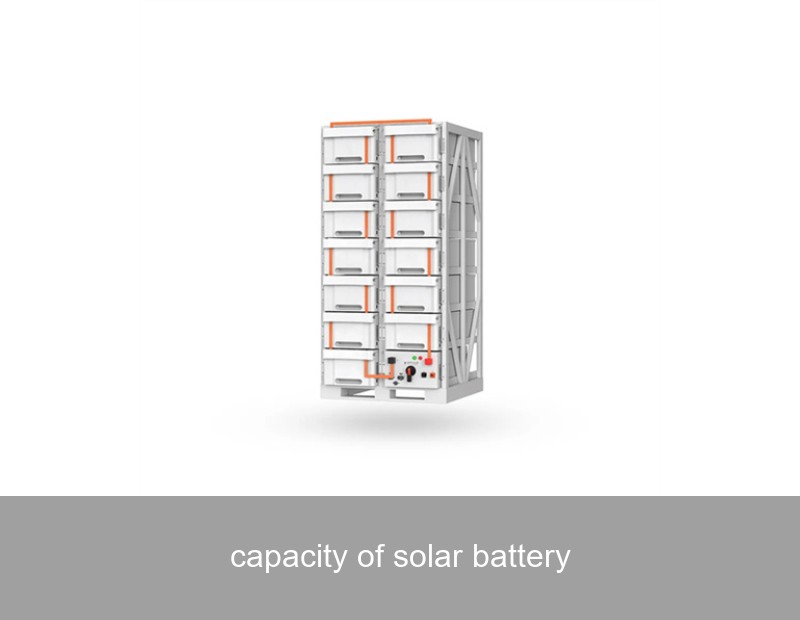
In simple terms, the capacity of a solar battery refers to the total amount of electrical energy it can store, measured in kilowatt-hours (kWh). Think of it like the size of a water tank. A 10 kWh battery can, in theory, deliver 10 kilowatts of power for one hour, 5 kilowatts for two hours, and so on. It's the fundamental metric that answers the question: "How much of my solar energy can I keep?"
However, this raw number only tells part of the story. Two critical factors immediately shape the real-world utility of that capacity: power rating (in kW) and chemistry. The power rating determines how much electricity the battery can deliver at once. A battery with a high capacity but a low power rating might run your fridge and lights all night but couldn't handle the simultaneous surge of starting an air conditioner and an oven. This is where leading providers like Highjoule engineer their systems for balance. Highjoule's IntelliStoreTM residential series, for example, combines high-energy-density lithium iron phosphate (LFP) cells with advanced power electronics to offer both robust capacity and sufficient peak power for typical household demands, ensuring you can use your stored energy when you need it most.
The Chemistry Behind the Capacity
Most modern solar batteries use lithium-ion chemistry, but not all are created equal. The choice between Nickel Manganese Cobalt (NMC) and Lithium Iron Phosphate (LFP) has direct implications for capacity longevity and safety.
- NMC: Often offers a slightly higher energy density (more capacity in a smaller space) but may have a slightly shorter lifespan under deep cycling conditions.
- LFP: Known for exceptional cycle life, thermal stability, and safety. It typically maintains its usable capacity over a much longer period. Highjoule's commitment to sustainable and safe storage means their core products utilize LFP chemistry, ensuring that the capacity you pay for endures for thousands of cycles.

Image Source: Unsplash (Representative image of battery technology)
Beyond the Basics: Depth of Discharge & Usable Capacity
Here's a crucial concept that many first-time buyers overlook: Depth of Discharge (DoD). To prolong battery life, manufacturers recommend not draining it completely. A 10 kWh battery with a recommended 90% DoD means you should only use 9 kWh of its total capacity regularly. The usable capacity is therefore the most important figure for your calculations.
| Term | Definition | Impact on You |
|---|---|---|
| Total Capacity | The absolute maximum energy the battery can hold (e.g., 13.5 kWh). | The "tank size." A baseline for comparison. |
| Depth of Discharge (DoD) | The percentage of the battery that can be safely used (e.g., 90%). | Dictates how much of the tank you can actually empty. |
| Usable Capacity | Total Capacity x DoD (e.g., 13.5 kWh x 90% = 12.15 kWh). | The real number for your daily energy budgeting. |
Highjoule systems are designed with transparency and longevity in mind. Their integrated energy management software clearly displays the usable capacity and manages the DoD automatically, optimizing the system to maximize your daily savings while guaranteeing the product's promised lifespan of 15+ years.
Sizing Your System: It's More Than Just kWh
Choosing the right capacity of a solar battery isn't about picking the biggest number. It's a careful balance between your energy goals, your consumption patterns, and your solar production. Let's break down the key considerations:
- Load Shifting (Maximizing Self-Consumption): This is the most common goal. You want to store excess daytime solar energy to use at night. To size for this, analyze your average evening/nighttime energy consumption. A typical U.S. home might use 10-20 kWh during non-sun hours, suggesting a battery in the 10-15 kWh usable capacity range.
- Backup Power (Resilience): If your goal is to keep essential loads running during a grid outage, you need to list those circuits (refrigerator, lights, modem, furnace fan) and estimate their runtime needs. This often requires a smaller capacity than full load-shifting but must be paired with a system capable of forming an island (off-grid power).
- Time-of-Use (TOU) Rate Optimization: In regions with high peak electricity prices (common in California and parts of Europe), you may charge the battery from solar or the grid during cheap periods and discharge during expensive peak hours. This strategy may favor batteries with a higher cycle life and power rating.
For commercial and industrial applications, the calculus becomes more complex, involving demand charge reduction and power quality management. This is where Highjoule's C&I and microgrid solutions excel. Their scalable ModuStackTM platform allows businesses to build storage capacity from hundreds of kWh to multiple MWh, all managed by an AI-driven platform that optimizes for the highest financial return, whether through arbitrage, demand charge management, or providing grid services.
Case Study: A German Bakery's Recipe for Resilience
Let's look at a real-world example from Bavaria, Germany. Bäckerei Schmidt (a mid-sized bakery) faced two problems: volatile energy costs that squeezed profit margins on their energy-intensive ovens and cooling systems, and occasional grid instability that threatened production.
Phenomenon: High daytime energy consumption coincided with solar peaks, but surplus solar was underutilized. High grid demand charges applied during morning bake cycles.
Data & Solution: An energy audit revealed a daily load of ~400 kWh with a peak demand of 80 kW. Highjoule deployed a 250 kWh / 100 kW ModuStackTM battery system, integrated with the bakery's existing 100 kWp solar array.
Outcome:
- Self-Consumption Rate increased from 35% to over 80%.
- Demand Charges were reduced by an estimated 40% by flattening the peak load.
- The system provides 2-3 hours of full backup power, ensuring the completion of bake cycles during short grid outages.
- Projected payback period: Under 7 years, thanks to Germany's energy price landscape and available incentives.
This case illustrates that the optimal capacity of a solar battery is not determined in isolation. It's part of an integrated system designed to solve specific economic and operational challenges.

Image Source: Unsplash (Representative image of a commercial energy storage installation)
Future Trends and Smart Management
The future of solar battery capacity is not just about bigger tanks; it's about smarter water management. With the rise of virtual power plants (VPPs) and dynamic electricity tariffs, the value of your battery's capacity can be multiplied.
Imagine a system that not only manages your home's energy but also aggregates your capacity with thousands of others to provide stability to the regional grid during times of stress—all while earning you revenue. This is the promise of smart, grid-interactive storage. Highjoule's GridSyncTM intelligence layer is already enabling this in pilot programs, allowing compatible IntelliStore systems to participate in grid service markets while prioritizing the homeowner's backup and savings needs. The capacity you install becomes a community asset, enhancing the transition to renewables. For a deeper dive into how VPPs work, the U.S. Department of Energy provides a comprehensive overview.
Making the Right Choice for Your Needs
So, how do you determine the ideal capacity of a solar battery for your home or business? Start by asking the right questions:
- What is my primary goal? (Savings, backup, environmental impact?)
- What is my average daily energy consumption, and what portion do I want to cover with storage?
- Do I have time-of-use rates or high demand charges?
- Is my system designed for future expansion?
Partnering with an expert is crucial. A reputable provider won't just sell you a box; they will conduct a thorough energy analysis. Highjoule's network of certified installers uses sophisticated modeling tools to simulate different capacity scenarios against your local weather patterns, tariff structures, and consumption data, ensuring the proposed system delivers the best return on investment. For independent information on solar and storage sizing, resources like the National Renewable Energy Laboratory (NREL) offer valuable tools and publications.
Ultimately, the journey to energy independence is both a personal and a technical one. The right battery capacity is the linchpin that connects your solar panels to your power needs, 24 hours a day. It turns sunlight from a momentary resource into a constant, reliable companion.
What energy challenge in your home or business could the right battery capacity solve today, and how might it shape your energy strategy for the next decade?
 Inquiry
 Online Chat