


Finding the Right 27U Cabinet Supplier for Your Energy Storage Project: A Technical Buyer's Guide
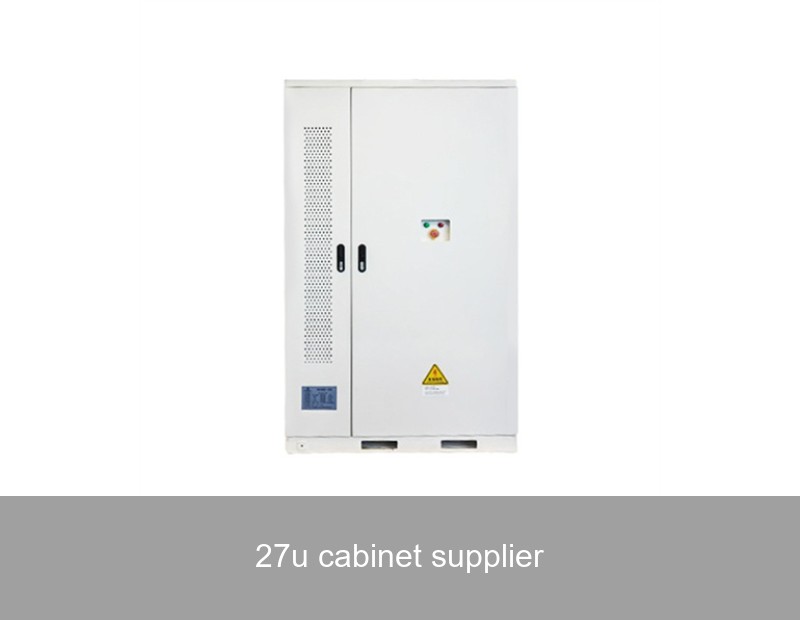
In the rapidly evolving world of renewable energy and battery storage, the infrastructure that houses critical components is just as important as the components themselves. If you're an engineer, project developer, or facility manager sourcing equipment for a commercial or industrial energy storage system (ESS), you've likely encountered the term "27U cabinet." But what does it truly mean, and more importantly, how do you choose a 27U cabinet supplier that ensures safety, reliability, and long-term value? This article cuts through the noise, explaining why the cabinet is more than just a metal box and how partnering with a seasoned provider like Highjoule can de-risk your entire project.
Table of Contents
- What is a 27U Cabinet & Why is it a Standard?
- Beyond the Enclosure: The Critical Role of the Cabinet in ESS
- Key Criteria for Evaluating a 27U Cabinet Supplier
- The Highjoule Approach: Integrated Cabinet Solutions
- Case Study: 27U Cabinets in a German Industrial Microgrid
- Future-Proofing Your Investment: Key Considerations
What is a 27U Cabinet & Why is it a Standard?
Let's start with the basics. The "U" in 27U stands for "Unit," a standard measurement of height in equipment racks and cabinets. One "U" equals 1.75 inches (44.45 mm). Therefore, a 27U cabinet offers approximately 47.25 inches (or 1200mm) of vertical mounting space. This dimension has become a workhorse size in data centers and, increasingly, in the battery energy storage sector. But why? It strikes a practical balance: it provides ample space to house battery management systems (BMS), power conversion systems (PCS) controllers, communication hubs, and safety gear, while remaining manageable for shipping, installation, and access within utility and industrial rooms. When we talk about a supplier for these cabinets, we're not just discussing a fabricator of sheet metal. We are talking about a partner who understands the complex ecosystem that must live inside it.
Beyond the Enclosure: The Critical Role of the Cabinet in ESS
Phenomenon: A project team sources a low-cost 27U enclosure from a generic IT supplier. During commissioning, they face overheating issues with the BMS, cable routing nightmares, and unforeseen delays to modify the cabinet for proper fire suppression interfaces.
Data: According to a DNV report on energy storage system failures, a significant percentage of performance and safety incidents can be traced back to auxiliary systems and integration issues—thermal management and improper component layout being prime contributors. The cabinet is the foundational layer for this integration.
An effective cabinet for an ESS must address several core functions beyond simple mounting:
- Thermal Management: Battery electronics generate heat. A cabinet must have optimized airflow (often with filtered fans or air conditioning units) to maintain components within their safe operating temperature range, directly impacting lifespan.
- Safety & Compliance: It must be constructed from appropriate materials, often with fire-retardant properties, and designed to meet regional electrical standards (like UL in the US or IEC in Europe).
- Cable Management & EMI Shielding: Proper routing channels and segregation of power and data lines are crucial to prevent interference, ensure serviceability, and maintain safety.
- Serviceability: Doors should offer 180-degree opening, interior components should be easily accessible, and the design should allow for safe hot-swapping of parts where necessary.

Image: Proper cabinet design is essential for serviceability and safety. Source: Unsplash
Key Criteria for Evaluating a 27U Cabinet Supplier
So, how do you separate a commodity vendor from a true solutions partner? Here’s a logical ladder to guide your evaluation:
| Criteria | Generic Supplier | Expert ESS Supplier (e.g., Highjoule) |
|---|---|---|
| Core Expertise | General IT/Telecom enclosures | Deep domain knowledge in battery chemistry, BMS, PCS, and grid interconnection requirements |
| Design Support | Offers standard catalog products | Provides pre-configured, application-specific designs and custom modification engineering |
| Compliance & Certification | Basic safety standards | Active compliance with UL 9540, IEC 61439, and local grid codes for the target market |
| Integration Readiness | Empty shell | Pre-installed mounting rails, busbars, breaker panels, and cooling system interfaces | Supply Chain & Scalability | Variable lead times | Reliable, scalable global supply to support projects from pilot to multi-MW deployment |
The Highjoule Approach: Integrated Cabinet Solutions
At Highjoule, we view the cabinet not as a separate purchase but as the central nervous system housing of our power conversion and control intelligence. Our 27U cabinet solutions are born from nearly two decades of field experience deploying systems across Europe and North America. We understand that the most elegant battery cell or inverter design can be undermined by a poorly conceived enclosure.
Our standard and custom-configured 27U cabinets are designed as pre-integrated control hubs. They often come pre-wired for our advanced BMS and energy management system (EMS) platforms, with calculated thermal management profiles and built-in safety disconnect features. This "plug-and-play" philosophy significantly reduces on-site installation time, lowers labor costs, and minimizes integration errors. For a project manager, this means predictable timelines. For the asset owner, it translates to higher system availability and a lower total cost of ownership over the system's life. By acting as your single-source 27U cabinet supplier and system integrator, Highjoule assumes responsibility for the compatibility and performance of the entire subsystem, removing a major point of risk from your plate.
Case Study: 27U Cabinets in a German Industrial Microgrid
Phenomenon: A mid-sized automotive parts manufacturer in Bavaria aimed to achieve 80% energy self-sufficiency using onsite solar PV and wanted to add storage for load shifting and backup power. Their main challenge was space constraint in their existing facility and stringent German grid connection guidelines (VDE-AR-N 4105).
Project Insight: The engineering team needed a compact, fully compliant solution that could house the complex control systems required for seamless islanding and grid re-synchronization. A generic cabinet would have required extensive custom engineering on-site.
Highjoule Solution: We supplied a turnkey battery storage system centered on our pre-engineered, factory-tested 27U control cabinets. These cabinets housed the customized EMS, grid-forming inverters' control units, and all protection devices. They were pre-certified to meet VDE standards, featuring integrated cooling calibrated for the inverter heat loads.
Data & Outcome:
- Project Scale: 500 kW / 1 MWh Lithium-ion BESS.
- Key Metric: The use of Highjoule's pre-integrated 27U cabinets reduced on-site electrical installation time by an estimated 40%.
- Result: The system achieved smooth certification from the local grid operator (VNB) on the first review, avoiding costly delays. The manufacturer now reliably shifts over 85% of its solar generation to cover evening production shifts, substantially reducing peak demand charges.
This real-world example, backed by Fraunhofer ISE data highlighting the importance of system integration in microgrid economics, underscores that the value of a supplier lies in their application knowledge, not just their product catalog.

Image: Industrial microgrids require precise control housed in robust cabinets. Source: Unsplash
Future-Proofing Your Investment: Key Considerations
As you engage with potential 27U cabinet suppliers, look beyond the immediate project. Ask questions that reveal their capacity to support your long-term roadmap:
- Modularity: Can the cabinet design be easily replicated and linked for future capacity expansions?
- Technology Agnosticism: Is the design flexible enough to accommodate future upgrades to BMS or communication protocols?
- Digital Twin & Monitoring: Does the supplier offer software that allows remote monitoring of the cabinet's internal environment (temperature, humidity, door access)?
- Lifecycle Support: What is the supplier's policy on spare parts availability and technical support over a 10-15 year period?
Highjoule builds these principles into our design philosophy. Our cabinets are nodes in our broader IEA-aligned vision of creating resilient, software-defined power networks. We see the cabinet as a long-term asset that protects and enables your energy investment.
Ready to Discuss Your Specific Cabinet and Integration Challenges?
The choice of a 27U cabinet supplier is a strategic decision that impacts the performance, safety, and profitability of your energy storage asset. It's a decision that merits a conversation focused on your specific application, site constraints, and operational goals. What unique thermal, compliance, or scalability challenges are you facing in your current or upcoming project?
 Inquiry
 Online Chat