


Choosing the Right ESS Inverter Supplier: Your Key to Energy Independence
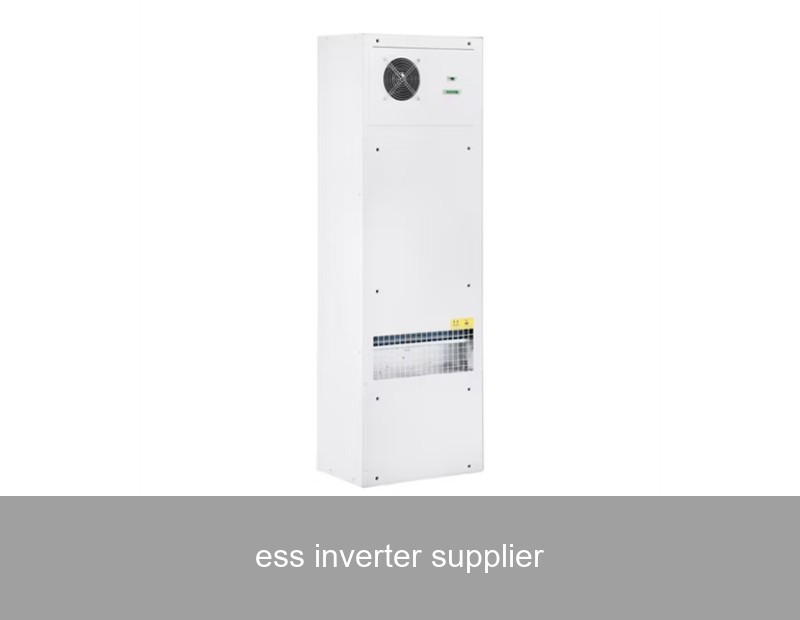
Have you ever wondered what truly powers a modern energy storage system? While batteries capture the headlines, the ESS inverter supplier provides the system's true brain and heart. This critical component converts stored DC power into usable AC power and intelligently manages the entire energy flow. For businesses and homeowners in Europe and the US navigating the shift to renewables, selecting the right partner for this technology is a decision that defines the success, safety, and return on investment of your entire energy project. Let's explore why the inverter, and the expertise behind it, is the linchpin of a reliable storage solution.
Table of Contents
- The Silent Conductor: More Than Just Conversion
- Data-Driven Decisions: The Metrics That Matter
- Case Study: Grid Stability in Southern Europe
- Beyond the Hardware: The Supplier as a Strategic Partner
- Highjoule: Engineering Confidence into Every Cycle
- Your Energy Future: A Question of Control
The Silent Conductor: More Than Just Conversion
Think of your Energy Storage System (ESS) as a symphony orchestra. The batteries are the musicians, holding the potential (the stored energy). The ESS inverter supplier provides the conductor and the sheet music—the inverter itself. It doesn't just convert DC to AC; it dictates the pace, volume, and timing of the energy flow. Is solar production peaking? The inverter orchestrates charging. Is grid demand high and expensive? It seamlessly dispatches stored power. It also ensures grid compliance, manages battery health to prevent degradation, and can island critical loads during an outage. Choosing a supplier is about selecting the composer of your energy resilience.

This role becomes exponentially more complex in commercial and industrial (C&I) settings. Here, the inverter must handle multi-modal operations: peak shaving to avoid demand charges, frequency regulation to support the grid, and backup power for operational continuity. A top-tier supplier like Highjoule designs inverters with this multi-tasking core, backed by software that makes these advanced functions accessible and manageable.
Data-Driven Decisions: The Metrics That Matter
So, how do you evaluate an ESS inverter supplier? Look beyond the basic specs. The conversation must center on performance data and long-term value.
| Key Metric | Why It's Important | What to Ask a Supplier |
|---|---|---|
| Round-Trip Efficiency (RTE) | The percentage of energy retained after a full charge/discharge cycle. Higher RTE means less wasted energy and more savings. | "Can you provide certified test reports showing RTE under real-world partial load conditions, not just ideal lab tests?" |
| Grid Service Capabilities | Can the inverter provide services like frequency response or voltage support? This unlocks additional revenue streams. | "Which grid codes (e.g., UL 1741-SA, VDE-AR-N 4105) are your inverters certified for in my region?" |
| Mean Time Between Failures (MTBF) | A reliability indicator. A higher MTBF suggests more robust engineering and fewer operational disruptions. | "What is the projected MTBF for your C&I inverter line, and what is your global service network response time?" |
| Software & Upgradability | The intelligence layer. Can new features and compliance updates be added via software over the system's 15+ year life? | "Describe your software roadmap. How do you ensure my system remains compliant and feature-rich for its lifetime?" |
According to a 2023 NREL report, inverter reliability and software capabilities are among the top three factors influencing the levelized cost of storage (LCOS) for C&I projects. The right supplier directly impacts your bottom line.
Case Study: Grid Stability in Southern Europe
Let's make this concrete. A large food processing plant in Spain faced a dual challenge: volatile energy prices and a local grid prone to frequency fluctuations, which risked damaging sensitive refrigeration equipment. They needed a solution that could cut costs and provide ultra-fast grid support.
They partnered with an ESS inverter supplier that provided a system centered on advanced, grid-forming inverters. Here’s the outcome:
- Project Scale: 2.5 MWh battery storage system.
- Inverter Core Function: Highjoule's HPS Series C&I inverters were deployed, specifically chosen for their grid-forming capability and sub-20-millisecond response time.
- Results (18-month period):
- Demand Charge Reduction: Achieved 28% savings through intelligent peak shaving.
- Grid Revenue: Earned approximately €45,000 annually by providing automatic frequency regulation services to the local TSO.
- Reliability: Zero process interruptions due to grid micro-dips, protecting millions in inventory.
This case highlights that the inverter's advanced functionality, supplied by a knowledgeable partner, transformed a cost center into a revenue-generating, resilience-enhancing asset. The supplier's deep understanding of both local grid codes and the client's operational needs was critical.
Beyond the Hardware: The Supplier as a Strategic Partner
When you choose an ESS inverter supplier, you're not just buying a component. You're selecting a long-term partner for your energy infrastructure. The best suppliers offer a holistic value proposition:
- Application Engineering: They work with you to design the system architecture that fits your unique load profile and goals.
- Compliance Navigation: They ensure the entire system, with their inverter at the core, meets all local utility interconnection and safety standards—a complex task that varies by country and even municipality.
- Lifecycle Support: They provide remote monitoring, proactive maintenance alerts, and firmware updates to ensure performance never stagnates.
This partnership model is what separates a commodity transaction from a strategic investment. As the Energy Storage News industry analysis often notes, the integration and service layer is becoming the key differentiator in mature markets like the US and Germany.
Highjoule: Engineering Confidence into Every Cycle
At Highjoule, we've built our reputation over nearly two decades on this exact principle of partnership. We understand that our role as an ESS inverter supplier is to deliver unwavering reliability and intelligence.
Our flagship product lines, like the HPS Series for C&I and the integrated HomePower Hub for residential applications, are designed from the ground up for the demands of modern energy management. They feature:
- Universal Grid Compliance: Pre-certified for major standards across North America and the EU, accelerating project timelines.
- Advanced Battery Agnosticism: Our inverters communicate seamlessly with leading lithium-ion battery chemistries, giving you flexibility and future-proofing.
- Highjoule Energy OS: Our proprietary software platform turns raw data into actionable insights, enabling automated cost-saving and revenue-generating modes with a user-friendly interface.

For us, supplying an inverter means supplying a complete solution: the hardware, the brain, and the ongoing expertise to ensure your storage asset performs optimally year after year, from initial design through its entire operational life.
Your Energy Future: A Question of Control
The transition to a resilient, cost-effective energy future is inevitable. The real question is, how much control do you want over that process? Selecting your ESS inverter supplier is the most significant step in claiming that control. It's the decision that determines whether your system merely stores energy or actively manages it to create value.
Is your organization ready to move beyond just comparing kilowatt-hours and delve into the intelligent core that will define your energy strategy for the next decade? What specific energy challenge—be it demand charges, grid instability, or sustainability targets—could a truly intelligent inverter system solve for you?
 Inquiry
 Online Chat