


Understanding 3 kV Solar System Load Capacity: Powering Your Energy Independence
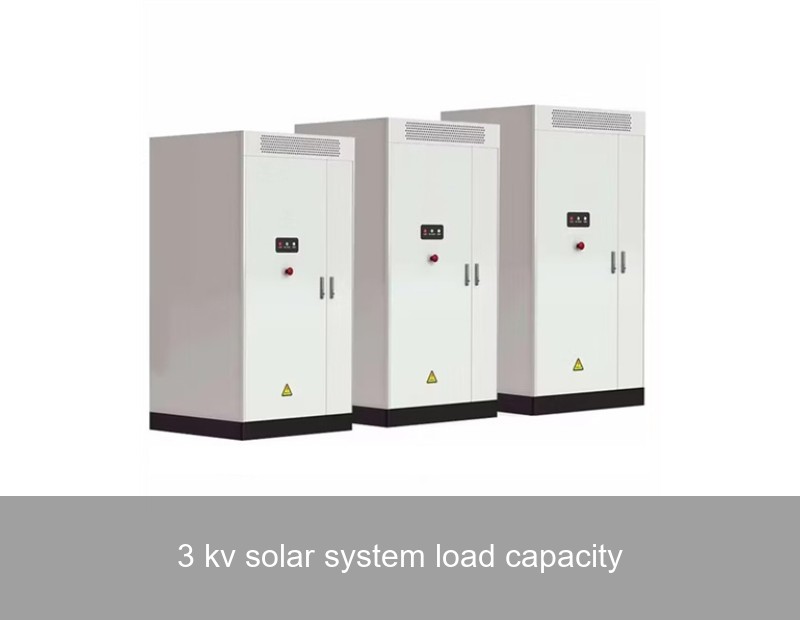
Have you ever looked at your electricity bill and wondered just how much of your home or business's energy needs a solar system could truly cover? You're not alone. As energy costs rise and sustainability becomes a priority, more people are asking: "What can a solar system actually power?" Specifically, for those with larger energy demands or commercial operations, the concept of a 3 kV solar system load capacity becomes crucial. It's not just about the panels on the roof; it's about the intelligent system behind them that ensures every kilowatt-hour is harnessed, stored, and used efficiently. Let's demystify what this means for your energy resilience.
Table of Contents
What is a 3 kV Solar System & Its Load Capacity?
First, let's clarify the terminology. "3 kV" typically refers to a three-phase electrical system operating at a voltage of 3 kilovolts (3000 volts). This is common in commercial, industrial, and larger residential applications, especially in Europe. However, in the context of solar, we often talk about system size in kilowatts (kW). A 3 kV system often pairs with a substantial solar array, say 20kW to 100kW or more, designed to handle significant power loads.
The load capacity here isn't a single number on a spec sheet. It's the system's effective ability to meet your simultaneous energy demands—from lighting and machinery to HVAC and electric vehicle chargers—without straining or requiring grid backup. It's the difference between just having solar generation and having a reliable, self-sufficient power ecosystem.

A large-scale solar array, like those often integrated with 3 kV systems, powers significant commercial operations.
Why Load Capacity and Intelligent Management Matter
The phenomenon is simple: solar generation is intermittent. The sun doesn't always shine. The challenge is matching that generation to consumption, which often peaks in the morning and evening—times when solar yield may be lower.
Consider this data: The U.S. Department of Energy highlights that without storage or smart management, a typical solar system might only directly cover 30-50% of a site's total load, exporting the excess midday and importing at night. This leaves a substantial "capacity gap." For a business, this gap represents ongoing cost, carbon footprint, and vulnerability to grid outages.
Key Components Beyond the Panels
To truly maximize your 3 kV system's load capacity, three components are non-negotiable:
- Advanced Inverters: The heart of the system. They convert DC from panels to AC for your building and, crucially, manage grid interaction. For 3 kV applications, robust, three-phase inverters are essential.
- Battery Energy Storage System (BESS): This is the game-changer. Storage captures excess solar for use when needed, effectively increasing your usable load capacity from the same set of panels.
- Energy Management System (EMS): The brain. A smart EMS predicts generation, learns consumption patterns, and autonomously dispatches stored energy to ensure critical loads are always prioritized, maximizing self-consumption.
A Real-World Case Study: Müller Bakery, Bavaria, Germany
Let's ground this in reality. Müller Bakery, a mid-sized family operation, faced soaring energy costs. Their dough mixers, industrial ovens, and refrigeration constituted a significant and variable load, operating on a 3-phase grid connection.
The Challenge: A 68 kWp solar array was installed but was exporting over 60% of its midday production while the bakery still bought expensive power during morning and evening baking peaks.
The Solution: Integration of a tailored Highjoule H2-Cube Commercial battery storage system with a capacity of 120 kWh and our proprietary Neuron EMS. The system was specifically configured to handle their high-power, 3-phase loads.
The Data-Driven Result: Within one year:
| Metric | Before Highjoule System | After Highjoule System |
|---|---|---|
| Grid Energy Consumption | 100% (Baseline) | Reduced by 81% |
| Solar Self-Consumption Rate | ~35% | Increased to 94% |
| Backup Power for Critical Loads | 0 hours (Grid-dependent) | Full operation for 8+ hours during a grid outage |
How Highjoule's Smart Systems Optimize Your 3 kV Load Capacity
At Highjoule, founded in 2005, we understand that a 3 kV solar system's potential is unlocked not by hardware alone, but by intelligent integration. Our approach focuses on turning your solar investment into a resilient power plant.
Our H2-Series Battery Storage Systems, built with premium lithium-iron-phosphate (LFP) cells, are engineered for high-cycle, long-duration performance. They seamlessly integrate with major inverter brands and are scalable, allowing you to right-size storage for your exact load profile.
The true differentiator is the Highjoule Neuron EMS platform. Using AI-driven forecasting, it doesn't just react—it anticipates. It knows when your bakery starts its ovens or when your facility's HVAC peaks, scheduling energy dispatch from the batteries to prevent grid draw during expensive peak tariffs. This intelligent orchestration is what truly maximizes the effective load capacity of your solar asset, ensuring you get the most from every ray of sunshine.

A modern, rack-mounted BESS unit, similar to Highjoule's H2-Cube, providing scalable and safe energy storage.
Future-Proofing Your Energy Investment
The energy landscape is evolving. As noted by the International Energy Agency, electric vehicle adoption is skyrocketing, adding new high-power loads. A future-ready 3 kV solar system must account for this.
Highjoule systems are designed with this in mind. Our architecture allows for the integration of EV charging stations, where the EMS can prioritize using solar-stored energy to power your fleet, avoiding costly grid upgrades. We don't just sell a product; we provide a sustainable, intelligent, and adaptive power solution for commercial, industrial, and large residential applications.
Your Energy, Your Control
So, when you think about a 3 kV solar system, move beyond the kilowatts of the panels. Ask yourself: What is the true load capacity I need to achieve energy security and cost predictability? How can I ensure my system intelligently adapts to my actual consumption, not just theoretical production?
What would a 94% self-consumption rate do for your operational bottom line and sustainability goals?
 Inquiry
 Online Chat