


Understanding and Optimizing Your Sistema de Celdas Solares (Solar Cell System)
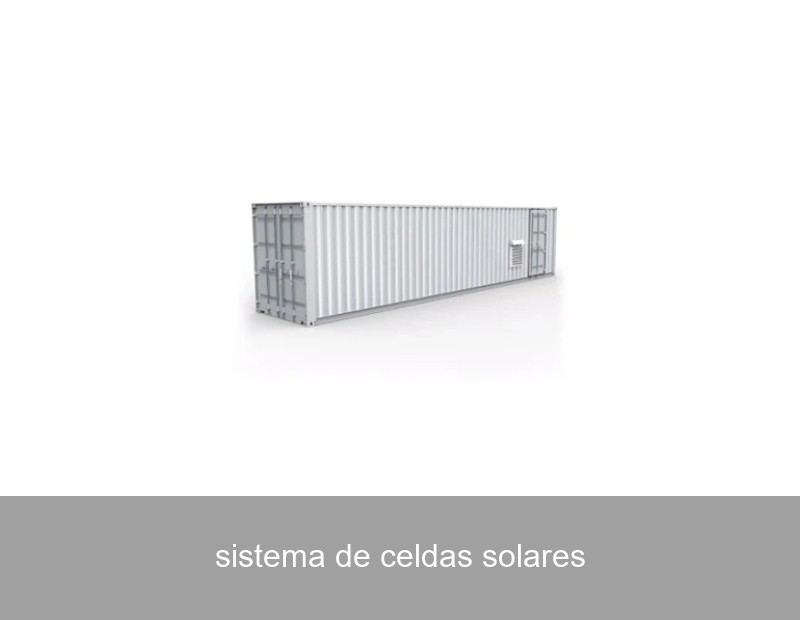
So, you've made the smart decision to invest in a sistema de celdas solares, or you're seriously considering it. Those panels on your roof are a fantastic step towards energy independence and sustainability. But have you ever wondered if you're getting the most out of your investment? Many homeowners and businesses face a common challenge: their solar panels produce abundant energy during the day, but consumption peaks in the morning and evening when the sun isn't shining. This mismatch means sending excess power back to the grid for a low credit and still drawing expensive power at night. The true potential of your sistema de celdas solares isn't fully realized without a key component: intelligent energy storage. This is where the journey from being just a producer to becoming a true master of your energy begins.
Table of Contents
- The Generation-Consumption Gap: A Solar Dilemma
- Beyond the Battery: The Evolution of Solar Storage Systems
- Key Components of a Modern Solar Cell System
- Real-World Impact: A Case Study from Spain
- Choosing the Right System for Your Needs Is Your Solar Installation Future-Ready?
The Generation-Consumption Gap: A Solar Dilemma
Let's look at the data. A typical residential sistema de celdas solares in Southern Europe or California might generate a production curve that looks like a perfect bell-shaped arc, peaking at midday. Conversely, the household energy consumption curve often has two peaks: one in the morning (7-9 AM) and a larger one in the evening (6-10 PM). The result? A significant surplus of solar energy is exported to the grid between 10 AM and 4 PM.
While net metering policies have historically credited this export, regulations are shifting. Markets like California's NEM 3.0 have drastically reduced the compensation for exported solar, making it far more economical to store and use your own power. The financial equation for solar is now unequivocal: maximizing self-consumption is paramount. This isn't just about economics; it's about resilience. With increasing grid instability due to extreme weather events, the ability to power your home or business during an outage has become a critical feature, one that a standard grid-tied solar array simply cannot provide.
Beyond the Battery: The Evolution of Solar Storage Systems
When we talk about adding storage to a sistema de celdas solares, it's easy to think only of the battery pack. However, the battery is just one part of a sophisticated ecosystem. The true intelligence lies in the Battery Energy Storage System (BESS) – an integrated unit comprising the battery modules, a critical battery management system (BMS), a bi-directional inverter, and thermal management systems.
Think of it this way: the battery cells are the muscles, but the BMS and inverter are the brain and nervous system. The BMS meticulously monitors each cell for voltage, temperature, and state of charge, ensuring safety, longevity, and performance. The inverter's role is crucial; it converts the DC electricity from your panels and batteries into the AC power your home uses, and vice-versa for charging. Modern hybrid inverters can manage multiple energy flows simultaneously—from solar, battery, and grid—with millisecond precision.
This is the core of what companies like Highjoule have perfected since 2005. Highjoule's integrated BESS solutions, such as the Highjoule Hive series for residential and commercial use, are designed as complete, plug-and-play units. They seamlessly integrate with new or existing sistema de celdas solares, providing not just storage, but intelligent energy management. Their systems use advanced algorithms to learn your consumption patterns, weather forecasts, and utility rate schedules to automatically decide when to store, use, or sell energy, maximizing your financial return and energy autonomy.
Key Components of a Modern Solar Cell System
To visualize how everything fits together, let's break down a fully optimized system:
| Component | Primary Function | Why It Matters |
|---|---|---|
| Solar Panels (Celdas Solares) | Convert sunlight into DC electricity. | The primary generation asset. Efficiency and durability are key. |
| Hybrid Inverter / Power Conversion System (PCS) | Converts DC to AC for use, and AC to DC for storage. Manages energy flow. | The system's heart. Determines efficiency and smart capabilities. |
| Battery Modules (e.g., LiFePO4) | Store electrical energy for later use. | Provides energy time-shifting and backup power. Chemistry affects safety & lifespan. |
| Battery Management System (BMS) | Protects, monitors, and balances individual battery cells. | Critical for safety, performance, and extending battery life to 10+ years. |
| Energy Management System (EMS) | The software brain that controls the entire system based on settings & algorithms. | Enables smart optimization, grid services, and user-friendly monitoring via an app. |
Highjoule's approach is to engineer these components to work in perfect harmony. Their systems often utilize stable and long-lasting Lithium Iron Phosphate (LiFePO4) chemistry, and their proprietary EMS platform allows users to set preferences, like "maximize self-consumption" or "prepare for a storm," with ease.

Image Source: Unsplash (Representative image of a modern solar and storage setup)
Real-World Impact: A Case Study from Valencia, Spain
Let's move from theory to practice. Consider a medium-sized winery in the Valencia region of Spain. They installed a 100 kW sistema de celdas solares to power their refrigeration units, irrigation pumps, and bottling line. Despite a large solar array, they faced two issues: high grid demand charges due to short-term power spikes from machinery, and no backup power for critical cold storage during occasional grid outages, which risked spoiling inventory.
In 2023, they integrated a Highjoule Hive-C 120 kWh commercial storage system. The results, monitored over one year, were significant:
- Self-Consumption Rate Increased: From 35% to over 85%. They now use most of the solar energy they produce.
- Demand Charges Reduced: The system's "peak shaving" feature capped power draws from the grid, reducing their monthly demand charges by an average of 40%.
- Backup Power Achieved: The system provides seamless backup for their critical refrigeration load for up to 8 hours during a grid failure.
- ROI Timeline: Projected payback period for the storage addition was reduced to under 6 years thanks to combined savings and applicable EU sustainability grants.
This case exemplifies how a sistema de celdas solares transforms from a cost-reducer to a strategic, resilient asset with the right storage technology.
Choosing the Right System for Your Needs
Whether you're a homeowner or a business owner, selecting storage isn't one-size-fits-all. Here are key questions to guide your decision:
- What is your primary goal? (Bill savings, backup power, sustainability, all of the above?)
- What is your critical load? Identify the appliances or circuits you must power during an outage.
- Understand your utility rate structure. Are there time-of-use rates, demand charges, or unfavorable net metering?
For residential clients, Highjoule offers scalable solutions like the Hive-Home series, which can start at a modest capacity and be expanded as needs or budgets grow. For commercial and industrial applications, their Hive-Grid and containerized solutions provide the scale and robustness needed for factories, agricultural operations, and even microgrids. The common thread is a focus on intelligent integration, ensuring the storage system doesn't just sit there but actively works to optimize your energy ecosystem.

Image Source: Unsplash (Representative image of a commercial BESS monitoring interface)
Is Your Solar Installation Future-Ready?
The energy landscape is evolving rapidly. We're moving towards two-way interactive grids, where homes and businesses can provide valuable grid stability services. A modern, intelligent sistema de celdas solares with storage is not just an expense; it's an asset that can participate in this new market. In some regions, virtual power plants (VPPs) allow aggregated home batteries to support the grid during peak times, generating revenue for the system owner.
This raises a forward-looking question: Does your current or planned solar system have the technological capability and connectivity to adapt to these future opportunities, or is it a static installation with limited potential? The choice you make today in storage technology will determine your ability to participate in the energy economy of tomorrow.
We invite you to reflect on your energy profile. What would a day of 100% energy self-sufficiency look like for your home or business, and what is the first step you need to take to get there?
 Inquiry
 Online Chat