


Unlocking the Full Potential of a 3 Megawatt Solar Power Plant
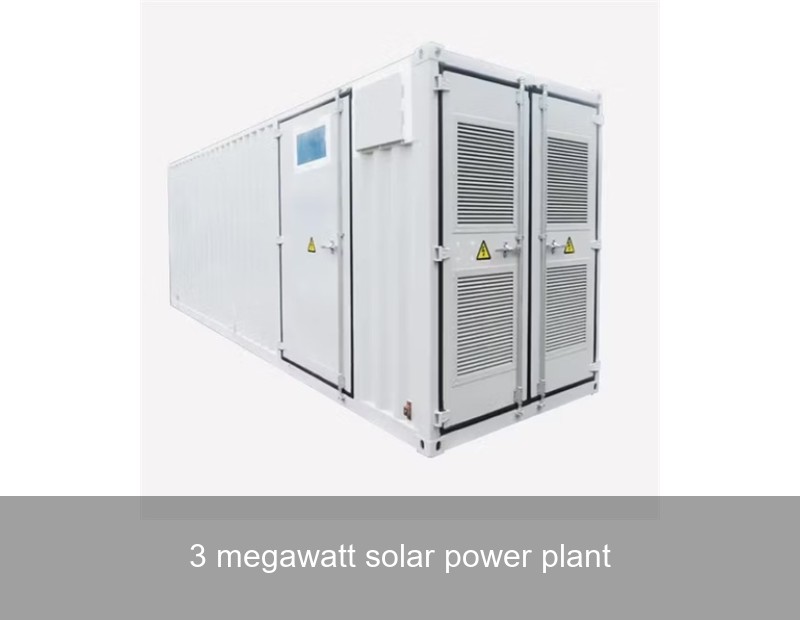
Imagine a vast field, or perhaps a large commercial rooftop, covered in glistening photovoltaic panels, quietly converting sunlight into electricity. This is the image a 3 megawatt solar power plant conjures. It's a significant energy asset, capable of powering hundreds of homes or a sizable manufacturing facility. But here's a question we often get at Highjoule: "Is the true value of a 3MW solar installation simply in those panels, or is there something more?" The answer lies not just in generation, but in intelligent control and storage. Let's explore how to transform a static solar array into a dynamic, resilient, and highly profitable energy system.
What is a 3 Megawatt Solar Power Plant?
A 3 megawatt (MW) solar power plant is a utility-scale or large commercial photovoltaic system with a peak power output of 3,000 kilowatts (kW) under ideal Standard Test Conditions. To put that in perspective, its annual energy production can vary significantly by location:
- In sun-rich Southern Europe (e.g., Spain, Italy): Approximately 4.5 - 5 million kWh per year.
- In Central/Northern Europe (e.g., Germany, UK): Approximately 2.8 - 3.3 million kWh per year.
- In the United States (Southwest vs. Northeast): Ranges from ~4.8 million to ~3.6 million kWh annually.
This clean energy can offset thousands of tons of CO2 emissions yearly. However, the "nameplate" capacity only tells part of the story. The real-world performance and financial return hinge on factors like local irradiance, system efficiency, and—most critically—how and when the generated power is used or stored.

Image Source: Unsplash - A visual representation of a utility-scale solar farm.
The Power Output Phenomenon: More Than Just a Number
The output of your 3MW plant isn't constant. It's a curve that follows the sun, peaking at midday and dropping to zero at night. This intermittency creates a fundamental challenge for grid stability and for maximizing self-consumption if you're powering a 24/7 operation.
Consider this data: A typical 3MW solar array in California might produce 80% of its daily energy in just 6 hours around solar noon. What happens to the excess power when generation exceeds on-site demand? Often, it's sold back to the grid at lower feed-in-tariff rates. Conversely, what powers your facility in the evening when the sun sets but operations continue? You're forced to buy expensive peak electricity from the utility. This mismatch is the central economic and operational puzzle of solar energy.
The Storage Imperative: Why a 3MW Solar Plant Needs a Brain
This is where advanced energy storage systems (ESS) become non-negotiable for a modern, high-performance plant. Think of storage as the "brain" and "battery" for your solar asset. It doesn't just store energy; it intelligently decides when to store, when to discharge, and how to optimize for your specific financial and operational goals.
The key benefits of pairing a 3MW solar plant with a tailored ESS include:
- Energy Time-Shifting: Store cheap, midday solar energy for use during expensive evening peak hours.
- Grid Services & Revenue Stacking: In many markets (like the US PJM or UK grid), stored energy can provide frequency regulation services, creating an additional revenue stream.
- Enhanced Resilience: Maintain critical operations during grid outages, a feature increasingly valued by industries and communities.
- Capacity Firming: Smooth out the solar generation curve, making your plant's output more predictable and valuable to off-takers.
Case Study: A 3MW Plant's Journey in Southern Spain
Let's look at a real-world example. A food processing company in Andalusia, Spain, installed a 3MW ground-mounted solar plant in 2021. Initially, it covered about 40% of their 24/7 energy needs directly, exporting huge midday surpluses and buying expensive night-time power.
In 2023, they partnered with Highjoule to integrate a 2.4 MWh battery energy storage system (BESS) using our HPS-2000 commercial storage units and our proprietary Energy Management System (EMS). The results after one year were transformative:
| Metric | Before Highjoule ESS | After Highjoule ESS |
|---|---|---|
| On-Site Solar Consumption | ~40% | ~85% |
| Grid Energy Purchases (Peak Hours) | 100% of night-time need | Reduced by 78% |
| Annual Energy Cost Savings | Baseline | €210,000 additional savings |
| ROI Period for Storage Addition | N/A | Estimated 4.2 years |
The Highjoule EMS intelligently forecasts energy production and load, automatically optimizing charge/discharge cycles. This case exemplifies how storage transitions a solar plant from a simple generator to a core strategic asset.

Image Source: Unsplash - Representing intelligent energy management and control systems.
Engineering the Future: Highjoule's Integrated Solutions
At Highjoule, we don't just see a 3MW solar array; we see the nucleus of a comprehensive, intelligent energy ecosystem. Founded in 2005, we specialize in designing and deploying seamless storage solutions that unlock the full potential of renewable assets.
For a project of this scale, our approach typically involves:
- Highjoule HPS Series Commercial BESS: Scalable, containerized or modular battery systems with industry-leading safety (UL 9540 certified) and longevity, precisely sized to match your 3MW plant's profile.
- Highjoule Apex Energy Management System (EMS): The true nerve center. This AI-driven platform performs real-time analytics, predictive scheduling, and can participate in grid service markets autonomously, maximizing your plant's economic yield.
- End-to-End Project Support: From initial feasibility and financial modeling to system design, grid integration support, and long-term performance monitoring, our team ensures your hybrid solar-storage plant is optimized from day one.
Our systems are designed for the demands of both the European and North American markets, complying with all local grid codes and safety standards.
Optimizing Your 3MW Investment for Maximum Return
Planning or operating a 3MW solar power plant? Ask yourself these strategic questions:
- What is my true levelized cost of energy (LCOE) when factoring in curtailment losses and peak grid purchases?
- How can I future-proof my investment against declining feed-in tariffs and rising grid volatility?
- Does my plant have the capability to provide backup power for critical loads, adding a layer of operational resilience?
The integration of smart storage is the key to answering all these questions positively. According to a 2023 NREL report, solar-plus-storage projects are becoming the new benchmark for economic and reliable renewable energy, especially for commercial and industrial applications.
Beyond Commercial: The Microgrid Potential
A 3MW solar + storage system is also the perfect foundation for an industrial or community microgrid. By islanding from the main grid during outages or price spikes, such a system guarantees energy security and price stability—a growing priority globally. Highjoule's solutions are at the forefront of this decentralized energy revolution.
So, as you consider the journey of your 3 megawatt solar power plant, we leave you with this: Is your solar asset merely generating power, or is it intelligently managing and delivering energy exactly when and how you need it most? What new value streams could you unlock by giving it the capability to think and store?
 Inquiry
 Online Chat