


Why a 3 Phase Battery Industrial System is the Backbone of Modern Energy Resilience
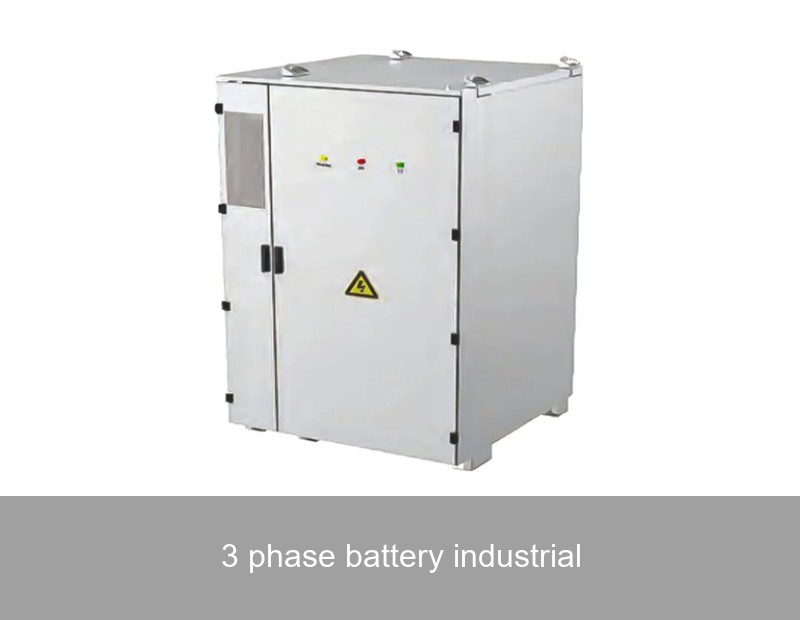
Imagine a humming factory floor. Machines are operating at peak efficiency, production lines are flowing seamlessly, and then—a momentary grid dip. In the past, this might have caused costly stoppages, damaged equipment, and wasted materials. Today, forward-thinking industrial operators have a powerful solution: the industrial 3 phase battery system. This isn't just a backup power source; it's an intelligent energy management hub that stabilizes your entire electrical infrastructure, unlocks significant savings, and future-proofs your operations. As a global leader in advanced energy storage since 2005, Highjoule has been at the forefront of designing and deploying these critical systems across Europe and North America, empowering businesses to take control of their power.
Table of Contents
- The Challenge: Industrial Power Isn't Just About Outages
- The Solution: How 3 Phase Battery Systems Work
- Key Benefits Beyond Backup
- A Real-World Case: Manufacturing in Germany
- Choosing the Right System: What to Look For
- Highjoule's Role: From Assessment to Ongoing Support
- The Future Outlook for Industrial Energy
The Challenge: Industrial Power Isn't Just About Outages
For industrial facilities, power problems are multi-faceted. The primary concern is, of course, a complete blackout. But more insidious and often more costly are power quality issues—voltage sags, swells, harmonics, and phase imbalances. These are particularly disruptive for sensitive CNC machinery, robotic arms, process control systems, and data centers. A 2022 report by the U.S. Department of Energy highlighted that power disturbances cost U.S. industry an estimated $150 billion annually. In Europe, aging grid infrastructure and the variable nature of renewable energy integration are creating new stability challenges.
Furthermore, with the global shift towards time-of-use (TOU) tariffs and demand charges based on peak power consumption, simply drawing power from the grid is becoming a major operational expense. Facilities need a way to smooth out their demand profile and avoid punitive charges.

This is the phenomenon: industries are caught between rising energy costs, increasing grid instability, and ambitious sustainability goals. The data is clear—relying solely on the traditional grid is a financial and operational risk.
The Solution: How 3 Phase Battery Systems Work
A 3 phase battery energy storage system (BESS) is specifically engineered to integrate with the three-phase alternating current (AC) power that fuels industries. Unlike a simple single-phase home battery, it manages all three phases simultaneously, ensuring balanced power delivery and protection for the entire facility.
At its core, the system consists of:
- Battery Modules: High-density lithium-ion (like LiFePO4 for enhanced safety and longevity) or other advanced chemistry cells that store DC electricity.
- 3 Phase Inverter/Charger: The intelligent heart of the system. It converts DC from the batteries to stable, synchronized 3-phase AC for your facility, and vice-versa for charging. It also performs critical functions like power factor correction.
- Energy Management System (EMS): The brain. This software platform continuously monitors grid conditions, energy prices, and facility demand. It makes real-time decisions to charge, discharge, or hold based on predefined strategies (e.g., peak shaving, self-consumption of solar).
Think of it as a sophisticated "energy shock absorber" and "financial optimizer" for your plant, working 24/7.
Key Benefits Beyond Backup: The PAS Framework in Action
Let's break down the tangible value using the Problem-Agitate-Solution (PAS) framework.
| Problem | Agitation (The Cost/Risk) | Solution (3 Phase BESS) |
|---|---|---|
| High Peak Demand Charges | Utility bills are inflated by short spikes in power use, sometimes accounting for 30-50% of the total bill. | Peak Shaving: The system discharges during your facility's short, high-power periods, capping grid draw and slashing demand charges. |
| Unstable Grid Power | Micro-outages and sags cause production downtime, scrap material, and potential equipment damage worth tens of thousands per event. | Voltage Support & UPS-Grade Backup: Provides instantaneous power to bridge short dips and seamless transition to backup for longer outages, protecting critical processes. |
| Rising Time-of-Use Rates | Operating during high-price periods erodes profit margins. | Energy Arbitrage: Store energy when grid prices are low (e.g., at night), use it when prices are high. |
| Sustainability Goals | Carbon footprint reduction targets are hard to meet with grid-only power, which may have a high fossil fuel mix. | Renewables Integration: Store excess solar or wind energy generated on-site for use when the sun isn't shining or wind isn't blowing, maximizing green self-consumption. |
A Real-World Case: Manufacturing in Germany
Let's look at a concrete example. A mid-sized automotive parts manufacturer near Stuttgart, Germany, was facing steep Netzentgelte (grid fees) based on its peak power demand and wanted to integrate a large rooftop solar PV array. Their challenge was solar overproduction at midday and high power draws during machine start-up cycles in the early morning.
Highjoule deployed a custom 500 kWh / 250 kW 3 phase battery system integrated with their existing infrastructure. The EMS was programmed with a dual strategy: maximize self-consumption of solar and aggressively shave peak demand.
- Demand Charge Reduction: Peak power draw from the grid was reduced by 22%, leading to a direct 18% reduction in overall grid fee costs.
- Solar Self-Consumption: Increased from 35% to over 80%, dramatically reducing payback time for their solar investment.
- Power Quality: Eliminated recurring issues with voltage sags affecting precision welding robots, reducing scrap rates by an estimated 2%.
- ROI: The combined savings project a full return on investment in under 7 years, with a system lifespan exceeding 15 years.
This case, mirrored by many across our portfolio, shows the system paying for itself while adding resilience.
Choosing the Right System: Key Technical Considerations
Not all 3 phase battery systems are created equal. For an industrial application, you must look beyond basic specs.
- Power (kW) vs. Energy (kWh): Power determines how much load you can support at once (critical for peak shaving). Energy defines how long you can support that load (critical for backup duration). Sizing them correctly is paramount.
- Scalability: Can the system start at 200 kWh and be easily expanded to 1 MWh as your needs grow? Highjoule's modular platform architecture is built for this.
- Grid Services Capability: In some markets (like parts of the U.S. or via EU balancing mechanisms), advanced systems can generate revenue by providing frequency regulation to the grid. This is a sophisticated feature offered by providers like Highjoule.
- Safety & Compliance: Look for UL 9540 (US) or equivalent IEC certifications for the entire system, not just components. Robust thermal management and fire suppression design are non-negotiable.
Highjoule's Role: Your Partner from Assessment to Ongoing Support
At Highjoule, we don't just sell hardware; we deliver a comprehensive energy resilience strategy. Our process begins with a detailed site assessment and energy audit, analyzing your load profiles, utility bills, and operational goals. Using this data, our engineering team designs a system with a clear financial model, projecting your savings and ROI.
Our flagship H-Series Industrial BESS is a prime example of this tailored approach. It features a modular, containerized or skid-mounted design for easy deployment, a high-efficiency 3-phase inverter with advanced grid-forming capabilities, and our proprietary JouleOS™ Energy Management Platform. JouleOS™ doesn't just control the battery; it provides real-time visibility, customizable automation strategies, and remote monitoring—giving you complete command over your energy ecosystem.
Our service includes professional installation, grid interconnection support, and long-term performance monitoring and maintenance plans, ensuring your system delivers value for decades.
The Future Outlook: Where is Industrial Energy Storage Heading?
The trend is clear. As noted by the International Energy Agency (IEA), energy storage is set to be the keystone of the global clean energy transition, with grid-scale applications leading growth. For industries, the 3 phase battery system will evolve from a specialized tool to a standard component of any facility's infrastructure. We are moving towards integrated microgrids where solar, storage, and intelligent control work as one autonomous entity, capable of islanding from the grid during outages or price spikes.

With technologies like vehicle-to-grid (V2G) for industrial fleets on the horizon, the industrial site itself becomes a proactive node in a more resilient and sustainable energy network.
Ready to See Your Blueprint?
The data is compelling, the technology is proven, and the financial case is stronger than ever. What would a detailed analysis of your facility's load profile reveal about your potential savings and risk exposure? Could your operations become not only more resilient but also a contributor to a more stable grid? We invite you to start that conversation.
 Inquiry
 Online Chat