


Why a 3 Phase Battery Storage System is the Smart Choice for Modern Energy Needs
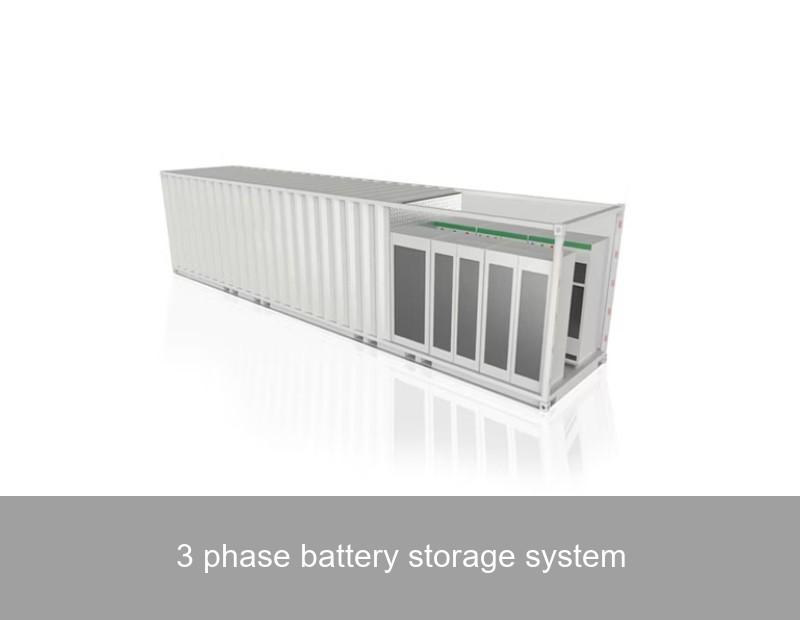
Have you ever wondered how large homes with swimming pools, bustling workshops, or entire commercial buildings can effectively harness solar power and achieve energy independence? The answer often lies not just in having batteries, but in having the right 3 phase battery storage system. Unlike single-phase systems designed for typical household loads, three-phase power is the standard backbone of commercial, industrial, and larger residential properties, especially in Europe and the US. Integrating a battery storage solution that natively speaks this language of power is crucial for efficiency, stability, and true scalability. As a leader in advanced energy storage, Highjoule has been engineering intelligent 3-phase solutions since 2005, helping businesses and communities build a resilient and sustainable energy future.
Table of Contents
What is a 3 Phase Battery Storage System?
Let's break it down simply. The electrical grid delivers power in waves. Single-phase power, common in smaller homes, uses one alternating current (AC) wave. A 3 phase battery storage system, however, is designed to work with a three-phase electrical supply, which uses three separate AC waves, evenly spaced, to create a constant and powerful flow of energy.
Think of it like a bicycle engine versus a high-performance car engine. A single-cylinder bike engine (single-phase) has pulses of power with gaps in between. A smooth, multi-cylinder car engine (three-phase) delivers continuous, balanced power. For properties with heavy-duty equipment, large HVAC systems, or significant on-site generation like a sizable solar array, this balanced and continuous power is not a luxury—it's a necessity.
A true three-phase battery system, such as Highjoule's H-Series Commercial ESS, is built from the ground up to manage and interact with all three phases intelligently. It doesn't just attach a single-phase battery to a three-phase board; it ensures energy can be stored from and discharged to any phase, maintaining the critical balance of the entire electrical system.
Why 3-Phase Power Matters for Your Property
If your property receives a three-phase supply from the grid, it's for a reason. This setup is the standard for:
- Commercial & Industrial Facilities: Manufacturing plants, data centers, workshops with heavy machinery.
- Large Residential Properties: Estates, homes with electric vehicle chargers, pool heaters, and extensive amenities.
- Agricultural Operations: Farms with irrigation pumps, cooling systems, and processing equipment.
- Community & Microgrid Projects: Where stable, scalable power distribution is paramount.
Installing a single-phase storage system on such a property is inefficient and can even cause phase imbalance—where one phase becomes overloaded while others are underutilized. This imbalance can lead to inefficiencies, potential equipment damage, and higher utility costs. A dedicated 3 phase battery storage system acts as a central hub, dynamically managing energy across all three legs to keep everything running smoothly.

Credit: Photo by American Public Power Association on Unsplash. Commercial and industrial sites with three-phase power benefit immensely from balanced, three-phase energy storage.
Key Benefits of a 3 Phase Battery System
Upgrading to an intelligent three-phase storage solution delivers tangible advantages that go beyond simple backup.
| Benefit | Description | Impact |
|---|---|---|
| Load Balancing | Automatically redistributes power between phases in real-time. | Prevents transformer overload, reduces grid stress, and avoids penalty fees from utilities for imbalance. |
| High-Power Capability | Designed to deliver and absorb large amounts of power simultaneously across three phases. | Can start large motors (e.g., for HVAC or compressors) and support rapid EV charging without flickering lights or tripping breakers. |
| Maximized Self-Consumption | Captures excess solar generation from any phase and stores it for use on any other phase. | Dramatically increases the use of your own renewable energy, often boosting solar self-consumption rates to over 80%. |
| Enhanced Resilience | Provides seamless backup power for the entire property, not just select circuits. | Keeps critical three-phase operations running during grid outages, protecting productivity and revenue. |
| Future-Proofing | Built-in scalability and compatibility with microgrid controls. | Easily expand storage capacity or integrate into virtual power plant (VPP) programs for additional revenue streams. |
A Real-World Case Study: The German Bakery
Let's look at a concrete example from Bavaria, Germany. A mid-sized artisan bakery with a 100 kWp solar rooftop system faced a classic challenge: their ovens, chillers, and mixers ran on three-phase power. Their solar production peaked at midday, but their highest energy consumption was in the early morning (baking) and had a secondary peak in the afternoon. They were exporting a huge amount of solar energy to the grid at low feed-in tariffs, only to buy expensive grid power during their peak hours.
The Solution: Highjoule installed a tailored 3 phase battery storage system—the H-Series 50 kWh unit—integrated with their existing solar inverters and a smart energy management system (EMS).
The Data-Driven Results (12-month period):
- Self-Consumption Rate: Increased from 35% to 88%.
- Grid Energy Purchased: Reduced by 68%.
- Peak Demand Charges: Lowered by approximately 40% through strategic battery discharge during short, high-power periods.
- ROI Timeline: Projected payback period of under 7 years, factoring in German energy prices and available incentives.
The bakery now operates its dough mixers and deck ovens primarily on its own solar-stored power, ensuring a stable three-phase supply that is immune to grid fluctuations. This case exemplifies the perfect marriage of renewable generation and sophisticated, phase-aware storage. For more on the importance of demand charge management, see this resource from the U.S. Department of Energy.
Choosing the Right System: Highjoule's Integrated Approach
Not all systems labeled "three-phase" are created equal. The key is true three-phase management at the battery inverter level. Highjoule's solutions are designed with this core principle.
Our H-Series Commercial and Industrial ESS features a modular, rack-mounted design that can be scaled from 30 kWh to over 1 MWh. Its core intelligence lies in the proprietary TriPhase Controller™, which continuously monitors load and generation on each individual phase and directs the battery's power flow accordingly. This ensures optimal balance and protects your sensitive equipment.
Furthermore, our systems come with the Highjoule Energy OS, a cloud-based platform that provides real-time monitoring, customizable charge/discharge schedules based on time-of-use tariffs, and even participation in grid flexibility services. This turns your storage asset from a cost center into a smart, revenue-generating tool. You can learn more about grid services from independent authorities like NREL.

Credit: Photo by Andreas Gücklhorn on Unsplash. Modern, scalable battery storage systems like Highjoule's H-Series can be seamlessly integrated into commercial settings.
Services That Complete the Picture
Highjoule provides more than just hardware. We offer a full suite of services including:
- Feasibility & Design: Our experts analyze your load profiles, solar generation, and utility rates to design the optimal system size and configuration.
- Grid Compliance Support: Navigating interconnection agreements and utility requirements, particularly for three-phase systems, can be complex. We guide you through it.
- Professional Installation & Commissioning: Certified technicians ensure your system is installed safely and performs to specification from day one.
- Ongoing Monitoring & Support: Proactive system health checks and remote troubleshooting guarantee long-term performance and peace of mind.
The Future is Three-Phase
As we move towards electrification of transport and heating, the demand for robust, three-phase capable energy infrastructure will only grow. The integration of 3 phase battery storage systems is no longer a niche application but a critical component for any forward-thinking business, large estate, or community project aiming for sustainability, resilience, and cost control.
Is your property's three-phase power supply fully optimized to handle tomorrow's energy challenges and opportunities today?
 Inquiry
 Online Chat