


Maximizing Your Solar Investment: A Deep Dive into Eficiencia Placas Solares
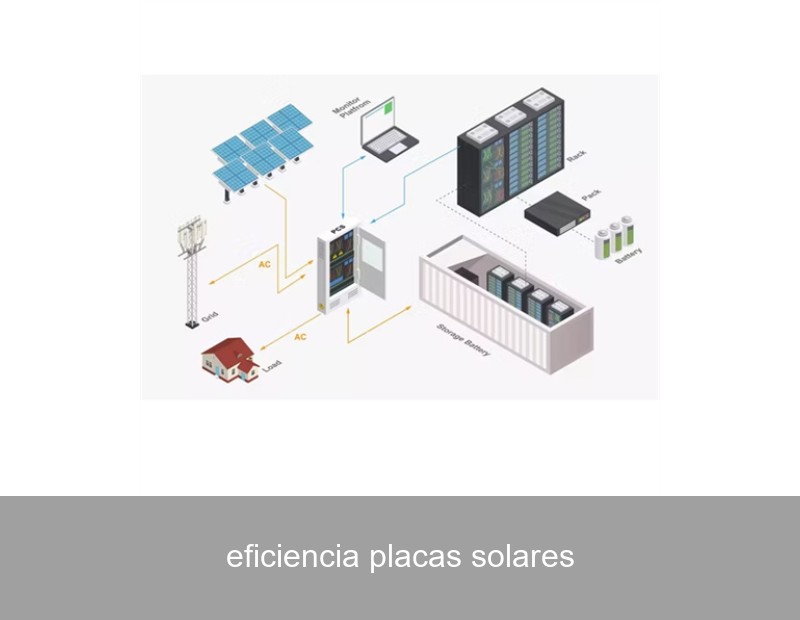
You've made the smart decision to invest in solar panels. The sun is shining, the panels are on your roof, and you're ready to reap the benefits of clean, free energy. But are you truly getting the most out of your system? The gap between the theoretical power of your solar panels and the usable electricity in your home is where the critical concept of solar panel efficiency comes into play. It's not just about the panels themselves; it's about the entire ecosystem that captures, stores, and manages that energy. In this article, we'll explore how understanding and optimizing eficiencia placas solares can transform your energy independence, especially when paired with intelligent energy storage.
What Does "Eficiencia Placas Solares" Really Mean?
In simple terms, solar panel efficiency is the measure of a panel's ability to convert sunlight into electricity. A panel with 22% efficiency will convert 22% of the sun's energy hitting its surface into electrical power. While lab ratings under Standard Test Conditions (STC) are important for comparison, they tell only part of the story. The true eficiencia of your solar installation is its annual energy yield – the total kilowatt-hours it delivers to your home or business over the year, considering real-world factors.
These factors include:
- Temperature Coefficient: Most panels lose efficiency as they get hotter. A cool, sunny day can often produce more power than a scorching one.
- Shading and Soiling: Even partial shading from a chimney or dust accumulation can disproportionately reduce output.
- Inverter Efficiency: The inverter, which converts DC from panels to AC for your home, has its own efficiency curve, typically between 95-99%.
- System Design and Orientation: The tilt, azimuth (direction), and wiring setup are foundational to performance.
The Real-World Gap: Why Your System's Efficiency is More Than a Panel Rating
Let's talk numbers. Imagine a European household with a 10 kWp solar array. Based on panel specs alone, they might expect around 10,000 kWh of annual production. However, due to the factors above, real production might be closer to 8,500 kWh. That's a 15% loss right off the bat. But here's the kicker: without storage, a typical home might only directly use 30-50% of that produced energy, exporting the rest to the grid at a lower price. This drops the effective utilization efficiency of your investment to a startlingly low level.
The phenomenon is clear: peak solar production happens midday, while peak energy consumption for most families occurs in the morning and evening. This temporal mismatch is the single biggest drain on your system's real-world efficiency.

Image Source: Unsplash - Illustrative representation of production vs. consumption curves.
Closing the Efficiency Loop: The Indispensable Role of Energy Storage
This is where the conversation about eficiencia placas solares evolves. To truly maximize efficiency, you must address the "when" of energy use, not just the "how much." A battery energy storage system (BESS) acts as a reservoir for your solar harvest, allowing you to store excess midday energy for use during high-demand, high-cost evening hours.
The impact is transformative:
| Metric | Without Storage | With Intelligent Storage |
|---|---|---|
| Self-Consumption Rate | ~30-50% | >80-95% |
| Grid Dependence | High (especially evenings) | Minimal to None |
| ROI on Solar Investment | Slower (5-10 years) | Accelerated (due to higher utilization) |
| Resilience | Vulnerable to grid outages | Backup power during outages |
Case Study: A Spanish Winery's Journey to 95% Self-Consumption
Let's look at a concrete example from La Rioja, Spain. A medium-sized winery installed a 150 kWp solar system to power its cooling facilities, irrigation, and bottling line. Despite significant production, their grid bills remained high because critical refrigeration ran at night.
The Solution: They integrated a Highjoule Industrial ESS-500 battery system with a capacity of 500 kWh. The system's intelligent energy management software was programmed to prioritize charging the batteries during peak solar hours and discharging during their high-tariff operational periods.
The Data-Driven Results (12-month period):
- Solar Self-Consumption Rate: Increased from 41% to 94%.
- Grid Energy Purchased: Reduced by 82%.
- Peak Demand Charges: Reduced by 73% through load-shaving.
- Total Energy Cost Savings: €48,000 annually, projecting a full system payback in under 6 years.
This case, documented in part by the International Renewable Energy Agency (IRENA) in broader industry reports, showcases that true solar efficiency is achieved at the system level, not just the panel level.
How Highjoule's Smart Systems Elevate Solar Efficiency
At Highjoule, we view the solar panel as the first, crucial component in a symphony of energy optimization. Our role is to provide the intelligent backbone that makes the entire system smarter and more efficient. Founded in 2005, we've dedicated nearly two decades to perfecting this integration.
Our product suite is designed to directly address the efficiency gaps discussed:
- Highjoule HEM (Home Energy Manager): This is the brain of the system. It doesn't just manage battery charge/discharge; it learns your consumption patterns, integrates weather forecasts, and dynamically optimizes energy flow between solar panels, battery, home loads, and the grid. It ensures every kilowatt-hour you produce is used in the most cost-effective way possible.
- Residential & Commercial Battery Systems: Our lithium iron phosphate (LFP) based batteries, like the Residential H-Series, are built for safety, longevity (10,000+ cycles), and high round-trip efficiency (over 97%). This means minimal energy is lost in the storage process itself.
- Advanced Inverter Technology: Our hybrid inverters are engineered for seamless DC coupling, which can be more efficient than AC coupling for new installations, reducing conversion losses.

Image Source: Unsplash - Modern home energy system.
For larger-scale applications, our Microgrid Controller can orchestrate multiple energy sources (solar, wind, generators) and storage systems to achieve unparalleled levels of efficiency and resilience for communities or industrial campuses, a topic further explored by resources like the National Renewable Energy Laboratory (NREL).
The Future of Solar Efficiency: Integration and Intelligence
The next frontier for eficiencia placas solares lies in deeper integration with other home systems and the grid. Imagine your EV charger communicating with your Highjoule system to charge only when solar production is abundant, or your system automatically participating in grid-balancing programs to earn revenue, all without compromising your comfort. This level of AI-driven, predictive energy management is where we are headed, turning a passive solar array into an active, profit-optimizing asset.
So, as you consider your solar journey, we leave you with this question: Is your current or planned solar system designed to capture energy, or is it engineered to truly maximize the value and independence that energy provides? The difference lies in the intelligence behind the panels.
 Inquiry
 Online Chat