


3 Phase On Grid Solar Inverter: The Heart of Modern Commercial & Industrial Solar Systems
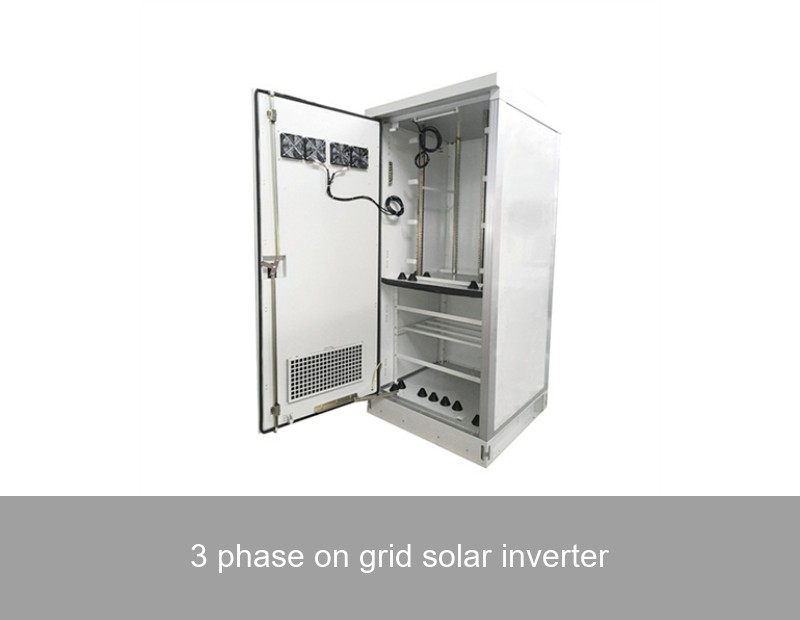
If you're managing a business, factory, farm, or any sizable property, you've likely explored solar to cut energy costs and boost sustainability. But when your power needs are high and your electrical supply is three-phase, the choice of inverter becomes critical. This is where the 3 phase on grid solar inverter steps in—a sophisticated piece of technology that's far more than just a simple converter. It's the intelligent core of a robust solar energy system, ensuring stability, efficiency, and seamless integration with the grid. Let's demystify this key component and explore why it's essential for larger-scale solar success, especially with partners like Highjoule, a global leader in advanced energy storage since 2005.
Table of Contents
- What is a 3 Phase On-Grid Solar Inverter?
- Why Choose a 3 Phase System? The Key Advantages
- Key Features to Look For in a Modern Inverter
- Highjoule's Integrated Approach: Beyond the Inverter
- The Future of Three-Phase Solar Technology
What is a 3 Phase On-Grid Solar Inverter?
In simple terms, a 3 phase on grid solar inverter converts the direct current (DC) electricity generated by your solar panels into alternating current (AC) that can be used by your business and fed back into the public electricity grid. The "three-phase" part refers to the type of AC power it produces. Unlike single-phase power (common in homes), which uses one alternating wave, three-phase power uses three concurrent waves, delivering power more consistently and with less strain on the system. This is the standard for commercial, industrial, and agricultural facilities because it can handle much higher loads efficiently—from heavy machinery and refrigeration units to extensive lighting and HVAC systems.
Think of it like water flow: a single-phase system is a single hose, while a three-phase system is three hoses working together, providing a steadier, more powerful, and more reliable stream of energy.
Why Choose a 3 Phase System? The Key Advantages
Upgrading or installing a three-phase solar solution isn't just about compatibility; it's about performance and optimization. Here’s why it matters for your bottom line:
- Balanced Load & Grid Stability: It evenly distributes the electrical load across three phases, preventing "phase imbalance" which can cause inefficiencies, equipment stress, and even penalties from some utilities. This is crucial for grid stability, especially as more renewables come online.
- Higher Power Output & Efficiency: Three-phase systems can handle higher power capacities with thinner cables and lower energy losses, making them more efficient for systems typically above 10kW—the domain of most businesses.
- Future-Proofing & Energy Independence: A quality 3-phase inverter is the perfect foundation for adding battery storage or creating a grid-interactive microgrid. This allows you to store excess solar energy for use at night or during peak tariff periods, maximizing self-consumption and protecting against outages.

Credit: Unsplash - A commercial-scale solar array requires a robust 3-phase inverter system.
Key Features to Look For in a Modern Inverter
Not all inverters are created equal. When selecting a 3 phase on grid solar inverter, prioritize these capabilities:
| Feature | Benefit for Your Business |
|---|---|
| High Peak Efficiency (>98%) | Maximizes the energy harvest from your panels, turning more sunlight into usable electricity. |
| Advanced Grid Support Functions (VPP-ready, Frequency-Watt) | Ensures compliance with strict grid codes (like in Germany or California) and enables participation in virtual power plants for additional revenue. |
| Multiple MPPT Trackers | Allows different roof sections or panel orientations to perform independently, avoiding losses from shading or mismatch. |
| Smart Monitoring & Remote Management | Gives you real-time and historical insights into system performance, energy production, and savings via a user-friendly platform. | Hybrid or Storage-Ready Design | Seamlessly integrates with battery systems like Highjoule's HPS Series for true energy resilience. |
Real-World Impact: A German Manufacturing Case Study
Let's move from theory to practice. A mid-sized automotive parts supplier in Bavaria, Germany, faced rising energy costs and ambitious corporate sustainability targets. Their facility operated on a three-phase supply with a peak load of 250kW.
The Challenge: Reduce grid dependency, manage peak demand charges, and ensure a stable power supply for precision machinery.
The Solution: A 280kWp solar PV system was installed, centered around high-efficiency 3 phase on grid solar inverters. The system was designed with future expansion in mind and integrated with a Highjoule HPS-150 battery storage system (150kWh capacity).
The Data-Driven Results (12-month period):
- Annual Solar Generation: 265 MWh
- Self-Consumption Rate Increased from 35% to 78% with battery buffering.
- Peak Grid Demand Reduced by 40%, slashing capacity charges.
- CO2 Emissions Offset: Equivalent to 180 metric tons annually.
- ROI Period: Projected at 6.2 years, thanks to Germany's EEG legislation and intelligent energy management.
This case highlights how the right inverter technology, coupled with smart storage, transforms solar from a simple supplement to a strategic energy management asset.
Highjoule's Integrated Approach: Beyond the Inverter
At Highjoule, we understand that the inverter is just one part of a high-performing energy ecosystem. Since 2005, we've evolved from a storage specialist to a provider of complete, intelligent power solutions. For our commercial and industrial clients across Europe and North America, this means we offer:
- Compatible, High-Performance Inverter Solutions: We supply and integrate top-tier 3 phase on grid solar invertors known for their reliability and grid compliance, ensuring they work perfectly with our storage systems.
- The Highjoule Energy Management System (EMS): This is the true brain. Our proprietary EMS intelligently dispatches solar power, decides when to charge or discharge the battery based on weather forecasts and tariff schedules, and can even aggregate systems to participate in grid services markets.
- Scalable Battery Storage (HPS Series): Our flagship Highjoule HPS battery systems are built with lithium iron phosphate (LFP) chemistry for safety and longevity. They are modular, scaling from tens of kWh to MWh-scale projects, perfect for both microgrid and large-scale industrial applications.
- End-to-End Service: From initial consultancy and system design to installation support, commissioning, and long-term monitoring via our Highjoule Portal, we partner with you for the lifecycle of your investment.
Credit: Unsplash - A modern containerized battery storage unit, similar to Highjoule's scalable solutions.
The Future of Three-Phase Solar Technology
The role of the 3 phase on grid solar inverter is rapidly evolving from a passive converter to an active grid citizen. With the global push for decarbonization, future inverters will need to provide even more sophisticated grid-forming and black-start capabilities, essentially helping to stabilize the grid during high penetration of renewables. The integration with artificial intelligence for predictive energy management and the rise of sector coupling (linking electricity, heat, and transport) will place the inverter at the center of a fully digitalized energy landscape.
Companies like Highjoule are already pioneering these integrations, ensuring that today's solar and storage investment remains viable and valuable for decades to come.
Ready to Power Your Business with Intelligent Solar?
Choosing the right 3 phase on grid solar inverter and system partner is a complex but crucial decision. It's about more than hardware—it's about a long-term strategy for cost control, sustainability, and operational resilience. What specific energy challenge—be it unpredictable demand charges, grid reliability concerns, or a clear sustainability target—is driving you to consider solar today, and how could a truly integrated solution change the game for your operation?
 Inquiry
 Online Chat