


3 Phase Solar Inverter Off-Grid: Your Key to Robust, Independent Power
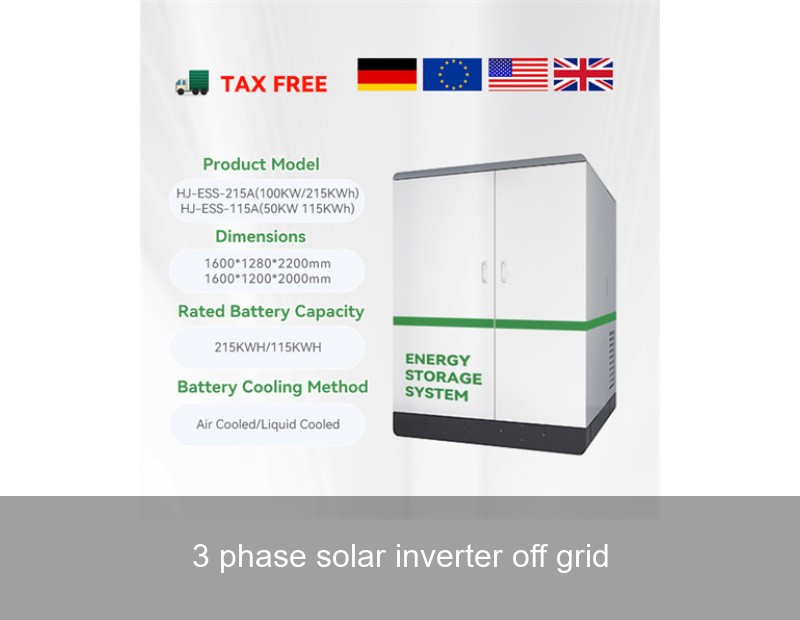
Imagine a farm, a remote workshop, or a large home completely disconnected from the main utility grid, yet powered reliably by the sun. This isn't a futuristic dream; it's the reality enabled by a critical piece of technology: the 3 phase solar inverter off-grid system. Unlike single-phase systems common in residential settings, a three-phase off-grid inverter manages power across three alternating currents, providing the stable, high-power foundation needed for larger-scale energy independence. For businesses, agricultural operations, and remote communities primarily in Europe and the US, mastering this technology is the first step toward true energy resilience and sustainability.
Table of Contents
What is a 3 Phase Off-Grid Solar Inverter?
Let's break it down. An off-grid solar inverter's primary job is to convert the direct current (DC) electricity generated by your solar panels into the alternating current (AC) that powers your appliances and machinery. The "off-grid" part means it operates without any connection to the public electricity grid, relying instead on solar panels and battery storage. Now, the "3 phase" aspect refers to how that AC power is delivered.
Think of it like a multi-lane highway. A single-phase system is a one-lane road—it works, but it has a limit to how much power (traffic) it can handle at once. A 3 phase solar inverter off-grid system creates three synchronized lanes of power. This design allows it to efficiently run larger equipment (like industrial motors, heavy pumps, and commercial HVAC systems) that are inherently designed for three-phase power, which is the standard for commercial and industrial infrastructure in Europe and North America.

Image Source: Unsplash - Representative image of a large-scale solar installation.
Why Choose Three-Phase for Off-Grid? Key Advantages
Opting for a three-phase off-grid solution isn't just about compatibility; it's about performance, efficiency, and future-proofing. Here’s why:
- Higher Power Capacity & Balanced Loads: Three-phase systems can deliver more power without requiring excessively thick, expensive cables. They naturally balance the electrical load across the three phases, leading to smoother operation and less stress on the system components.
- Efficient Operation of Heavy Machinery: Industrial motors start and run more efficiently on three-phase power, with higher torque and less vibration. This translates to lower energy losses and longer equipment lifespan—a critical factor for off-grid operations where every watt-hour counts.
- System Scalability: As your energy needs grow, a three-phase architecture is easier and more cost-effective to scale up. You can add more solar panels, batteries, or even a backup generator without overhauling your core inverter setup.
- Grid-Forming Capability: High-quality 3 phase off-grid inverters, like those from Highjoule, act as a stable "grid" themselves. They create a perfect sine wave, ensuring sensitive laboratory equipment, medical devices, and IT servers operate safely and reliably, even in the most remote locations.
Essential Components of a Robust Off-Grid System
A successful 3 phase solar inverter off-grid installation is more than just the inverter. It's a meticulously integrated ecosystem:
| Component | Role in the System | Highjoule's Solution |
|---|---|---|
| 3 Phase Off-Grid Inverter | The brain and heart. Converts DC to AC, manages power flow, and forms the stable microgrid. | Highjoule's HPS Series features advanced hybrid inverters with high surge capacity for motor starts and intelligent grid-forming technology. |
| Solar PV Array | The primary fuel source. Captures sunlight and generates DC electricity. | Highjoule provides system design to optimize panel configuration for your location and load profile. |
| Battery Energy Storage System (BESS) | The energy bank. Stores excess solar energy for use at night or during low-sun periods. | Our integrated HJ Cube lithium-ion battery systems offer high cycle life, scalable capacity, and seamless communication with the inverter for optimal performance. |
| Charge Controller | Protects the batteries by regulating the charging voltage and current from the solar panels. | Often built into our inverter or system design for a streamlined, efficient package. |
| Backup Generator (Optional) | Provides assurance during extended periods of poor weather. A well-integrated generator acts as a last-resort backup. | Highjoule systems can include automatic generator start/stop controls, ensuring fuel efficiency and seamless backup power. |
Real-World Application: A European Agri-Business Case Study
Let's move from theory to practice. A dairy farm in rural Bavaria, Germany, faced unreliable grid power and sought energy independence to secure its milking operations, cooling tanks, and ventilation systems. Their machinery ran on 400V three-phase power.
The Challenge: Power any interruption would disrupt the milking schedule and risk spoiling milk, leading to significant financial loss. The farm needed a system that could handle high starting currents of industrial motors and provide 24/7 reliability.
The Solution: Highjoule engineered a turnkey 3 phase solar inverter off-grid system featuring:
- 3x HPS-15kW inverters configured for three-phase output.
- A 45 kWp ground-mounted solar array.
- A 120 kWh HJ Cube battery storage bank.
- An integrated diesel generator with automatic start for long winter months.
- 99.8% Power Availability: The farm has achieved near-total energy autonomy, with the generator contributing less than 0.2% of annual energy.
- Annual Savings: €18,500 saved on grid electricity and avoided losses from spoilage.
- ROI: Projected system payback in under 7 years, factoring in German energy price trends (Fraunhofer ISE, 2023).
- Carbon Reduction: Eliminates approximately 35 tonnes of CO2 emissions annually.

Image Source: Unsplash - Representative image of a modern, technology-driven farm.
Choosing the Right System: Highjoule's Integrated Approach
Selecting a 3 phase solar inverter off-grid system is a significant investment. At Highjoule, we believe it's not about selling a box, but about delivering guaranteed performance. Our process ensures your system is built to last:
- In-Depth Load Analysis: We don't guess. We analyze your specific equipment, starting surges, and 24/7 load profile to size every component correctly.
- Technology Agnostic Design: We select the best-in-class components that work together harmoniously, centered around our robust, self-developed inverter and BMS technology.
- Smart Energy Management: Our systems come with the Highjoule Energy OS, a monitoring platform that gives you real-time insights and control over your energy production, storage, and consumption, optimizing for efficiency and cost.
- Global Support & Warranty: With nearly two decades of experience, we provide comprehensive warranties and remote monitoring support from our centers in the EU and US, ensuring peace of mind wherever you are.
The Future of Off-Grid Power
The evolution of 3 phase solar inverter off-grid technology is leaning towards greater intelligence and integration. We're moving towards systems that can dynamically manage multiple energy sources (solar, wind, generator, grid if available) and even participate in virtual power plants. The core principle remains: creating self-sufficient, resilient power hubs that empower businesses and communities. As battery densities improve and AI-driven management becomes standard, the economic case for going off-grid will only strengthen (IEA, Energy Storage Outlook).
Is your business or project evaluating the leap to energy independence? What specific operational challenge—be it unreliable power, soaring energy costs, or a sustainability mandate—is driving you to explore a robust 3 phase off-grid solar solution today?
 Inquiry
 Online Chat