


Understanding Cymbet EnerChip Cost and Its Role in the Modern Energy Landscape
If you're an engineer, product designer, or tech enthusiast delving into the world of low-power electronics and the Internet of Things (IoT), you've likely asked the question: "Cymbet EnerChip, how much does it cost?" It's a logical starting point. However, as a product technology expert in the energy storage field, I'd suggest we reframe that inquiry. The more insightful question is: "What is the total value of a perpetually powered, maintenance-free device?" The answer takes us on a fascinating journey from microscopic solid-state batteries to the grid-scale systems that power our world, revealing a unified principle: intelligent energy management is key, whether you're powering a sensor or a factory.
What Exactly is an EnerChip?
Before discussing cost, let's clarify what we're talking about. Cymbet's EnerChip is not a traditional battery in the sense of a AA cell or a lithium-ion pouch. It's a family of solid-state, thin-film batteries that are often integrated directly onto a circuit board. Think of them as energy storage components, similar to capacitors but with much higher capacity and the ability to be recharged thousands of times. Their primary use case is in energy harvesting systems – devices that collect ambient energy from light, vibration, or RF waves. The EnerChip acts as a tiny, reliable reservoir, storing micro-energy bursts to provide steady, uninterrupted power to microcontrollers, sensors, and real-time clocks.

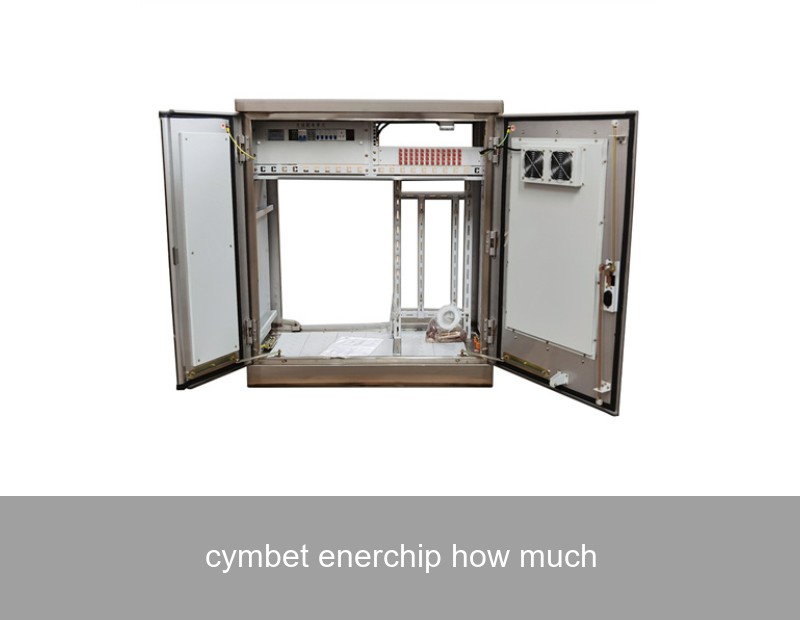
Image Source: Cymbet.com - Showcasing the integrated nature of EnerChip technology.
The Big Question: How Much Does a Cymbet EnerChip Cost?
Let's address the direct query. As of 2023-2024, a single Cymbet EnerChip CBC3150 (a common model with 50μAh capacity) might have a unit price in the range of $5 to $10 when purchased in low volumes from distributors. In higher volumes, this cost can decrease significantly. But here’s the crucial context: that number is almost meaningless in isolation.
Key Factors Influencing EnerChip Cost
- Capacity (μAh): Like any battery, higher capacity chips cost more.
- Integration Level: Bare die, packaged chip, or pre-integrated with power management (EnerChip CC)? The more features, the higher the price.
- Volume: Unit price for 1,000 pieces is vastly different from 100,000 pieces.
- Supply Chain & Market Dynamics: Global semiconductor and component availability directly impacts cost and lead time.
So, while we can quote a ballpark figure, the real evaluation is a Total Cost of Ownership (TCO) analysis. You're not just buying a battery; you're enabling a device that may never need a battery change, can be sealed against the environment, and reduces long-term labor and material waste. This shift from upfront cost to lifecycle value is a cornerstone of modern energy thinking.
Beyond the Chip: The True Cost of an Energy Harvesting System
An EnerChip is the heart, but it needs a supporting system: an energy harvester (solar PV cell, piezoelectric, etc.), power management circuitry, and the end device. The total Bill of Materials (BOM) for such a system might be $15-$30. The alternative? Using a primary (disposable) lithium battery costing $2. The choice seems obvious until you project costs over 10 years.
| Cost Component | Primary Battery System | Energy Harvesting (EnerChip) System |
|---|---|---|
| Initial BOM | $2 (battery) + $0 (simple circuit) | $8 (EnerChip) + $12 (harvester/PMIC) |
| 10-Year Maintenance | $20 (10 battery replacements @ $2) | $0 |
| Labor/Service Cost | High (site visits, disposal) | Negligible |
| Environmental Cost | High (10 batteries to landfill) | Very Low |
| Total 10-Year Cost | >$22 + significant labor | ~$20, fixed upfront |
Suddenly, the "expensive" EnerChip solution is competitive or cheaper, not to mention more reliable and sustainable. This principle of long-term value over short-term cost is exactly what guides our philosophy at Highjoule. While we operate at the other end of the capacity spectrum—providing megawatt-scale battery energy storage systems (BESS) for commercial and industrial applications—the core idea is identical. Our Highjoule H-Series modular BESS might have a higher initial investment than a diesel generator, but its 20-year lifespan, near-zero operational cost, and grid services revenue create a vastly superior TCO.
A Real-World Case Study: Precision Agriculture in California
Let's connect micro and macro with a concrete example. A major agri-tech company in California’s Central Valley deployed thousands of wireless soil moisture and nutrient sensors. Their first generation used lithium batteries, requiring a team to replace them every 18 months—a costly, disruptive process across vast fields.
The Shift: Their second-generation sensor design integrated a small photovoltaic cell with a Cymbet EnerChip for energy storage. The unit cost per sensor node increased by $15.
The Result:
- Eliminated all battery replacement labor, saving an estimated $250,000 over a 5-year period for their 5000-node network.
- Enabled more frequent data transmission, improving irrigation efficiency and boosting crop yield by an estimated 5%.
- Removed thousands of disposable batteries from the waste stream.
This case perfectly illustrates the TCO victory. The success of such distributed, smart sensor networks often relies on the stability of the larger power infrastructure. This is where companies like Highjoule contribute, providing behind-the-meter storage for the farm's processing and cooling facilities, ensuring the entire operation—from sensor to cold storage—runs on clean, resilient power. Our intelligent energy management software optimizes this flow, much like the power management IC optimizes energy for an EnerChip.
Scaling Up: When EnerChips Meet Megawatt-Hours
The thinking behind energy harvesting scales beautifully. Imagine a factory or a hospital. Instead of thousands of micro-sensors, you have HVAC systems, refrigeration, and critical loads. The "ambient energy" to be harvested isn't light or vibration—it's the sporadic over-generation from onsite solar panels, the energy wasted during grid frequency regulation, or the cost savings available by avoiding peak demand charges.
A Highjoule BESS, like our containerized MegaJoule Array, acts as the industrial-scale "EnerChip." It harvests and stores low-cost or free energy, then delivers it when it's most valuable and needed. The upfront cost is measured in hundreds of thousands of dollars, but the financial and operational returns are profound:
- Demand Charge Reduction: By discharging during short peak periods, facilities can cut a major portion of their utility bills. We've seen clients reduce peak demand by 30% or more.
- Energy Arbitrage: Buying and storing grid power when it's cheap (at night) to use when it's expensive (daytime).
- Backup Power: Providing seamless, instantaneous power during grid outages, ensuring continuity for businesses and microgrids.

Image Source: Unsplash - Representative image of a containerized BESS.
Choosing the Right Energy Solution for Your Application
So, how do you decide? The spectrum of energy storage is vast, but the decision framework is consistent.
Ask yourself:
Is my need in the microwatt to milliwatt range, for decades, with zero maintenance? Explore solid-state thin-film batteries like Cymbet's EnerChip. Research their applications in energy harvesting to see if it fits your design.
Is my need in the kilowatt to megawatt range, for load shifting, cost savings, and resilience for a business, factory, or community? This is the domain of advanced lithium-ion BESS providers like Highjoule. With nearly two decades of experience since 2005, we engineer systems that are not just battery racks, but intelligent, integrated power solutions. Our platforms come with the sophisticated monitoring and control needed to maximize your investment, whether you're in Europe facing volatile energy markets or in the US leveraging solar tax incentives.
Ultimately, "Cymbet EnerChip, how much?" is a gateway question. It leads to a deeper conversation about sustainability, reliability, and total cost of ownership. Whether you're designing the next groundbreaking IoT device or managing the energy strategy for a large campus, the principle remains: smart energy storage and management unlock true long-term value.
What is the single biggest energy reliability or cost challenge your project or organization is facing today, and have you evaluated how integrated storage could transform that equation?
 Inquiry
 Online Chat