


Understanding the 300W Solar Panel Price in Nigeria: A Gateway to Energy Independence
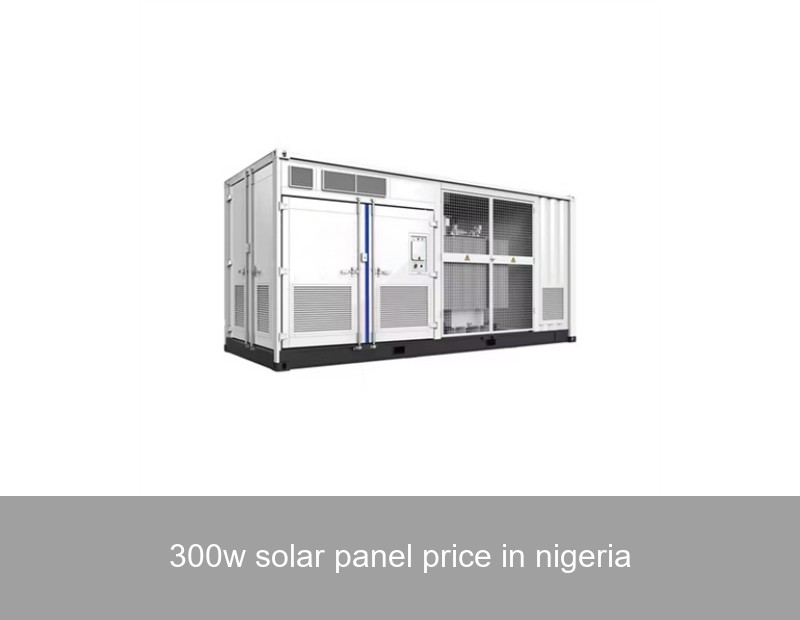
When researching solar energy solutions, a specific query like "300W solar panel price in Nigeria" is often the first step for homeowners and businesses. This search represents more than just a cost comparison; it's the beginning of a journey toward reliable, clean, and self-sufficient power. In markets like Nigeria, where grid instability is a common challenge, a 300W panel is a popular, versatile building block for systems ranging from small home setups to expansive commercial arrays. However, the true value isn't just in the panel's sticker price. It lies in the quality of the components, the intelligence of the system integration, and the long-term performance it delivers. As a global leader, Highjoule understands that sustainable power is about building resilient ecosystems, not just selling hardware.
Table of Contents
- The Real Cost Behind the 300W Solar Panel Price in Nigeria
- The Market Phenomenon: More Than Just a Panel
- Data Breakdown: System Costs vs. Long-Term Value
- Case Study: A Lagos SME's Transformation
- Expert Insights: Choosing the Right System Architecture
- Highjoule's Role in Advanced, Reliable Solar-Plus-Storage
- The Future of Solar in Emerging Markets
The Real Cost Behind the 300W Solar Panel Price in Nigeria
Let's address the headline figure first. A standalone 300W monocrystalline solar panel in Nigeria can range from roughly ₦80,000 to ₦150,000, depending on the brand, warranty, and efficiency rating. But here's the crucial point: this is only 20-30% of the total system cost. Focusing solely on this number is like buying a high-performance engine without the chassis, wheels, or transmission. To make that panel work, you need a compatible charge controller, a battery storage system, an inverter, cabling, and professional installation. The total investment for a functional 1.5kW to 3kW solar-plus-storage system, often starting with a few 300W panels, becomes the meaningful metric for budgeting.
The Market Phenomenon: More Than Just a Panel
Why is the 300W panel such a common unit of inquiry? Its popularity stems from a sweet spot in technology and application. It's powerful enough to charge significant battery banks, run essential appliances, and be scaled in arrays, yet its physical size remains manageable for rooftop installations. In Nigeria, where daily power needs are high but grid supply is low, consumers are smartly looking for scalable solutions. They start by researching the core component—the panel—but their ultimate need is for uninterrupted power. This is where the conversation must evolve from commodity pricing to integrated system performance and reliability.

Image Source: Unsplash. A scalable solar installation starts with quality panels but depends on a robust system design.
Data Breakdown: System Costs vs. Long-Term Value
To make an informed decision, one must look at the total cost of ownership. Let's compare a basic setup with a premium, integrated system like those Highjoule provides.
| Cost Component | Basic Generic System | Highjoule Optimized System | Key Difference |
|---|---|---|---|
| 4x 300W Panels (1.2kW) | ~ ₦400,000 | ~ ₦480,000 | Higher efficiency, longer linear warranty |
| Battery Storage (5kWh) | ~ ₦600,000 (Lead-acid) | ~ ₦1,200,000 (LiFePO4) | 3-4x longer lifespan, deeper discharge, compact size |
| Inverter/Charge Controller | ~ ₦200,000 (Basic PWM/Off-grid) | ~ ₦450,000 (Highjoule AIO Smart Inverter) | Grid-interactive, smart energy management, remote monitoring |
| Estimated Total (Ex. Install) | ~ ₦1,200,000 | ~ ₦2,130,000 | |
| Projected System Lifespan | 5-7 years (battery replacement needed) | 15+ years (with minimal degradation) | Superior Lifetime ROI |
As the table shows, the initial investment is higher for a premium system, but the lifetime value is dramatically superior. The frequent replacement cost of inferior batteries alone can make a "cheaper" system far more expensive over a decade.
Case Study: A Lagos SME's Transformation
Consider "Bella's Cuisine," a mid-sized restaurant in Victoria Island, Lagos. In 2022, they were spending ₦280,000 monthly on diesel for generators to cover 12 hours of daily grid outage. Their primary search was for "affordable solar panels," but they partnered with a Highjoule-certified installer for a holistic solution.
The Solution: A 9.6kW system using thirty-two 300W high-efficiency panels, coupled with a Highjoule H-Stack 20kWh lithium-ion battery system and a 10kW hybrid inverter. The system was designed to prioritize solar energy, use the grid when stable (and cheap), and seamlessly switch to battery storage during outages.
The Data-Driven Result: Within 8 months:
- Diesel consumption and costs reduced by 95%.
- Monthly energy savings: ₦266,000.
- Payback period calculated at under 4 years.
- Carbon footprint reduced by an estimated 42 tonnes annually.
This case underscores that the value is in the outcome—uninterrupted operations and lower total energy costs—not the per-panel price. The Highjoule H-Stack battery system's modular design also allows Bella's Cuisine to easily expand capacity as their business grows.
Expert Insights: Choosing the Right System Architecture
Based on thousands of global deployments, here is our guidance. Your system's brain is the inverter and energy management system, not the panels. Opt for a hybrid or all-in-one (AIO) inverter that can integrate multiple power sources. For batteries, lithium iron phosphate (LiFePO4) is the undisputed standard for safety, cycle life, and value in demanding climates like Nigeria's. Finally, ensure your provider offers remote monitoring—a feature central to Highjoule's EnergyOS platform. This allows you to track production, consumption, and system health in real-time, turning your power system into a smart, manageable asset.
Highjoule's Role in Advanced, Reliable Solar-Plus-Storage
At Highjoule, we provide the intelligence that makes hardware resilient. While we offer top-tier 300W+ solar panels, our core expertise is in integrated Battery Energy Storage Systems (BESS). For the Nigerian market and similar regions, our H-Stack residential/commercial series and scalable MicroGrid solutions are particularly relevant. These aren't just battery cabinets; they are pre-engineered power stations with built-in safety protocols, advanced thermal management, and seamless integration capabilities. Our EnergyOS software provides the layer of smart control, optimizing every kilowatt-hour from your solar panels, ensuring battery longevity, and giving you complete visibility and control over your energy ecosystem. This holistic approach delivers the reliability that businesses and families truly need.

Image Source: Unsplash. A modern LiFePO4 battery storage system, similar to Highjoule's H-Stack, is key for reliable solar energy.
The Future of Solar in Emerging Markets
The trajectory is clear. As battery costs continue to fall and AI-driven energy management becomes standard, solar-plus-storage will become the default, not the alternative. Markets like Nigeria are leapfrogging traditional grid infrastructure, much like they did with telecommunications. The future belongs to decentralized, intelligent microgrids and home systems that provide not just backup, but primary power. For more on global solar trends, you can refer to authoritative sources like the International Energy Agency (IEA) or the International Renewable Energy Agency (IRENA).
So, as you continue your research on the "300W solar panel price in Nigeria," we leave you with this question: What is the true cost of *not* having reliable power for your home or business over the next 15 years, and how can an intelligent, integrated system designed for resilience become your most valuable asset?
 Inquiry
 Online Chat