


Understanding the 30kVA Solar System Price in Nigeria: A Guide to Value and Performance
If you're researching a 30kVA solar system price in Nigeria, you're likely moving beyond basic backup power towards a comprehensive energy solution. The quoted price is more than just a number; it's a reflection of component quality, system design, and long-term value. In a market with frequent power outages and rising diesel costs, a 30kVA (approximately 30kW) solar hybrid system represents a pivotal investment for businesses, farms, and large residences seeking energy independence. Let's demystify the costs and explore what truly defines a reliable and high-ROI installation.
Table of Contents
The Real Price Breakdown of a 30kVA Solar System
Asking for the price of a 30kVA system is like asking for the price of a car—the range is vast. In Nigeria, you might encounter quotes from ₦15 million to ₦40 million or more. Why such a disparity? It stems from the core components and their specifications. A low quote may use generic batteries with short lifespans or inverters not suited for Nigeria's harsh voltage fluctuations and heat, leading to premature failure. A comprehensive, professional quote should transparently itemize costs for solar panels, inverters, batteries, balance of system (BOS), and professional installation.

Image: A commercial-scale solar installation. Source: Unsplash
What Drives the Final Cost?
- Solar Panels (PV Modules): Tier-1 monocrystalline panels are more efficient and durable, costing more upfront but yielding more power per square meter over 25+ years.
- Inverter & Charger: The heart of the system. A true 30kVA hybrid inverter must handle solar input, battery charging/discharging, and grid/generator synchronization seamlessly. Reliability here is non-negotiable.
- Battery Storage: This is often the largest cost driver. Lithium-ion (LiFePO4) batteries, while more expensive than lead-acid initially, offer 3-5x longer cycle life, faster charging, and zero maintenance, providing a lower total cost of ownership.
- Design & Installation: A system designed for your specific load profile and location by certified engineers will perform optimally. Cutting corners on installation can lead to safety hazards and underperformance.
Key Components Defining Cost and Quality
To understand value, we must look under the hood. A 30kVA system is a significant piece of infrastructure.
1. The Inverter: Brains and Brawn
A quality hybrid inverter does more than convert DC to AC. It intelligently prioritizes solar power, manages battery health, and provides grid-forming capabilities for stable power. Inferior inverters can struggle with Nigeria's grid instability, causing system shutdowns or even damage to connected equipment.
2. The Battery: Your Energy Reservoir
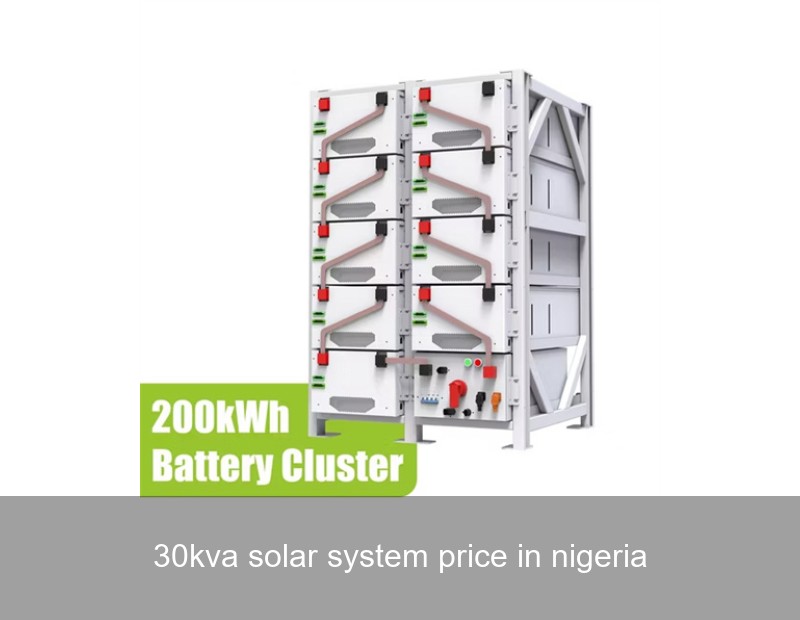
The storage capacity (measured in kWh) determines your backup duration. For a 30kVA system, you might pair it with 40kWh to 100kWh of storage. Highjoule's HyperStack LiFePO4 battery systems are engineered for commercial resilience. With modular design, built-in Battery Management Systems (BMS), and a lifespan exceeding 6000 cycles, they ensure that your "energy bank" delivers dependable power night after night, year after year, ultimately reducing the cost per cycle.
3. The Solar Array: Your Fuel Source
The number of panels needed depends on their wattage and your site's solar insolation. A well-designed array will maximize daytime self-consumption, directly powering operations and charging the battery, thereby minimizing reliance on the grid or generator.
| Component | Specification/Quality Tier | Impact on Price & Performance |
|---|---|---|
| Solar Panels | 10kW of Tier-1 Mono PERC (e.g., 25 x 400W) | Higher efficiency means fewer panels, less roof space, better low-light performance. |
| Hybrid Inverter | 30kVA True Hybrid (3-Phase) | Robust surge capacity for motors, seamless grid/generator transfer, advanced software. |
| Battery Storage | 50kWh Lithium-Ion (LiFePO4) | Single largest cost. High-cycle life chemistry like LiFePO4 offers best long-term value. |
| Balance of System | Professional Cabling, Mounting, Protection Devices | Ensures safety, longevity, and compliance with local electrical codes. |
Case Study: A Nigerian Agro-Processor's Success with a 30kVA System
Let's move from theory to practice. A medium-sized cassava processing plant in Ogun State faced crippling operational costs. Running 12-hour shifts, they depended on two 50kVA diesel generators, consuming over 200 liters of diesel daily, with fuel costs exceeding ₦4 million monthly. Power fluctuations also damaged sensitive milling equipment.
In 2023, they invested in a tailored 30kVA solar hybrid system comprising:
- High-efficiency 12kWp solar array
- A 30kVA Highjoule Hyperion hybrid inverter
- Two Highjoule HyperStack 25.6kWh battery cabinets (51.2kWh total storage)
The results, after one year of operation:
- Diesel Consumption Reduced by 85%: Generators now only run as a rare backup.
- Monthly Energy Savings: ~₦3.4 million saved on fuel, leading to a projected ROI of under 4 years.
- Operational Stability: Clean, stable power eliminated voltage-spike damage to motors.
- Noise & Pollution: The factory floor is now quieter and cleaner, improving working conditions.
This case underscores that the true metric isn't just the 30kVA solar system price in Nigeria, but the cost of not having one. The investment translated directly into predictable operational costs and enhanced productivity. For more data on industrial solar ROI, see this report from the International Renewable Energy Agency (IRENA).

Image: Technician inspecting a commercial battery energy storage system. Source: Unsplash
Looking Beyond Price: The Highjoule Advantage
As a global leader with nearly two decades of experience, Highjoule understands that an energy system is a long-term partnership. Our approach to a 30kVA solution for the Nigerian market goes beyond supplying components.
We provide intelligent, integrated systems. Our Hyperion Series hybrid inverters are built for harsh environments and feature advanced grid-management software. Coupled with our HyperStack batteries, they form a cohesive ecosystem that can be monitored and managed remotely via the Highjoule Energy Platform. This smart management optimizes every kilowatt-hour, extending equipment life and maximizing savings.
Our services include in-depth site assessment, load auditing, and custom design to ensure your system is neither undersized (leading to disappointment) nor oversized (leading to wasted capital). We partner with certified local installers to ensure international standards are met on the ground, providing you with a single point of accountability. For insights into quality standards, you can reference the International Electrotechnical Commission (IEC).
Making the Right Investment Decision
When evaluating quotes for your 30kVA solar system price in Nigeria, shift the conversation from "cost" to "value." Ask potential suppliers:
- What is the specific brand and model of the inverter and batteries? What are their warranty terms (years and throughput cycles)?
- Can you provide a detailed simulation of my expected solar production, self-consumption, and grid/generator offset?
- Do you offer remote monitoring and proactive maintenance support?
- Can you share case studies or references from similar commercial installations in Nigeria?
The energy landscape is evolving rapidly. With potential grid reforms and the ever-present volatility of fossil fuel prices, locking in your electricity cost with solar is a strategic business decision. How will you ensure your operations are powered reliably and cost-effectively for the next 20 years?
Ready to explore a tailored 30kVA solar hybrid solution designed for resilience and maximum ROI? Contact Highjoule's engineering team today for a comprehensive feasibility assessment.
 Inquiry
 Online Chat