


Decoding the 3.5 kVA Hybrid Inverter Price: A Guide to Value and Reliability
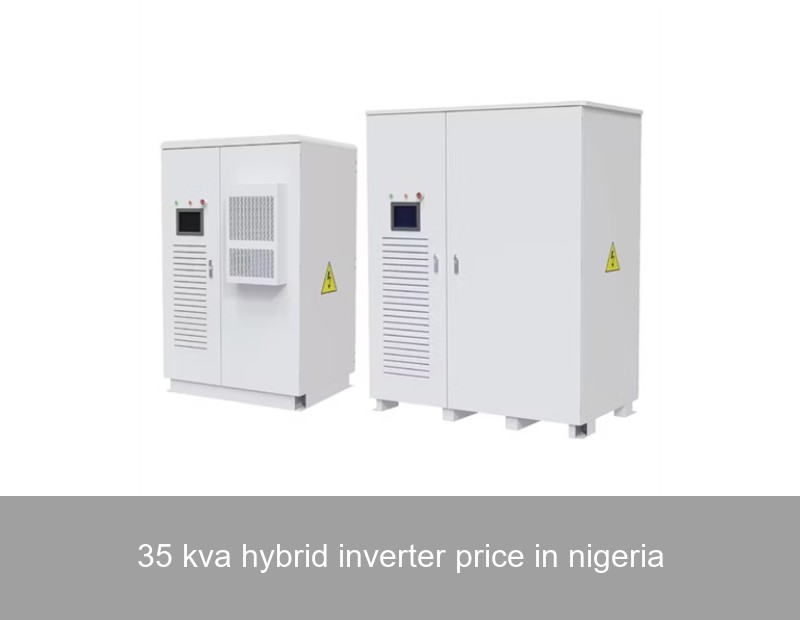
If you're searching for a "3.5 kVA hybrid inverter price in Nigeria," you're likely looking for more than just a number. You're seeking a solution to a persistent problem: unreliable grid power. The quoted price is just the entry point into a critical decision about energy independence, equipment longevity, and total cost of ownership. A hybrid inverter is the intelligent heart of a modern solar storage system, managing power from the grid, solar panels, and batteries seamlessly. Understanding what drives its cost is the first step toward making a power investment that pays off for years, not just a purchase that solves today's blackout.
Key Factors Influencing a 3.5 kVA Hybrid Inverter Price
When comparing prices, which can range significantly, it's crucial to look under the hood. The core technology and build quality directly impact performance, safety, and lifespan.
- Waveform Technology: Pure Sine Wave inverters are more expensive than Modified Sine Wave models but are essential for safely running sensitive electronics like laptops, medical equipment, and modern appliances. They are the non-negotiable standard for quality systems.
- Efficiency Rating: A 95% efficient inverter versus a 90% one means more of your precious solar energy or battery capacity powers your loads, not lost as heat. High efficiency, often from premium components, commands a higher price but lowers long-term energy waste.
- Grid Interaction & Charging Speed: Advanced units offer sophisticated grid-tie functions, fast multi-stage battery charging, and even grid support features. The speed and intelligence of the inverter's charger can dramatically affect how quickly your system recovers after an outage.
- Brand & Software: Established brands with proven track records in harsh conditions invest in rigorous testing, durable components, and intuitive monitoring software. This reliability and user experience are factored into the price.

Image: A modern hybrid inverter unit, the central component for managing solar, battery, and grid power. Source: Unsplash
The Nigerian Energy Context: A Prime Case for Hybrid Solutions
Nigeria presents a unique and demanding environment for power equipment. The challenge isn't just frequent outages, but often voltage fluctuations and surges when the grid is present. An inverter that isn't built to withstand these conditions can fail prematurely, turning a "budget" buy into a costly mistake.
Consider a real-world scenario: A small business in Lagos, such as a pharmacy or a boutique office, runs critical refrigeration, computers, and lighting. A standard 3.5kVA system with a 5kWh battery bank can keep essential operations running through a typical 8-hour outage. However, if the inverter lacks robust surge protection, a grid spike during a brief power return could damage it and connected devices. The true cost then includes not just a new inverter, but lost business and damaged assets. Data from the World Bank highlights the economic impact of unreliable power, making system resilience paramount.
Engineered for Resilience: Highjoule's Approach to Reliable Power
At Highjoule, with nearly two decades of experience powering homes and businesses worldwide, we engineer our systems for real-world conditions like those in Nigeria. We view the inverter as part of an integrated ecosystem, not a standalone commodity.
Our H-IQ Series Hybrid Inverters, available in the 3.5kVA-10kVA range, are designed with these challenges in mind. They feature wide input voltage ranges and advanced surge protection to handle unstable grids. Their high peak power output ensures they can start motor-driven appliances like pumps or air conditioners. Furthermore, our proprietary energy management software allows users to intelligently prioritize power sources—for example, using solar to charge batteries first during the day, then powering loads, and only using the grid as a last resort to maximize savings and battery life.
For a complete solution, we pair our inverters with Highjoule's modular lithium-ion battery systems. Unlike traditional lead-acid batteries, our LiFePO4 (Lithium Iron Phosphate) batteries offer longer cycle life, faster charging, deeper safe discharge, and maintenance-free operation, providing a lower total cost of ownership over the system's lifetime. This integrated Highjoule ecosystem is monitored via a user-friendly app, giving customers transparency and control over their energy usage and costs.

Image: A complete solar and battery storage installation for reliable power. Source: Unsplash
Making an Informed Choice: Value Beyond the Invoice
So, how should you evaluate the "3.5 kVA hybrid inverter price in Nigeria"? Shift the question from "What does it cost?" to "What value does it deliver?"
| Cost Consideration | Low-Price Focus | High-Value Focus (e.g., Highjoule) |
|---|---|---|
| Upfront Price | Lower | Higher, reflecting quality components |
| Efficiency | Lower (e.g., 88-92%) | Higher (e.g., 95%+) saves energy long-term |
| Protection Features | Basic | Comprehensive surge & fault protection |
| Battery Compatibility | Often limited to lead-acid | Optimized for advanced LiFePO4 batteries |
| Software & Monitoring | Limited or none | Intelligent energy management & remote monitoring |
| Expected Lifespan & Support | Shorter, variable support | Longer, backed by global technical support |
As noted by the International Energy Agency (IEA), the quality and durability of solar PV and storage components are critical to achieving the promised financial and environmental returns. A system that fails early undermines both.
Your Power, Your Decision
The journey to energy independence is a significant investment. The right 3.5 kVA hybrid inverter is the cornerstone that determines whether that investment is protected and optimized. It's worth asking your supplier detailed questions about surge protection ratings, efficiency certifications, and compatibility with future battery expansion. Given your specific load requirements and local grid challenges, what would be the true cost of a system that fails to protect your appliances or doesn't last its expected lifetime?
 Inquiry
 Online Chat