


Demystifying the Life of Solar Panel Batteries: Your Guide to Long-Term Value
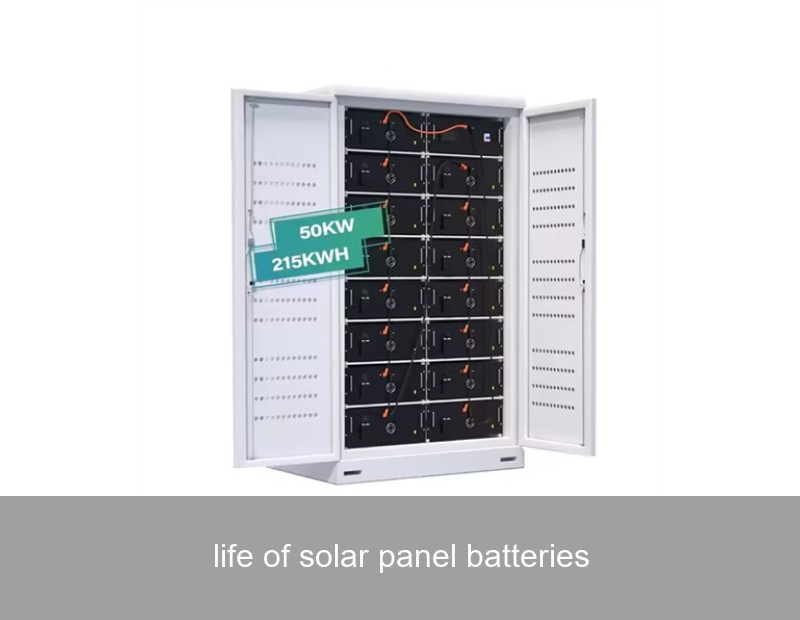
So, you've made the smart decision to invest in solar panels. You're generating clean energy, reducing your carbon footprint, and watching your electricity bills shrink. But what about the heart of your after-sunset power supply—the life of solar panel batteries? This is the question that determines the true long-term value and sustainability of your energy independence. Unlike a simple appliance with a fixed expiration date, a battery's lifespan is a dynamic story, shaped by chemistry, usage, and crucially, the intelligence of the system surrounding it. Let's unpack what "battery life" really means and how you can ensure your storage solution delivers for decades.
Understanding Solar Battery Lifespan: More Than Just Years
When we discuss the life of solar panel batteries, we're typically referring to two interconnected metrics: cycle life and calendar life.
- Cycle Life: This is the number of complete charge and discharge cycles a battery can perform before its capacity degrades to a specified percentage (often 80%) of its original capacity. Think of it as the battery's "mileage."
- Calendar Life: This is the sheer passage of time a battery remains functional, even with minimal use. Materials degrade slowly over time, regardless of cycles.
Your battery's effective lifespan is the point where either the cycle life or calendar life limit is reached first. For a typical modern lithium-ion home battery, manufacturers often specify a cycle life of 6,000 to 10,000 cycles and a calendar life of 10 to 15 years. But these are laboratory ideals. The real-world life of solar panel batteries hinges on several key factors.

Image Source: Unsplash - A modern home battery system, where intelligent management is key to longevity.
Key Factors That Determine Battery Life
Imagine your battery as a seasoned athlete. Its career length depends on how it's trained, cared for, and the stresses it faces.
| Factor | Impact on Lifespan | Simple Analogy |
|---|---|---|
| Depth of Discharge (DoD) | Regularly draining a battery to 100% (full DoD) stresses it more than only using 80% or 90% of its capacity. Shallower cycles extend life. | Like a runner sprinting a full marathon every day vs. a mix of shorter runs. |
| Temperature | Extreme heat is the #1 enemy. Operating consistently above 30°C (86°F) significantly accelerates chemical degradation and capacity loss. | An engine running too hot will wear out exponentially faster. |
| Charge/Discharge Rate (C-rate) | Pulling power too quickly (high C-rate) or charging too fast creates internal stress and heat, shortening cycle life. | Gentle acceleration vs. slamming the pedal in a car. |
| Battery Chemistry | Lithium Iron Phosphate (LFP) batteries generally offer longer cycle life and better thermal stability than traditional NMC chemistries, albeit with a slightly lower energy density. | The inherent durability of the building materials. |
| Battery Management System (BMS) | A sophisticated BMS is the brain that protects the battery. It meticulously manages charging thresholds, temperature, cell balancing, and prevents harmful states. | A world-class coach and physiotherapist for the athlete. |
A Real-World Case Study: The German WohnGenossenschaft Project
Let's move from theory to practice. A 2022 deployment in a residential cooperative (WohnGenossenschaft) in Bavaria, Germany, provides compelling data. The project involved 22 townhouse units, each equipped with a 8 kWp solar array and a 12 kWh lithium-ion (LFP) storage system. The primary goal was to maximize self-consumption of solar energy and provide backup power.
After three years of operation, an analysis was conducted. The systems, which utilized advanced adaptive charging algorithms, showed an average capacity retention of 94.5%. Crucially, the battery enclosures were installed in conditioned garages, maintaining an average operating temperature of 18°C. The intelligent BMS was programmed to limit daily Depth of Discharge to 85% except during grid outages. Projected data based on this degradation rate indicates a lifespan exceeding 15 years before reaching 80% capacity. This case underscores that with proper installation, chemistry choice (LFP), and intelligent management, the life of solar panel batteries can meet and exceed expectations in a demanding European climate.
Maximizing Your Solar Battery Lifespan: Practical Steps
As a homeowner or business owner, you have direct control over several longevity levers:
- Prioritize Installation Location: Install your battery in a cool, dry place—a conditioned basement, garage, or utility room is far better than a sun-exposed exterior wall or attic.
- Embrace Smart Settings: Don't set your system to "maximize export" at the battery's expense. Use software settings to cap the maximum charge and discharge levels. A buffer of 10-15% makes a huge difference.
- Choose Chemistry Wisely: For long-term, daily-cycling applications, Lithium Iron Phosphate (LFP) is increasingly becoming the preferred choice for its safety and cycle life, even if the upfront cost is slightly higher.
- Invest in Quality & Intelligence: The cheapest battery often has the simplest BMS. Opt for a system where the software is as advanced as the hardware, capable of learning usage patterns and optimizing cycles for longevity.
The Highjoule Approach: Engineering for Longevity
At Highjoule, we've built our reputation on delivering not just power, but enduring value. We understand that the life of solar panel batteries is the cornerstone of a sustainable investment. Our product philosophy is engineered around this principle.
Our H-Series Commercial & Industrial Storage Systems and Helix Home Energy Hub are built with premium LFP cell chemistry as a standard, prioritizing cycle life and thermal safety. However, our true differentiator is the Adaptive Core BMS. This proprietary system goes beyond basic protection. It uses machine learning algorithms to analyze your unique energy consumption patterns, weather forecasts, and grid signals. It then dynamically adjusts charge/discharge profiles to minimize stress on the battery pack. For instance, on a day forecasted to be extremely hot, it might slightly reduce the charge current to limit internal temperature rise, thereby preserving calendar life.
Furthermore, Highjoule systems are designed with proactive thermal management. Our liquid-cooled cabinets, used in larger installations, ensure even temperature distribution across all cells, a critical factor often overlooked in simpler, air-cooled designs. For our residential Helix system, we employ a silent, high-efficiency phase-change material cooling system that activates during high-load or high-ambient temperature events.
Our services extend beyond the sale. The Highjoule Pulse Monitoring Platform provides installers and owners with real-time insights into battery health, including State of Health (SOH) tracking, cycle count, and temperature trends. This transparency allows for predictive maintenance and validates the long-term performance of your investment.

Image Source: Unsplash - Monitoring and analytics are crucial for managing long-term battery health.
The Future Horizon of Solar Battery Life
The journey doesn't stop here. Research into solid-state batteries promises even greater energy density and cycle life (U.S. Department of Energy). Meanwhile, software innovations like vehicle-to-grid (V2G) integration and second-life applications are redefining the entire value proposition of storage. A battery that reaches 80% capacity for a home might still have a decade of useful life in a less demanding grid-support application. Highjoule is actively involved in R&D partnerships to explore these circular economy models, ensuring that the life of solar panel batteries extends in value far beyond its first installation.
Given that the average homeowner might move house within 10-15 years, how would knowing the verified, real-time health and remaining projected lifespan of your solar battery system influence your property's value and its appeal to environmentally conscious buyers?
 Inquiry
 Online Chat