


Unlocking Energy Independence: A Deep Dive into the 3500W Energy Storage Cabinet
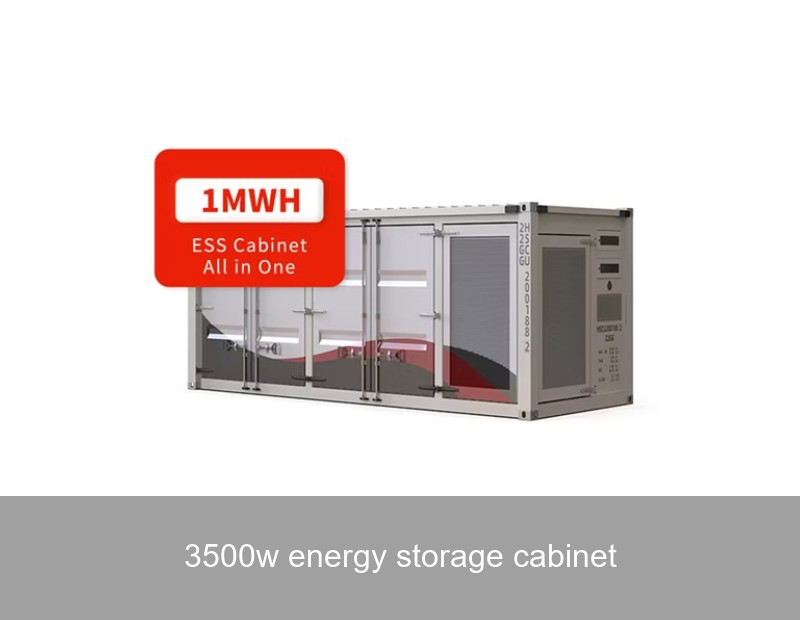
Have you ever watched your electricity meter spin wildly during peak hours, or felt a pang of anxiety during a storm warning, knowing the power could go out? You're not alone. Across homes in Europe and the US, a quiet revolution is taking place in basements and garages: the rise of the personal energy storage system. At the heart of this shift is a powerful, compact solution gaining immense popularity – the 3500W energy storage cabinet. This isn't just a battery in a box; it's the brain and brawn of a modern, resilient home energy system. Let's explore why this specific capacity is becoming a sweet spot for proactive homeowners and how companies like Highjoule are engineering these systems for intelligence, safety, and long-term value.
Table of Contents
What is a 3500W Energy Storage Cabinet?
Think of a 3500W energy storage cabinet as your home's personal power bank, but on a much grander and more sophisticated scale. It's an all-in-one unit that typically houses lithium-ion battery modules, a built-in inverter, a battery management system (BMS), and thermal controls. The "3500W" refers to its continuous power output rating – meaning it can consistently deliver 3500 watts of electricity to run your appliances. To put that in perspective, that's enough to simultaneously power your refrigerator (700W), lights (300W), a TV (150W), a laptop (50W), and still have ample capacity left for critical circuits like your home's Wi-Fi and security system, all while keeping your coffee maker (1000W) ready for action.
Unlike a simple generator, it operates silently, emits no fumes, and can be seamlessly integrated with solar panels. Companies leading this field, such as Highjoule, design these cabinets not merely for storage but for intelligent energy management. Highjoule's ResiPro 3.5 series, for example, is a prime specimen of a 3500W energy storage cabinet built for the European and North American markets. It features modular battery expansion, advanced lithium iron phosphate (LiFePO4) chemistry for safety and longevity, and smart software that learns your consumption patterns to optimize self-consumption of solar energy and provide automatic backup during grid outages.
Why 3500W? The Power Behind the Number
So, why has 3500W emerged as such a key power rating? The answer lies in a perfect balance between capability, cost, and common household needs.
- The Peak Shaving Sweet Spot: For many households, 3500W covers a significant portion of peak evening energy usage when everyone is home, appliances are running, and utility rates are highest. It allows you to "shave" that expensive peak draw from the grid, replacing it with stored, cheaper solar or off-peak electricity.
- Essential Load Backup: During an outage, 3500W is sufficient to back up the essential circuits in a typical 3-4 bedroom home. You're powering what's critical for comfort and safety, not necessarily every single appliance at once. This targeted approach makes the system more affordable and efficient.
- Solar Pairing Efficiency: It pairs exceptionally well with a mid-sized residential solar array (e.g., 6-10 kW). The cabinet can handle the typical output of such an array for storage and later use, maximizing your self-consumption rate—a crucial metric for ROI, especially in feed-in-tariff markets like Germany.
- Grid and Hardware Compatibility: In many regions, electrical configurations and standard inverter sizes make 3500W a practical and install-friendly choice, avoiding the need for major panel upgrades in many cases.

Image Source: Unsplash - A clean residential energy storage installation.
Key Components of a Modern Storage Cabinet
Not all cabinets are created equal. When evaluating a 3500W energy storage cabinet, understanding its core components is key.
| Component | Function | What to Look For |
|---|---|---|
| Battery Cells | The core energy storage medium. | Lithium Iron Phosphate (LiFePO4) is now the industry benchmark for safety (thermal stability) and cycle life (often 6000+ cycles). Highjoule exclusively uses LiFePO4 chemistry in its products. |
| Battery Management System (BMS) | The "brain" that monitors voltage, temperature, and state of charge. | A high-quality, multi-layer BMS is critical for safety, longevity, and performance. It should provide precise monitoring and active cell balancing. |
| Hybrid Inverter | Converts DC from batteries/solar to AC for home use. | An integrated hybrid inverter simplifies installation. Ensure it has high peak efficiency (>97%) and grid-forming capability for seamless off-grid operation. |
| Thermal Management | Regulates the operating temperature of the battery. | Active liquid cooling or advanced air cooling systems are superior to passive cooling, ensuring consistent performance in extreme climates and extending battery life. |
| Energy Management Software | The user interface and control logic. | Look for intuitive apps that allow mode setting (e.g., self-consumption, backup, time-of-use optimization), real-time monitoring, and remote updates. |
A Real-World Case: Resilience in California's Fire-Prone Zone
Theory is one thing, but real-world performance is everything. Let's look at a project in Sonoma County, California, an area frequently impacted by Public Safety Power Shutoffs (PSPS) to prevent wildfires.
The Challenge: A family with a 8.2 kW rooftop solar system wanted to ensure resilience during multi-day grid outages. Their critical loads included a well pump, refrigeration, essential lighting, communications, and a medical device, with a peak estimated load of around 3kW.
The Solution: A Highjoule ResiPro 3.5 3500W energy storage cabinet with 14 kWh of storage capacity was installed. The system was configured for whole-home backup with a critical loads sub-panel, prioritizing the well pump and medical equipment.
The Data & Outcome: During a 48-hour PSPS event in the fall of 2023, the system performed flawlessly.
- Energy Autonomy: The home operated entirely on solar and battery power for two full days.
- Peak Power Met: The 3500W inverter successfully handled simultaneous start-up surges from the well pump (2500W surge) and refrigerator, maintaining stable power.
- Solar Self-Consumption: The system's smart logic charged the batteries to 100% each day via solar, even while powering the home, eliminating any range anxiety. The state of charge never dropped below 40% by morning.
This case, documented in a California Solar Statistics report, highlights how a correctly sized 3500W energy storage cabinet isn't just about numbers—it's about providing tangible peace of mind and uninterrupted daily life. The family avoided the disruption, expense, and noise of a gasoline generator, and their solar investment continued to pay off even with the grid down.
Choosing the Right System for Your Home
Selecting a 3500W energy storage cabinet involves more than just comparing price tags. Here’s a practical guide:
- Audit Your Loads: List the essential appliances you'd need during an outage and their wattage. Your installer can help calculate your "essential load" to confirm 3500W is suitable.
- Evaluate Storage Capacity: Power (3500W) is how much you can draw at once; capacity (measured in kWh) is how long you can draw it. A 3500W cabinet might come with 10, 14, or more kWh options. More capacity means longer runtime.
- Prioritize Safety & Warranty: Insist on LiFePO4 chemistry and robust safety certifications (UL 9540 in the US, CE in Europe). A strong warranty (e.g., Highjoule's 10-year performance warranty) is a sign of manufacturer confidence.
- Consider Future Expansion: Can you add more battery modules later? Modular systems, like those from Highjoule, allow you to start with what you need and scale up as your budget or needs grow.
- Demand Smart Integration: The system should be a smart partner. Can it integrate with time-of-use rates to automatically buy cheap and use/store expensive power? The U.S. Department of Energy emphasizes the importance of such grid-interactive technologies.

Image Source: Unsplash - Monitoring home energy flow via a smart app.
Your Home's Energy Future: What's Next?
The 3500W energy storage cabinet represents a fundamental shift from the home as a passive energy consumer to an active, intelligent node in a broader energy network. As we move towards smarter grids and greater electrification (think electric vehicles), these systems will become the cornerstone of a sustainable and resilient household. They enable participation in virtual power plants (VPPs), where aggregated home batteries can support the grid during stress, potentially earning homeowners revenue—a concept actively explored by entities like the National Renewable Energy Laboratory (NREL).
The question is no longer if home energy storage will become standard, but when. With solutions like Highjoule's intelligent cabinets making the technology more accessible, reliable, and financially savvy, that future is closer than ever.
Is your home ready to become an active participant in the new energy landscape, and what would energy security and independence mean for your daily life?
 Inquiry
 Online Chat