


Unlocking Energy Independence: The Complete Guide to Solar Energy Storage Cabinet Units
Have you ever watched your solar panels bask in the midday sun, producing more clean power than your home or business can use, only to think about buying energy from the grid after sunset? This common experience highlights a key challenge in the renewable energy transition: the mismatch between solar production and energy demand. The solution is becoming increasingly sophisticated and accessible: the solar energy storage cabinet unit. These integrated systems are more than just batteries; they are the intelligent heart of a modern, resilient, and efficient energy setup. For homeowners and businesses across Europe and the U.S., understanding this technology is the first step toward true energy autonomy and significant cost savings. Companies like Highjoule, a global leader in advanced energy storage since 2005, are at the forefront, designing smart, sustainable power solutions that make this independence a reality.
Table of Contents
What Exactly is a Solar Energy Storage Cabinet Unit?
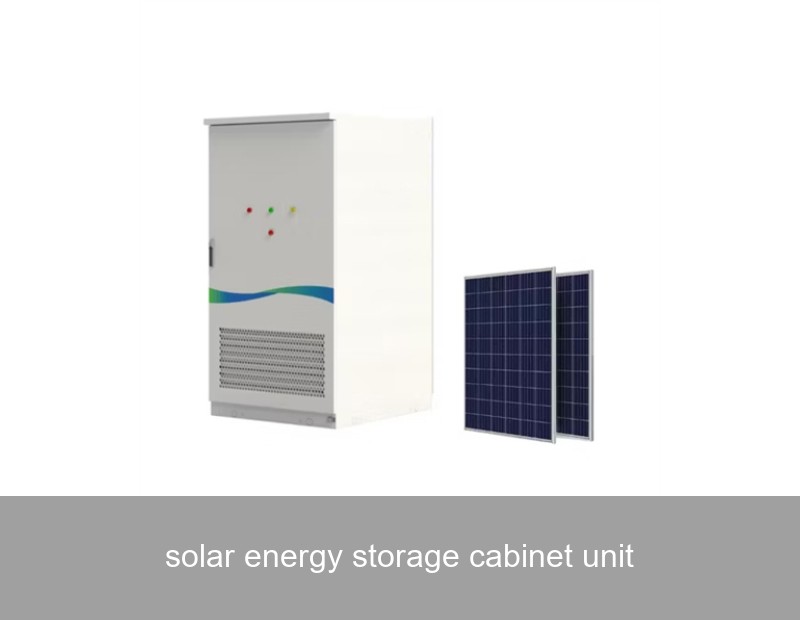
Let's demystify the term. A solar energy storage cabinet unit is an all-in-one, enclosure-based system that stores electrical energy generated from solar panels (or other sources) for later use. Think of it as a sophisticated, high-capacity power bank for your entire property. Unlike a loose collection of components, a cabinet unit integrates the core elements—battery modules, a battery management system (BMS), thermal management, safety systems, and an inverter/charger—into a single, sleek, and weather-resistant cabinet. This integrated approach, championed by providers like Highjoule, ensures safety, simplifies installation, and optimizes performance through unified control.

Image: A modern, integrated energy storage cabinet facilitates a clean home installation. Source: Unsplash
Highjoule's IntelliCabinet Series exemplifies this evolution. Designed for residential and commercial applications, these units combine high-density lithium-ion phosphate (LFP) battery technology with AI-driven energy management software. The result? A system that doesn't just store energy but learns your consumption patterns, automatically decides when to store, use, or even sell back energy to the grid, maximizing your financial return and energy security.
Why the Surge in Demand? The Data Behind the Trend
The move towards solar energy storage cabinet units isn't just a niche trend; it's a data-driven market shift. Several powerful forces are converging:
- Falling Technology Costs: The cost of lithium-ion batteries has plummeted by nearly 90% over the past decade (BloombergNEF, 2023), making storage systems more accessible than ever.
- Grid Instability and Policy Incentives: In Europe, the energy crisis accelerated demand for backup power. In the U.S., the Inflation Reduction Act (IRA) offers a direct 30% tax credit for installed storage, dramatically improving ROI.
- Rising Electricity Prices: Households and businesses are seeking a hedge against volatile utility rates. By using stored solar energy during peak price periods (evening), users can avoid the highest tariffs.
The numbers speak volumes. The U.S. energy storage market set a record in Q4 2023, deploying over 4,000 MW, while Europe is projected to see 100 GWh of cumulative battery storage capacity by 2030. The solar energy storage cabinet unit is the product form factor enabling this rapid scale.
Key Components and Technologies Inside the Cabinet
To appreciate their value, it helps to know what's inside. Here’s a breakdown of the core subsystems in a high-quality unit:
| Component | Function | Highjoule's Approach |
|---|---|---|
| Battery Cells & Chemistry | The core energy storage medium. Safety and longevity are paramount. | Uses proprietary Lithium Iron Phosphate (LFP) cells, known for superior thermal stability, safety (no thermal runaway), and long cycle life (6,000+ cycles). |
| Battery Management System (BMS) | The "brain" that monitors cell voltage, temperature, and state of charge to ensure safe, efficient operation. | Features a multi-layer, adaptive BMS with cell-level monitoring and active balancing, extending pack life by up to 20%. |
| Power Conversion System (Inverter/Charger) | Converts DC power from batteries to AC for your home, and AC from solar/grid to DC for charging. | Integrates a hybrid inverter with high conversion efficiency (>98%), enabling seamless switching between grid, solar, and battery power. |
| Thermal Management | Maintains optimal battery temperature for performance and lifespan. | Employs a silent, smart liquid cooling system that is 40% more efficient than standard air cooling, crucial for both Scandinavian winters and Texan summers. |
| Energy Management Software | The user interface and intelligent controller that optimizes energy flow. | Highjoule's EnergyOS platform allows for app-based control, real-time monitoring, and customizable modes like "Storm Guard" (automatic backup readiness) and "Cost Saver." |
Real-World Impact: A Case Study from California
Theory is good, but real data is better. Consider a commercial case from California, a leader in both solar adoption and grid challenges.
The Challenge: A mid-sized winery in Napa Valley faced two problems: extremely high "Time-of-Use" electricity rates during its critical afternoon and evening operational hours, and frequent Public Safety Power Shutoffs (PSPS) during fire season, which threatened to spoil entire fermentation batches.
The Solution: In 2022, the winery installed a 250 kW solar array paired with a Highjoule IntelliCabinet Commercial 500 system, providing 500 kWh of storage capacity. The system was configured for peak shaving (avoiding drawing grid power during expensive periods) and full backup for critical loads.
The Results (12-month period):
- Energy Cost Savings: Reduced monthly demand charges and avoided peak-time energy purchases led to a 68% reduction in overall electricity costs.
- ROI & Incentives: With the federal ITC and a California-specific incentive (SGIP), the projected payback period fell to under 5 years.
- Reliability: The system provided uninterrupted power during 7 separate grid outages, the longest lasting 14 hours, protecting tens of thousands of dollars worth of inventory.
- Sustainability: The winery increased its on-site renewable consumption from 40% to over 90%, bolstering its brand story.
This case underscores how a solar energy storage cabinet unit transitions from a cost to a strategic asset, delivering financial, operational, and environmental returns.

Image: Commercial solar and storage installations, like at wineries, provide critical backup and cost savings. Source: Unsplash
Choosing the Right System for Your Needs: A Homeowner's Guide
If you're considering a solar energy storage cabinet unit, here are the key questions to ask:
- Capacity & Power: Do you need whole-home backup or just critical loads (refrigerator, lights, internet)? Your installer will calculate based on your energy usage (kWh) and peak demand (kW).
- Chemistry & Safety: Insist on LFP chemistry for home use. It's the gold standard for safety and longevity.
- Integration: Does the unit work seamlessly with new or existing solar panels? Highjoule systems are designed to be both retrofit and new-install friendly.
- Software & Grid Services: Can the system participate in utility Virtual Power Plant (VPP) programs? In some regions, you can earn money by allowing the utility to use a small portion of your stored energy during grid stress.
- Warranty & Support: Look for a comprehensive warranty (e.g., Highjoule's 10-year warranty) and strong technical support from a proven provider.
The Future Horizon: Smarter Grids and Cleaner Communities
The proliferation of solar energy storage cabinet units is paving the way for a decentralized energy future. Imagine neighborhoods forming microgrids, where hundreds of Highjoule cabinets communicate to stabilize the local grid during a heatwave. This isn't science fiction; pilot programs are already underway. By turning passive consumers into proactive "prosumers," this technology empowers communities, enhances national energy resilience, and accelerates the decarbonization of our electricity supply. The question is no longer if you should consider storage, but how soon you can integrate it into your energy life.
Is your home or business ready to transform its solar power from a daytime supplement into a 24/7 energy solution? What would complete energy security during the next grid outage be worth to you?
 Inquiry
 Online Chat