


Demystifying the 35Ah Solar Battery Price: Your Guide to Real Value in Energy Storage
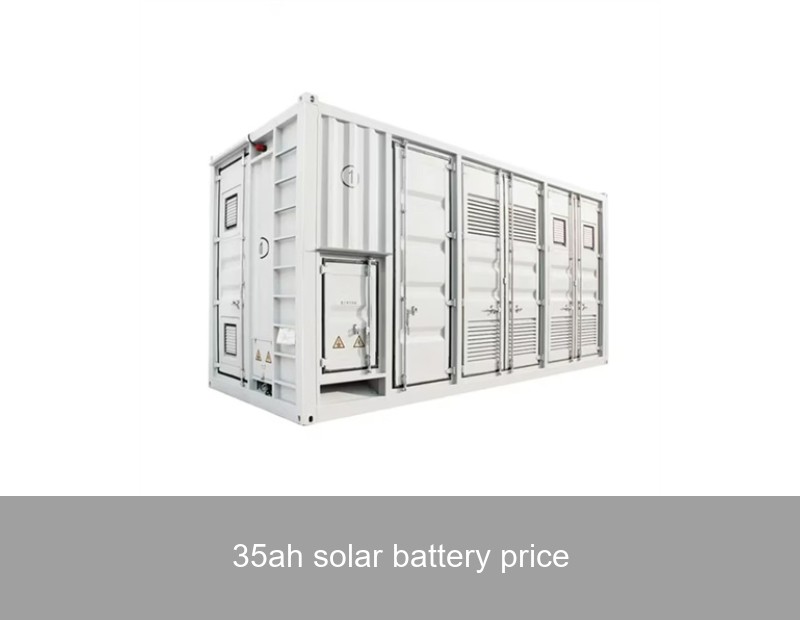
If you're researching solar energy storage, you've likely typed "35Ah solar battery price" into a search engine. It's a logical starting point—after all, understanding cost is crucial. But here's a truth we at Highjoule have learned since 2005: focusing solely on the price per amp-hour (Ah) is like buying a car based only on the size of its fuel tank. It tells you one small part of the story, but nothing about the engine's efficiency, the car's safety, or how many miles you'll actually get. The real value of a solar battery lies in its performance, longevity, and how intelligently it integrates with your entire energy system. Let's unpack what truly determines cost and value for a 35Ah solar battery and beyond.
Understanding the "35Ah Solar Battery Price" Tag
The term "35Ah" refers to the battery's capacity, specifically its amp-hour rating. In simple terms, a 35Ah battery can theoretically deliver 35 amps of current for one hour before being depleted. For a small, off-grid application like a shed light, a communication device, or a tiny cabin, a standalone 12V 35Ah battery might be a relevant component. However, for whole-house residential or commercial solar storage, batteries are almost never sold or evaluated as single 35Ah units. Modern systems use high-voltage lithium-ion battery modules that stack capacity (measured in kilowatt-hours, kWh) to meet larger energy needs. So, when you see a "35Ah solar battery price," it's often for a lead-acid battery in a very specific, small-scale context, or it's a misunderstanding of how modern home energy storage works.

Image Source: Unsplash (Representative image of modular battery technology)
Key Factors Influencing the 35Ah Solar Battery Price and Overall System Cost
1. Battery Chemistry: The Core of Value
The chemical makeup of the battery is the single biggest driver of cost, performance, and lifespan.
- Lead-Acid (Flooded, AGM, Gel): These often carry the lowest upfront "35Ah solar battery price." A 35Ah AGM battery might cost $80-$150. However, they have a short cycle life (300-500 deep cycles), lower depth of discharge (DoD), require maintenance, and degrade faster. The true long-term cost is high.
- Lithium-Ion (Li-ion): This is the standard for modern solar storage. While the upfront cost is higher, the value is superior. Two main types dominate:
- Lithium Iron Phosphate (LFP or LiFePO4): This is the chemistry of choice for safety and longevity. LFP batteries, like those used in Highjoule's Residential Energy Hub, are thermally stable, have a cycle life of 6,000+ cycles, and can be discharged nearly fully every day. Their total cost of ownership over 15+ years is significantly lower than lead-acid.
- Nickel Manganese Cobalt (NMC): Offers high energy density but may have slightly lower thermal stability and cycle life compared to LFP.
2. Beyond Amp-Hours: The Real Specs That Matter
Forget Ah alone. When evaluating, you must look at these key metrics:
| Metric | What It Means | Why It Affects "Value" |
|---|---|---|
| Usable Energy (kWh) | The actual electricity you can use, after accounting for Depth of Discharge (DoD). | A 10kWh battery with 90% DoD gives you 9kWh. A 10kWh with 100% DoD (like many LFP) gives you the full 10kWh. |
| Cycle Life | How many charge/discharge cycles the battery can handle before significant degradation. | 6,000 cycles vs. 1,000 cycles means the battery lasts 6x longer, radically reducing cost per cycle. |
| Round-Trip Efficiency | The percentage of energy put in that you can get back out. | 95% efficiency (like Highjoule's systems) means you lose only 5% of your solar energy. 80% efficiency means you lose 20%. |
| Power Rating (kW) | How much electricity the battery can deliver at once. | High power (e.g., 5kW) allows you to run multiple appliances simultaneously. A low-power battery may struggle with peak loads. |
3. System Integration & Smart Features
A battery in a box is just a component. An integrated energy management system is a solution. This is where companies like Highjoule differentiate themselves. Our systems include:
- Advanced Battery Management Systems (BMS): Continuously monitors cell health, temperature, and voltage for safety and longevity.
- Grid-Interactive Inverters: Seamlessly switches between solar, battery, and grid power.
- AI-Powered Energy Management Software: This is the brain. It learns your consumption patterns, forecasts weather, and optimizes when to charge from solar, when to discharge, and when to sell back to the grid (where available) to maximize your savings. This software can add to the initial investment but pays for itself many times over.
A Real-World Case: The 35Ah Decision in a German Home
Let's look at a concrete example from Bavaria, Germany. Herr Schmidt wanted backup power for his home office and refrigerator during brief grid outages. He initially found a 35Ah solar battery price for a set of four 12V AGM batteries (totaling ~1.7kWh usable) at €1,200, including a basic charger.
The Problem: The system provided only 2 hours of backup for his critical loads. After 18 months and numerous short outages, the batteries' capacity had degraded by nearly 40%, failing to meet his needs. The total cost per cycle became very high.
The Highjoule Solution: We proposed a compact 5kWh LFP battery system from our EcoFlex Modular Series. The upfront cost was higher (€4,500 installed). However, the system's 100% DoD provided full 5kWh, its 6,000-cycle warranty guaranteed 15+ years of service, and its integrated inverter allowed future expansion. Our smart software also enabled him to use stored solar power during peak tariff hours, saving €250 annually on his bill.
The Data-Driven Insight: The simple payback period from bill savings alone dropped to under 10 years, with over a decade of additional warranty-covered service. The AGM system, while cheaper upfront, was essentially a recurring expense.
The Highjoule Approach: Value Beyond the Price per Ah
At Highjoule, we engineer systems for lifetime performance, not just sticker price. For residential clients, our Residential Energy Hub uses LFP chemistry and scalable modular design, allowing you to start from 5kWh and expand as needed. For commercial and industrial applications, our C&I PowerPack solutions focus on demand charge reduction and peak shaving, delivering ROI often in just a few years by cutting the highest portions of utility bills.
We provide a complete, integrated solution: high-safety batteries, efficient hybrid inverters, and our proprietary Highjoule Neuron™ AI platform. This platform is the differentiator—it doesn't just store energy; it optimizes it intelligently, adapting to weather forecasts, tariff structures, and your unique consumption patterns. You're not buying a commodity battery; you're investing in an intelligent energy asset.

Image Source: Unsplash (Representative image of a solar-powered home)
Making an Informed Choice for Your Solar Project
So, what should you do next? Shift your focus from "35Ah solar battery price" to "total system value for my specific needs."
- Audit Your Energy Goals: Is this for full home backup, critical load backup, or purely for maximizing solar self-consumption and bill savings? Calculate your critical load wattage and desired backup duration.
- Demand Full Specifications: Ask any provider for: Usable kWh, Cycle Life at a specified DoD, Round-Trip Efficiency, Power Rating (kW), and warranty terms that guarantee end-of-warranty capacity.
- Insist on an Integrated System: Ensure the battery, inverter, and software are designed to work seamlessly together. A disjointed system can lead to inefficiency and safety risks.
- Calculate Total Cost of Ownership (TCO): Divide the total installed cost by the total usable kWh expected over the system's lifetime. This metric reveals the true cost of your stored energy.
For authoritative information on battery technologies and safety, you can refer to resources from the U.S. Department of Energy or the International Energy Agency (IEA).
Ready to move beyond the simple amp-hour quote and discover how an intelligent storage system can transform your energy independence? What's the first question about your energy usage you'd like our Highjoule experts to help you answer?
 Inquiry
 Online Chat