


Eastman Solar Battery 200Ah Price: Understanding Value in Energy Storage
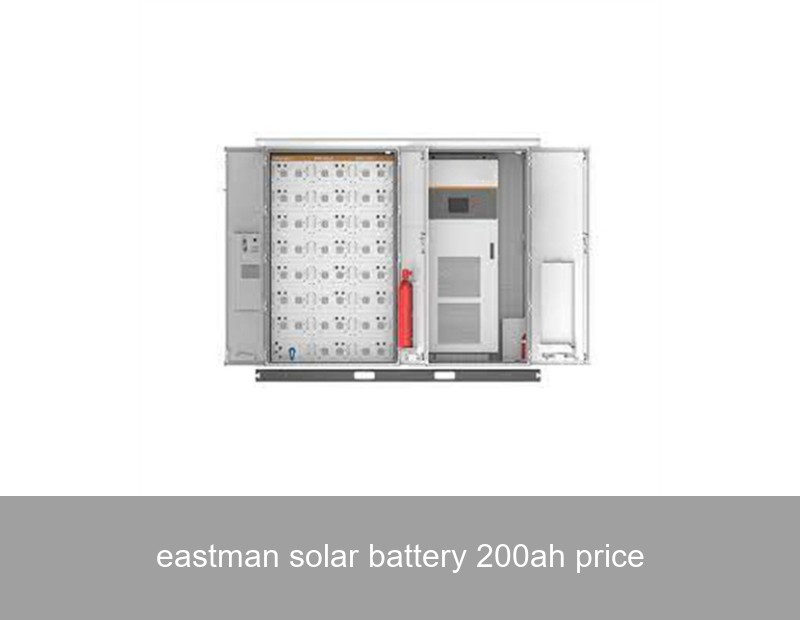
If you're researching solar batteries, you've likely encountered terms like "200Ah" and brands like Eastman. The immediate question that follows is almost always about cost. Searching for the Eastman solar battery 200Ah price is a logical first step, but it's just the beginning of a more important conversation. That price point represents a promise of energy independence, but its true value is unlocked only when you understand what's behind the number. As a global leader in advanced energy storage, Highjoule believes an informed decision is the best investment. Let's delve into what a 200Ah battery offers, what influences its price, and how to assess its long-term worth for your home or business.
Understanding Solar Battery Specs: What Does 200Ah Really Mean?
Ampere-hours (Ah) is a unit of electrical charge. In simple terms, a 200Ah battery can, in theory, deliver 200 amps for one hour, 10 amps for 20 hours, and so on. However, for solar storage, this raw number only tells part of the story. The actual usable energy depends heavily on the battery's voltage. Most residential solar batteries, including many Eastman models, are built on a 12V, 24V, or 48V architecture.
Here’s the crucial conversion: Energy (kWh) = Voltage (V) x Ampere-hours (Ah) / 1000.
| Battery Voltage | Total Energy Capacity (kWh) | Typical Application |
|---|---|---|
| 12V | 2.4 kWh | Small cabins, RV, backup for essential loads |
| 24V | 4.8 kWh | Larger off-grid homes, small businesses |
| 48V | 9.6 kWh | Standard for modern residential and commercial solar+storage systems |
Furthermore, Depth of Discharge (DoD) is critical. You can't use 100% of a battery's capacity without damaging it. If a 10kWh battery has a 90% DoD, you only have 9kWh of usable energy. When evaluating any solar battery 200Ah price, you must ask: What is the system voltage and the usable kWh? This is where expertise matters. At Highjoule, our energy consultants always start by analyzing your daily consumption patterns to determine the right capacity—measured in usable kWh, not just Ah—for your unique situation.
Decoding the Eastman Solar Battery 200Ah Price: A Value Proposition
The listed price for an Eastman 200Ah battery is typically for the battery cell or module itself. It's an attractive entry point, especially for DIY enthusiasts or specific off-grid projects. However, for a fully functional, safe, and grid-compliant energy storage system, you need more than just a battery box. The total system cost includes:
- Battery Management System (BMS): The brain that protects the battery from overcharge, deep discharge, and overheating.
- Inverter/Charger: A sophisticated device that converts DC battery power to AC for your home and manages charging from solar panels or the grid.
- Installation & Professional Integration: Labor, wiring, safety disconnects, and integration with your existing solar PV system.
- Permits and Grid Interconnection Fees: Required by local authorities and utilities, especially for grid-tied systems.
This is why comparing a bare battery price to a complete, warrantied system can be misleading. Highjoule provides fully integrated, AC-coupled or DC-coupled storage solutions like our H-Joule HomePower series. These systems come with a unified warranty, seamless integration software, and are installed by certified professionals, ensuring safety, performance, and eligibility for incentives. The peace of mind and guaranteed performance add immense value beyond the initial component cost.
Key Factors Influencing the Price of a 200Ah Solar Battery
Why do prices vary even for batteries with similar Ah ratings? Several core technologies and features drive cost.
- Battery Chemistry: This is the biggest differentiator.
- Lead-Acid (Flooded, AGM, Gel): Often the basis for a lower Eastman solar battery 200Ah price. They have a lower upfront cost but shorter lifespan (500-1000 cycles) and lower DoD, leading to a higher cost over time.
- Lithium Iron Phosphate (LiFePO4): The dominant chemistry for modern solar storage. It offers a longer lifespan (6000+ cycles), deeper DoD (90%+), superior safety, and higher efficiency. While the initial price is higher, the Levelized Cost of Storage (LCOS) is often lower. Highjoule's systems exclusively use premium-grade LiFePO4 cells for their longevity and safety.
- Cycle Life & Warranty: A battery rated for 3,000 cycles will outlast one rated for 1,500, justifying a higher price. Look for a warranty that guarantees both years and throughput (MWh).
- Brand, Certification & Software: Established brands invest in rigorous testing, safety certifications (like UL 9540 in the US), and intelligent energy management software. This software, like Highjoule's EnergyOS, optimizes self-consumption, manages time-of-use rates, and enables virtual power plant participation, creating additional revenue streams.

Image: A modern, professionally installed home battery system. Credit: Unsplash (Representative image)
Real-World Case Study: A German Farm's Transition to Energy Independence
Let's move from theory to practice. Consider the case of a dairy farm in Bavaria, Germany. The farm had a 30kW rooftop solar array but was exporting over 60% of its production during the day while drawing expensive power at night for milking machines and cooling.
Their Goal: Increase self-consumption, ensure backup power for critical refrigeration, and reduce grid dependency.
Initial Consideration: They researched a basic 48V 200Ah (approx. 10kWh) battery bank. The component price seemed manageable.
The Highjoule Solution: After a detailed audit, we proposed a Highjoule C&I PowerStack 20 system—a modular 20kWh LiFePO4 solution scalable to their growing needs. The system included a hybrid inverter, advanced grid management, and was designed to participate in Germany's balancing energy markets.
Results (18 Months Post-Installation):
- Self-consumption of solar power increased from 40% to 85%.
- Annual electricity bill reduced by €4,200.
- Revenue from grid services: approx. €300/year.
- Full ROI projected in under 8 years, with a system warranty of 10 years/10,000 cycles.
This case shows that the right system—properly sized, integrated, and intelligently managed—delivers financial returns that far outweigh a simple focus on the lowest battery unit price.
Looking Beyond the Price Tag: The Highjoule Holistic Approach
At Highjoule, we view energy storage not as a commodity product but as the intelligent heart of your power ecosystem. When you partner with us, you're not just buying batteries; you're investing in a comprehensive energy solution.
Our H-Joule HomePower and C&I PowerStack systems are built with industry-leading LiFePO4 cells, feature integrated high-efficiency inverters, and are governed by our proprietary EnergyOS platform. This software allows you to:
- Set optimization modes (self-consumption, backup, cost-saving).
- Monitor performance in real-time from anywhere.
- Receive proactive maintenance alerts.
- Future-proof your system for grid service opportunities.
We handle everything from initial site assessment and financial modeling to professional installation, permitting, and after-sales support. This end-to-end service, backed by over 18 years of experience, ensures your storage system performs optimally for its entire lifespan, maximizing your return on investment. For a deeper understanding of storage value, resources like the U.S. Department of Energy's Solar Office provide excellent context.

Image: Utility-scale solar farm with containerized battery storage. Credit: Unsplash (Representative image)
Making the Right Choice for Your Energy Needs
So, where does this leave you in your search? The Eastman solar battery 200Ah price is a useful data point for a specific component. However, the more pertinent questions you should be asking are:
- What is my daily and peak energy usage (in kWh)?
- What are my primary goals: bill savings, backup power, or environmental impact?
- What is the total installed cost and projected lifetime value (including savings and incentives) of a complete system?
- Does the provider offer a robust warranty and long-term support?
The energy storage market is evolving rapidly. While upfront cost is important, the true metric of success is the cost per kilowatt-hour stored and used over the system's lifetime. A cheaper battery that needs replacement in 5 years is far more expensive than a premium system that performs flawlessly for 15.
What energy challenge is driving your search today, and how can a truly intelligent storage system transform not just your power bill, but your relationship with energy?
 Inquiry
 Online Chat