


Unlocking the Potential of the 36V 7800mAh Lithium Battery: A Powerhouse for Modern Energy Needs
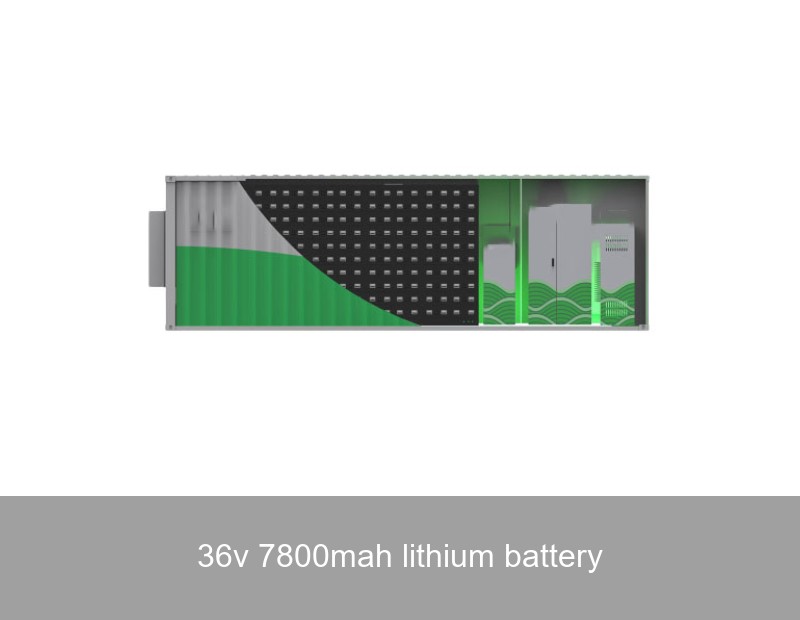
Have you ever wondered what powers the most efficient electric bikes, the most reliable portable power stations, or even sophisticated commercial backup systems? Often, the answer lies in a specific and powerful energy core: the 36V 7800mAh lithium battery. This isn't just a random set of numbers; it's a precise recipe for robust, sustained power. In this article, we'll demystify this battery specification, explore its real-world applications, and show you how understanding this technology is key to choosing the right energy solution for your home, business, or adventure.
Table of Contents
Specs Decoded: What Does 36V 7800mAh Actually Mean?
Let's break it down simply. Think of a battery as a water tank. The Voltage (36V) is like the water pressure—it determines the "force" with which the electrical energy is delivered. Many mid-to-high-power devices, like e-bikes and some power tools, are designed to operate efficiently at this 36V pressure. The Capacity (7800mAh, or 7.8Ah) is the size of the tank—it tells you how much total energy is stored. A 7800mAh battery can, in theory, deliver 7800 milliamps for one hour, or 3900 milliamps for two hours, before needing a recharge.
When you multiply voltage and capacity, you get the true measure of energy: Watt-hours (Wh). For our 36V 7800mAh battery, that's 36V x 7.8Ah = 280.8 Watt-hours. This single number is incredibly useful. It allows you to compare batteries of different voltages and directly estimate how long it can power a device. For example, a 50W device would run for roughly 5.6 hours (280.8Wh / 50W).

Image Source: Unsplash - A visual representation of advanced lithium battery cells.
Why Lithium Technology Reigns Supreme
Not all 36V batteries are created equal. The "lithium" in 36V 7800mAh lithium battery refers to the chemistry, and it's a game-changer. Compared to older lead-acid or nickel-metal hydride batteries, lithium-ion (Li-ion) and the more advanced Lithium Iron Phosphate (LiFePO4) offer decisive advantages:
- Higher Energy Density: More power in a smaller, lighter package. Crucial for e-mobility.
- Longer Lifespan: They can endure thousands of charge-discharge cycles, significantly reducing long-term cost.
- Faster Charging: They accept charge much more quickly than alternatives.
- Lower Self-Discharge: They hold their charge for months when not in use.
For demanding applications, the stability and cycle life of LiFePO4 chemistry is particularly noteworthy. It's inherently safer and can last 4-5 times longer than standard Li-ion, making it the preferred choice for stationary storage, as championed by companies like Highjoule in their commercial and residential energy storage systems.
Real-World Applications: Where This Battery Shines
A single 36V 7800mAh pack is a versatile powerhouse. You'll commonly find it in:
- High-Performance E-Bikes & E-Scooters: Providing the perfect balance of speed, range, and weight for a comfortable commute.
- Professional Power Tools: Running heavy-duty cordless drills, saws, and landscaping equipment for longer periods.
- Portable Power Stations: Serving as the core energy bank for camping, tailgating, or emergency home backup for essential devices.
But the real magic happens when these battery cells are assembled into large, intelligent systems. This is where Highjoule's expertise transforms basic components into reliable energy independence. While a single 36V pack might power a bike, hundreds of similar cells, organized into sophisticated battery modules and managed by a cutting-edge Battery Management System (BMS), can power a business.
Case Study: Powering a Small Business Through Grid Uncertainty
Consider "The Green Cup," a small coffee roastery in Bavaria, Germany. Their roasting machines and espresso equipment are sensitive to power fluctuations, and even a brief outage ruins a production batch. Facing an unreliable local grid and rising energy costs, they sought a solution.
They installed a Highjoule C&I ESS-30, a containerized commercial energy storage system. While not powered by a single 36V battery, the system utilizes the same fundamental lithium (LiFePO4) cell technology, scaled up to a massive 30 kWh capacity. The system was integrated with their existing rooftop solar panels.
| Metric | Before Highjoule System | After Highjoule System |
|---|---|---|
| Grid Dependency During Operations | 100% | < 20% (sunny days) |
| Energy Cost Impact | High, subject to peak rates | Reduced by ~40% via solar self-consumption & peak shaving |
| Production Halts from Micro-Outages | 3-5 per year | Zero since installation |
This real-world example, based on common European C&I challenges, shows how scalable lithium battery technology provides not just backup, but tangible financial and operational resilience. You can read more about grid stability challenges in Europe from the European Network of Transmission System Operators (ENTSO-E).
Beyond the Cell: The System is What Matters
A high-quality 36V 7800mAh cell is just the beginning. Its performance, safety, and longevity are entirely dependent on the system built around it. This is the core of Highjoule's philosophy. We provide not just batteries, but complete, intelligent power solutions.
For instance, our Highjoule Home Energy Hub for the residential market might utilize a 48V architecture for greater efficiency but is built with the same rigorous principles: military-grade LiFePO4 cells, an AI-driven BMS that monitors every cell for health and safety, and seamless integration with solar inverters. For larger-scale needs, our industrial and microgrid solutions offer modular, containerized systems that can be scaled from hundreds of kWh to multiple MWh, ensuring clean, reliable power for factories, farms, or remote communities.

Image Source: Unsplash - A modern home integrated with solar and battery storage.
Choosing the Right 36V Solution for You
So, whether you're looking at a specific 36V 7800mAh lithium battery for a device or a comprehensive energy storage system, ask these key questions:
- What is the true chemistry? (LiFePO4 is superior for safety and lifespan).
- What is the quality of the Battery Management System (BMS)? This is the brain that prevents overcharge, over-discharge, and overheating.
- What are the cycle life and warranty? A reputable provider will offer a clear, long-term warranty backed by robust cycle life data.
- Does it integrate with my existing or planned renewable sources? Like solar panels?
For deeper technical insights into lithium battery performance metrics, resources like the U.S. DOE Battery Testing Manual provide valuable context.
Where Does Highjoule Fit In?
At Highjoule, we apply the engineering excellence required for large-scale, mission-critical storage down to the cell level. Our products, from residential hubs to massive microgrid solutions, are designed with an uncompromising focus on intelligence, safety, and durability. We ensure that the fundamental power of a lithium cell is fully realized in a system you can trust for decades.
Now that you understand the capability encapsulated in a specification like "36V 7800mAh," what could reliable, intelligent energy storage unlock for you? Is it complete energy independence for your home, operational continuity for your business, or simply the peace of mind that comes with true power resilience?
 Inquiry
 Online Chat