


4 in 1 Energy Storage Cabinet: The All-in-One Power Hub for Modern Energy Needs
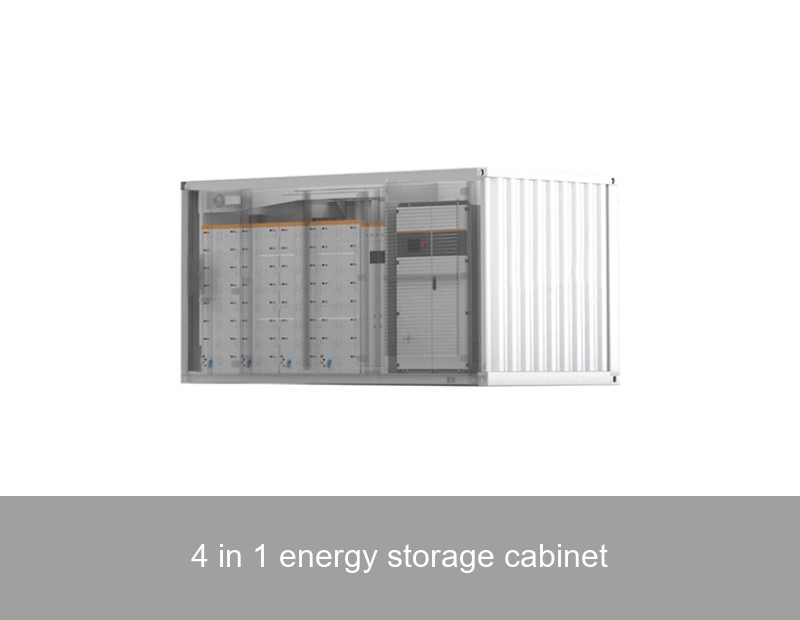
Imagine a single, sleek unit that not only stores solar energy but also manages your power flow, protects your equipment, and seamlessly connects to the grid. This isn't a futuristic concept; it's the reality of the 4 in 1 energy storage cabinet. As electricity grids face unprecedented strain and renewable adoption soars, both businesses and homeowners are seeking smarter, more integrated solutions. The "4-in-1" terminology elegantly captures a major industry shift: the move away from disparate, component-heavy installations towards unified, intelligent systems. In this article, we'll demystify what makes this integrated cabinet so revolutionary and explore how it's shaping a more resilient and efficient energy future.
Table of Contents
- What is a 4 in 1 Energy Storage Cabinet?
- Deconstructing the "4 in 1": The Four Core Functions
- The Driving Forces: Why This Solution is Gaining Traction Now
- A Real-World Case Study: Powering a German Manufacturing SME
- The Highjoule Approach: Engineering Intelligence into Every Cabinet
- Beyond Storage: Future Trends and Your Next Steps
What is a 4 in 1 Energy Storage Cabinet?
At its core, a 4 in 1 energy storage cabinet is a pre-integrated, containerized system that combines four critical energy management components into one physical enclosure. Traditionally, a full solar-plus-storage installation required separate pieces: the battery rack, the inverter, the power conversion system (PCS), and the energy management system (EMS) with its switchgear. This meant more space, more complex wiring, higher installation costs, and potential compatibility headaches. The 4-in-1 cabinet consolidates all this into a single, factory-tested unit. Think of it as the difference between building a computer from individual parts versus buying a perfectly optimized, ready-to-use laptop. The result is a plug-and-play powerhouse that simplifies deployment, enhances safety, and unlocks sophisticated energy control.

Credit: Modern energy storage solutions require integration and safety. Image from Unsplash.
Deconstructing the "4 in 1": The Four Core Functions
Let's break down the key elements that make this system so powerful:
- 1. Battery System (The "Fuel Tank"): This is the heart—the actual lithium-ion (typically LFP) battery modules that store electrical energy. The cabinet houses these in a thermally managed, safe environment.
- 2. Power Conversion System (PCS) / Hybrid Inverter (The "Engine"): This critical component handles the conversion between direct current (DC) from the batteries and solar panels, and alternating current (AC) used by your building and the grid. It's what allows bi-directional flow: charging from AC or DC sources and discharging to power your loads.
- 3. Energy Management System (EMS) & Smart Controls (The "Brain"): This is the intelligence hub. The EMS uses software and hardware to monitor, control, and optimize energy flow based on tariffs, weather forecasts, consumption patterns, and grid signals. It decides when to charge, when to discharge, and how to prioritize power sources.
- 4. Integrated Safety & Grid Connection (The "Nervous System"): This includes built-in circuit breakers, fire suppression, cooling systems, and grid-interconnection components. It ensures safe operation, complies with local grid codes, and provides essential protection for both the system and the facility.
The synergy of these four functions in one cabinet is what delivers remarkable efficiency gains. A study by the National Renewable Energy Lab (NREL) highlights how integrated power conversion and controls can reduce system losses by up to 15% compared to legacy setups.
The Driving Forces: Why This Solution is Gaining Traction Now
The rise of the 4 in 1 energy storage cabinet isn't accidental. It's a direct response to several converging market phenomena:
- Grid Volatility & Rising Costs: In both Europe and the U.S., energy prices have seen significant fluctuations. Businesses seek independence and predictability. An integrated storage system allows for peak shaving—using stored energy during expensive peak rate periods—directly impacting the bottom line.
- Solar Proliferation: As solar PV becomes ubiquitous, the "duck curve" problem deepens, where grid demand spikes as solar production falls at sunset. Storage is the essential counterpart to solar, and an integrated cabinet makes adding storage to new or existing solar projects straightforward.
- Space & Scalability Constraints: Commercial and industrial sites often have limited space for electrical equipment. A single, compact cabinet with a smaller footprint is far more attractive than a dedicated battery room.
The data speaks for itself. The European energy storage market is projected to grow at a CAGR of over 20% through 2030, with commercial & industrial (C&I) segments leading the charge, driven by the need for energy resilience and cost management.
A Real-World Case Study: Powering a German Manufacturing SME
Let's look at a concrete example. A mid-sized automotive parts manufacturer near Stuttgart, Germany, faced two major challenges: soaring energy costs that threatened competitiveness, and a need for uninterrupted power to prevent costly production line halts. Their existing 500 kW rooftop solar array was underutilized, often exporting excess power at low feed-in tariffs.
Their solution was the installation of a 4 in 1 energy storage cabinet system, specifically Highjoule's H-Cube Commercial Series. This single cabinet, with 250 kWh of storage capacity and a 150 kW inverter, was installed adjacent to their main distribution panel over a single weekend.
| Metric | Before Installation | After Installation (12-month avg.) |
|---|---|---|
| Grid Energy Consumption During Peak Hours | ~80% | ~20% |
| Solar Self-Consumption Rate | 35% | 85% |
| Annual Energy Cost Savings | Baseline | €42,000 |
| Payback Period (with incentives) | N/A | 4.2 years |
The system's integrated EMS was programmed to prioritize charging from excess solar, then discharge during the 4-hour evening peak period defined by their utility. It also provides seamless backup power for critical loads during grid outages. The factory manager noted, "The simplicity was key. One unit, one interface, and it just works. It turned our solar panels from a nice-to-have into a core strategic asset."
The Highjoule Approach: Engineering Intelligence into Every Cabinet
At Highjoule, we've been at the forefront of this integration trend since our founding in 2005. Our philosophy is that a true 4 in 1 energy storage cabinet must be more than just a mechanical bundling of parts; it must be a cyber-physical system where hardware and software are co-engineered for maximum performance and longevity.
Our flagship product lines, like the H-Cube for C&I applications and the more compact HomeHub for residential use, embody this principle. They feature:
- Proactive Thermal Runaway Prevention: Using multi-sensor arrays and AI-driven algorithms to detect potential battery cell issues weeks before they become a problem, a feature born from our deep expertise in battery chemistry.
- Grid-Interactive Intelligence: Our EMS can be configured to participate in grid services like frequency response (where market structures allow), creating an additional revenue stream for our clients. It's designed to comply with evolving grid standards like UL 9540 in the U.S. and the relevant IEC standards in Europe.
- Modular Scalability: Need more capacity? Our cabinets are designed to be stacked or paralleled, allowing energy capacity and power output to be scaled independently to match future growth.
This deep integration allows us to offer comprehensive services, from initial energy audit and financial modeling to remote monitoring, predictive maintenance, and end-of-life battery recycling—a true cradle-to-cradle service model. You can learn more about evolving safety standards from a source like the U.S. Department of Energy's Solar Energy Technologies Office.

Credit: Integrated storage solutions seamlessly pair with commercial solar installations. Image from Unsplash.
Beyond Storage: Future Trends and Your Next Steps
The evolution of the 4 in 1 energy storage cabinet is ongoing. We are already seeing the integration of "5th and 6th" functions, such as embedded electric vehicle (EV) charging controllers or hydrogen-ready interfaces, turning these cabinets into true multi-vector energy hubs. The rise of virtual power plants (VPPs), where thousands of distributed storage units are aggregated to act as a single power plant, will further elevate the importance of the smart, communicative EMS at the heart of these systems.
So, what does this mean for you? Whether you're a facility manager tired of volatile utility bills, a homeowner wanting to maximize a solar investment, or a developer designing a resilient microgrid, the integrated cabinet approach demands consideration. It represents a mature, efficient, and cost-effective paradigm in energy storage.
Given your specific energy profile and goals, what would be the primary driver for you to consider an integrated system: immediate cost savings, long-term energy independence, or contributing to a more stable community grid?
 Inquiry
 Online Chat