


Navigating Solar Panel Prices in Nigeria: A Guide to Smart Investment and Reliable Power
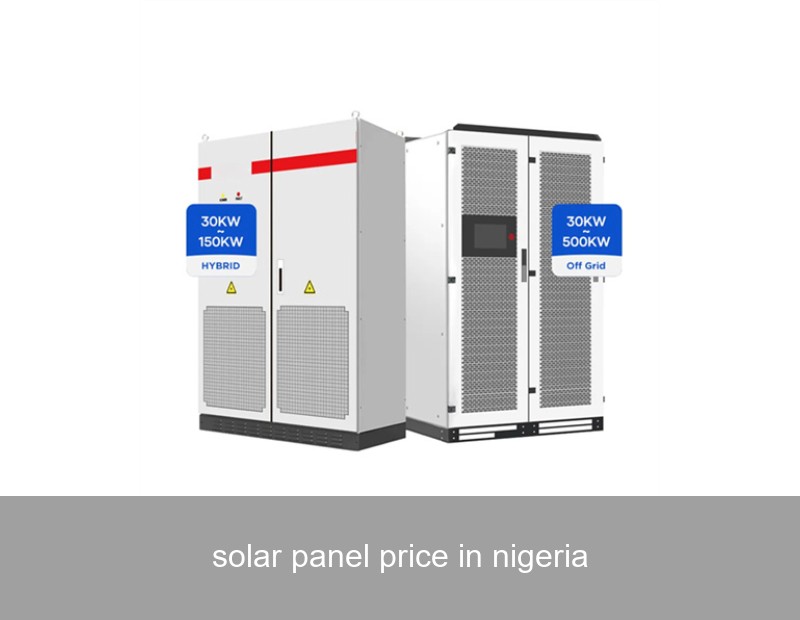
If you're researching solar panel prices in Nigeria, you're likely seeking more than just a cost figure. You're looking for a lasting solution to erratic grid power, soaring diesel costs, and the desire for energy independence. The initial price tag is just one piece of the puzzle. True value lies in understanding the total system, its long-term performance, and the partner you choose for this critical investment. As a global leader in advanced energy storage, Highjoule has witnessed how the right technology combination transforms solar from a simple purchase into a strategic asset for homes and businesses across regions with similar challenges to Nigeria's.
Table of Contents
- The Real Breakdown: What Constitutes Solar Panel Prices in Nigeria?
- The Critical Component Beyond Panels: Why Your Battery Defines Your Experience
- From Theory to Reality: A Lagos Business Case Study
- How Highjoule's Technology Optimizes Your Solar Investment
- Making an Informed Decision: Key Questions Beyond the Quote
The Real Breakdown: What Constitutes Solar Panel Prices in Nigeria?
When you receive a quote for a solar system, the panel cost often gets the most attention. However, a typical grid-tie or hybrid solar system includes several key components, each affecting performance and price:
- Solar Panels (Modules): Prices vary by efficiency (monocrystalline being higher efficiency and cost than polycrystalline), brand, and warranty. The trend, globally, is falling panel costs, which is a positive signal for the market (IEA Renewables 2023 Report).
- Inverter: The brain of the system, converting DC from panels to usable AC. Its capacity and quality (pure sine wave vs. modified sine wave) significantly impact price.
- Battery Energy Storage System (BESS): This is often the most significant cost driver and the most critical for reliability. Capacity (kWh), battery chemistry (lead-acid vs. lithium-ion), cycle life, and depth of discharge all factor in.
- Balance of System (BOS): Mounting structures, cables, connectors, circuit protection, and monitoring systems.
- Installation & Soft Costs: Design, permitting, labor, and the installer's expertise.
Therefore, comparing solely on a per-panel price is misleading. A cheaper system with inferior batteries may need replacement in 2-3 years, while a robust system with advanced lithium-ion storage can last 10+ years, offering a lower total cost of ownership.
The Critical Component Beyond Panels: Why Your Battery Defines Your Experience
In a context like Nigeria's, where the grid is unstable and solar hours are finite, the battery storage system isn't an add-on—it's the cornerstone. It determines how much of your solar energy you can actually use at night or during cloudy periods.
Traditional lead-acid batteries have a lower upfront cost but a shorter lifespan (300-500 cycles) and require regular maintenance. Modern lithium-ion solutions, particularly Lithium Iron Phosphate (LFP), offer a game-changing value proposition:
| Feature | Traditional Lead-Acid | Advanced LFP (e.g., Highjoule) |
|---|---|---|
| Cycle Life | 300 - 500 cycles | 6,000+ cycles |
| Depth of Discharge | ~50% | >90% |
| Lifespan | 2-3 years | 10+ years |
| Maintenance | High (Watering) | Virtually None |
| Safety | Risk of acid leak, gas | Inherently stable chemistry |
This means an LFP battery delivers more usable energy over its lifetime, making the levelized cost of storage (LCOS) significantly lower. This is where Highjoule's expertise becomes pivotal. Our integrated storage systems are engineered for harsh climates and are built with these long-life LFP cells, coupled with intelligent energy management software that optimizes every charge and discharge cycle to maximize longevity.

Image Source: Unsplash (Representative image of advanced battery storage)
From Theory to Reality: A Lagos Business Case Study
Let's move beyond theory. Consider a mid-sized garment factory in Lagos. Their challenge: 12-14 hours of daily grid outage, forcing reliance on diesel generators at a cost of over ₦400 per kWh generated. Their goal: reduce diesel use by 90% and secure power for critical sewing and finishing equipment.
The Solution & Data: A 100kW solar PV array was paired with a 300kWh Highjoule H2-Stack commercial battery system and a bi-directional inverter. The system was designed to power the full daytime load via solar, charge the batteries, and seamlessly take over during grid outages.
- Pre-Installation: Monthly diesel cost: ~₦4.8 Million.
- Post-Installation (12-month average): Monthly diesel cost: ~₦350,000 (used only for rare, extended poor weather).
- Annual Savings: ~₦53.4 Million in fuel costs alone.
- ROI: The system paid for itself in under 4 years.
- Additional Benefit: Stable voltage protected sensitive machinery, reducing maintenance costs and production downtime.
This case highlights that the solar panel price in Nigeria is a gateway to a larger financial equation. The high-performance storage system was the key to unlocking those dramatic savings by ensuring solar energy was available precisely when needed.
How Highjoule's Technology Optimizes Your Solar Investment
At Highjoule, we don't just supply batteries; we provide intelligent energy platforms. For the Nigerian market and similar environments, our systems offer distinct advantages that protect and enhance your solar investment:
- Adaptive Thermal Management: Our systems actively manage temperature, a critical factor for battery life in hot climates, ensuring optimal performance and longevity where it matters most.
- Grid-Interactive Intelligence: Our inverters and controllers can be configured for peak shaving and load management, further reducing energy costs even when the grid is present.
- Scalable Architecture: Starting with a core system? Our modular H2-Stack design allows you to easily add more battery capacity as your needs grow, protecting your initial investment.
- Remote Monitoring & Diagnostics: Proactive system health checks and performance data accessible via a cloud portal give you and your installer peace of mind and prevent small issues from becoming big problems.
By integrating Highjoule's storage into your solar project, you're not just buying components; you're investing in a predictable, manageable, and sustainable power ecosystem.

Image Source: Unsplash (Representative image of energy management monitoring)
Making an Informed Decision: Key Questions Beyond the Quote
As you evaluate proposals, empower yourself with these questions for your installer or supplier:
- "What is the total installed cost per kilowatt-hour (kWh) of usable storage over the system's warranted lifetime?" (This gets to the true LCOS).
- "Can you provide a detailed simulation of my expected energy generation, self-consumption, and grid/diesel backup needs across different seasons?"
- "What is the warranty on the battery's end-of-warranty capacity?" (e.g., Guaranteed 70% capacity after 10 years is a strong indicator).
- "How does the system's software manage battery health and optimize for my specific usage patterns?"
- "Can you reference a similar commercial/industrial installation I can speak to?"
Remember, the most competitive solar panel price in Nigeria might not lead to the most competitive long-term energy solution. The synergy between high-quality panels, a robust inverter, and an intelligent, durable storage system like Highjoule's is what delivers true energy independence and financial return.
Given the rapid evolution of energy technology and the specific challenges of your location, what is the one operational bottleneck or cost center that reliable, stored solar power could eliminate for your business or home tomorrow?
 Inquiry
 Online Chat