


Unlocking Maximum Value: A Deep Dive into 400W Monocrystalline Panels for Modern Solar Systems
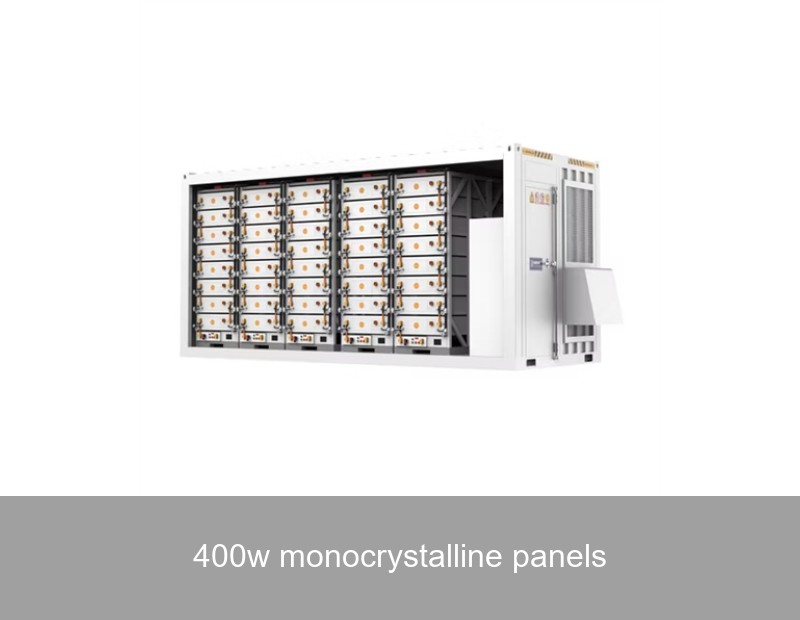
If you're exploring solar options for your home or business, you've likely encountered the term "400W monocrystalline panels." This isn't just another technical specification; it represents a significant leap in residential and commercial solar technology. But what does it truly mean for your energy independence, efficiency, and return on investment? As energy demands rise and roof space becomes a premium, the shift towards higher-wattage, more efficient panels like the 400W monocrystalline variant is becoming the new standard. Let's explore why these panels are game-changers and how pairing them with the right storage solution is the key to a truly resilient and cost-effective energy system.
Table of Contents
- The Evolution to 400W: Why Panel Power Matters
- The Monocrystalline Advantage: Efficiency Defined
- The Real-World Math: Output, Savings, and Payback
- Beyond the Panels: The Critical Role of Smart Storage
- Case Study: Maximizing a Californian Home's Solar Potential
- Future-Proofing Your Investment
The Evolution to 400W: Why Panel Power Matters
Just a few years ago, a 300W residential solar panel was considered high-performance. Today, the benchmark has shifted to 400W and beyond. This isn't mere marketing; it's a direct result of advancements in photovoltaic (PV) cell technology, particularly in monocrystalline silicon production. The core benefit is simple: more power from the same physical footprint. A typical 400W monocrystalline panel might have similar dimensions to an older 320W panel, but it captures and converts sunlight into electricity far more effectively.
This higher power density is crucial for several reasons. For homeowners with limited roof space (think complex roof lines, skylights, or shaded areas), fewer 400W panels are needed to achieve a target system size, simplifying installation and potentially lowering balance-of-system costs. For commercial installations, it means maximizing energy generation per square meter of available space, directly impacting the bottom line.
The Monocrystalline Advantage: Efficiency Defined
Not all 400W panels are created equal. The "monocrystalline" designation is key. These panels are made from single-crystal silicon, which allows electrons to flow more freely compared to the multi-crystal structure of polycrystalline panels. The result? Higher efficiency ratings.
While a standard polycrystalline panel might operate at 17-18% efficiency, modern 400W monocrystalline panels routinely achieve efficiencies of 20-22% or more. This means they convert a greater percentage of the sunlight that hits them into usable electricity, especially beneficial in low-light conditions or on days with indirect sunlight. They also typically have a higher temperature coefficient, meaning their performance degrades less on extremely hot days—a vital factor for installations in sun-drenched regions like Southern Europe or the American Southwest.

Image Source: Unsplash - Close-up of monocrystalline solar cells.
Key Technologies Behind 400W Panels:
- PERC (Passivated Emitter and Rear Cell): Enhances light absorption and reduces electron recombination, boosting efficiency.
- Half-Cut Cells: Cells are cut in half, reducing internal resistance and improving shade tolerance and overall durability.
- Multi-Busbar (MBB) & Shingled Designs: Increase the number of current-carrying ribbons, reducing losses and improving reliability.
The Real-World Math: Output, Savings, and Payback
Let's translate specs into savings. Assume a home in Munich, Germany, with a south-facing roof. Installing a 6 kW system would require:
- 20 x 300W panels (older standard)
- 15 x 400W monocrystalline panels (current standard)
With the higher-efficiency 400W panels, the system not only uses less roof space but, due to better performance in diffuse light, can generate more total annual kilowatt-hours (kWh). According to data from the National Renewable Energy Laboratory (NREL), a well-oriented, high-efficiency system in Central Europe can produce approximately 950-1050 kWh per installed kW per year. That small percentage gain in efficiency compounds into significant extra energy over the system's 25+ year lifespan.
| Factor | 300W Panel System (20 panels) | 400W Monocrystalline Panel System (15 panels) |
|---|---|---|
| Total System Size | 6 kW | 6 kW |
| Estimated Annual Production (Munich) | ~5,700 kWh | ~5,850 kWh (+2.6%)* |
| Roof Space Used | Higher | Lower |
| Balance-of-System Costs | Potentially Higher | Potentially Lower (fewer mounts, less labor) |
*Assumes a 2% higher performance ratio due to advanced cell technology and better temperature coefficient.
Beyond the Panels: The Critical Role of Smart Storage
Here's the insight many miss: high-performance panels are only half the equation. The true potential of your 400W monocrystalline array is unlocked when paired with an intelligent battery storage system. Why? Solar panels produce power primarily during the day, but energy demand often peaks in the early morning and evening. Without storage, excess solar energy is fed back to the grid, often at a low feed-in tariff, while you later buy back expensive power from the utility.
This is where Highjoule's expertise becomes critical. As a leader in advanced energy storage since 2005, we understand that a panel's output must be effectively captured, managed, and dispatched. Our Hive™ Home Energy System is engineered to seamlessly integrate with high-power solar arrays. Its advanced lithium-ion battery chemistry and predictive energy management software ensure every kilowatt-hour your 400W panels produce is stored for when you need it most, maximizing self-consumption and shielding you from peak utility rates.
For commercial and industrial applications, our GridSynergy™ BESS (Battery Energy Storage System) provides scalable storage that can manage the substantial output from large-scale monocrystalline installations, enabling load shifting, demand charge reduction, and backup power resilience.
Case Study: Maximizing a Californian Home's Solar Potential
Consider the real-world example of the Miller residence in Sacramento, California. In 2022, they upgraded their aging 5 kW solar system. Their constraints were clear: a roof with limited unshaded area and a desire for full home backup during frequent Public Safety Power Shutoffs (PSPS).
Solution: A new 8.4 kW DC system using 21 x 400W high-efficiency monocrystalline panels, paired with a Highjoule Hive™ 12 kWh storage system and a hybrid inverter.
- Annual Production: 12,800 kWh (exceeding the estimated 12,200 kWh).
- Self-Consumption Rate: Increased from 35% (old system, no battery) to 85%.
- Utility Bill Impact: Achieved a near-net-zero bill, with minimal imports during winter months.
- Resilience: The system provided 36 hours of critical load backup during a two-day PSPS event, a feature impossible with panels alone.
This case underscores the synergy: the 400W panels maximized generation on a constrained roof, while the Highjoule storage maximized the utilization of that generated power, delivering both economic and reliability benefits. Data from the U.S. DOE Solar Energy Technologies Office confirms that pairing storage with solar can increase the value of solar generation by 30-50% for homeowners.

Image Source: Unsplash - Home with solar panels and battery storage unit.
Future-Proofing Your Investment
Choosing 400W monocrystalline panels is a forward-thinking decision. Their higher output and efficiency provide a buffer against future energy needs, such as adding an electric vehicle charger or a heat pump. However, to truly future-proof your investment, the system's brain—the inverter and energy management system—must be equally advanced.
Highjoule systems are built with this ethos. Our software receives over-the-air updates, ensuring your energy management strategy evolves with new utility rate structures and your changing consumption patterns. We don't just sell hardware; we provide a continuously optimized intelligent, efficient, and sustainable power solution for the lifespan of your installation.
Essential Questions to Ask Your Installer:
- Given my roof's specific orientation and shading, what is the real annual kWh output I can expect from 400W panels compared to lower-wattage options?
- How does the inverter's efficiency curve match the output profile of high-power panels, especially during clipping conditions?
- What is the recommended storage capacity to maximize the self-consumption of the energy my new panels will produce?
The journey to energy independence isn't just about buying the most powerful panels. It's about designing a holistic system where generation, storage, and intelligence work in concert. So, as you consider those sleek 400W monocrystalline panels for your roof, we leave you with this: What would you power first, knowing your home could generate and store its own reliable, clean energy—day and night?
 Inquiry
 Online Chat