


Understanding the 48V 1000Ah Lithium Ion Battery Price: A Smart Investment for Your Energy Future
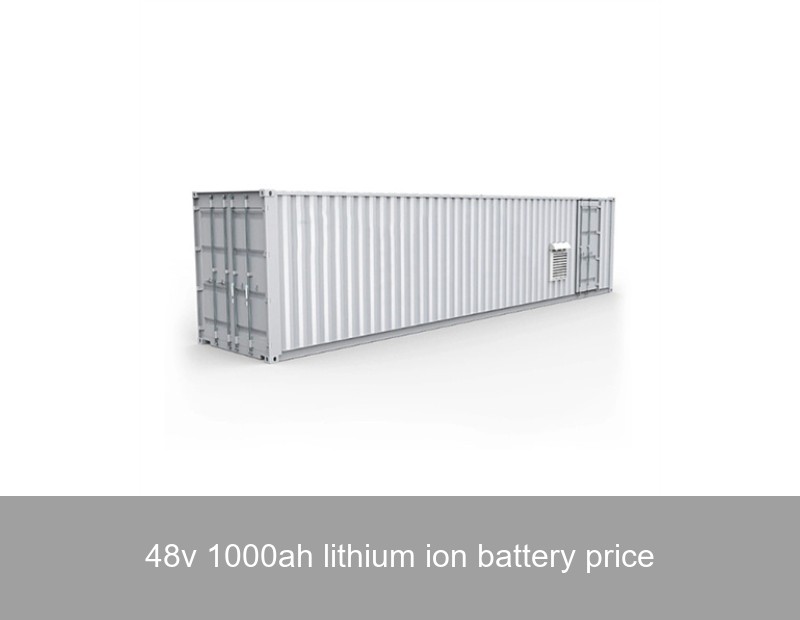
If you're exploring energy storage for your business, home, or a specific off-grid project, you've likely encountered the term "48V 1000Ah lithium-ion battery." It's a powerhouse specification that's becoming the gold standard for serious energy independence. But when you start searching for the 48v 1000ah lithium ion battery price, you'll find a wide range that can be confusing. Is a cheaper system a bargain, or a future headache in disguise? As a leading energy storage provider, Highjoule is here to demystify the costs. The true price isn't just a sticker on a battery; it's an equation involving performance, safety, longevity, and the intelligence of the system surrounding it. Let's break down what you're really investing in.
Table of Contents
- The Phenomenon: Why 48V 1000Ah Systems Are in High Demand
- Breaking Down the Cost: More Than Just Cells in a Box
- The Data Story: Total Cost of Ownership (TCO) is What Matters
- A Real-World Case: Commercial Reliability in Action
- The Highjoule Solution: Where Premium Engineering Meets Value
- Making the Right Choice for Your Needs
The Phenomenon: Why 48V 1000Ah Systems Are in High Demand
So, what's the big deal with a 48-volt, 1000-amp-hour battery? In simple terms, this configuration offers the perfect sweet spot between power and practicality. A 48V system is high enough to efficiently run substantial equipment (like air conditioners, industrial tools, or entire home circuits) with lower current, which means less energy loss and thinner, cheaper cabling. The 1000Ah capacity represents the energy store – think of it as a very large fuel tank. Combined, it provides roughly 48V * 1000Ah = 48,000 watt-hours or 48 kWh of usable energy. This is enough to power an average European household for 1-2 days, back up critical loads in a small business, or form the heart of a robust off-grid solar setup.
The surge in demand is directly tied to the global shift towards renewables. As more homes and businesses install solar panels, they need a reliable "bank" to store the sun's energy for use at night or during grid outages. The 48V 1000Ah lithium-ion battery, particularly using stable Lithium Iron Phosphate (LFP) chemistry, has emerged as the go-to solution for these applications.
Breaking Down the Cost: More Than Just Cells in a Box
When you see a price tag, you must understand what's included. A complete, reliable 48V 1000Ah system is an integrated piece of high-tech engineering, not just a collection of cells.
- Battery Cells (The Core): The quality and chemistry (e.g., premium LFP vs. lower-grade NMC) are the largest cost drivers. High-quality cells ensure safety, cycle life, and stable performance.
- Battery Management System (BMS - The Brain): This is non-negotiable. A sophisticated BMS monitors every cell for voltage, temperature, and current. It prevents overcharging, deep discharge, and thermal runaway. A cheap BMS is the single biggest point of failure.
- Packaging & Safety Systems: This includes robust enclosures (often IP65 rated for dust/water resistance), integrated cooling or thermal management, safety disconnects, and compliance with local certifications (like UL 9540 in the US or IEC 62619 in Europe).
- System Intelligence & Compatibility: Can the battery communicate seamlessly with your solar inverter, generator, and grid? Advanced systems offer software for remote monitoring and energy management, turning a simple battery into a smart grid asset.
As a global leader founded in 2005, Highjoule designs every aspect of its H-Joule Commercial & Industrial (C&I) Energy Storage Series with this holistic philosophy. We don't just sell batteries; we deliver intelligent, UL-certified power solutions where safety, communication, and longevity are engineered in from the start.

Image Source: Unsplash - A professional-grade battery system requires rigorous design and safety standards.
The Data Story: Total Cost of Ownership (TCO) is What Matters
Let's talk numbers. The upfront 48v 1000ah lithium ion battery price can range from $10,000 to over $25,000. The lower end often reflects basic, commoditized packs with minimal BMS intelligence and uncertain cell provenance. The higher end represents fully integrated, certified, and intelligent systems like those from Highjoule.
The critical metric is Total Cost of Ownership (TCO) over the system's life. Consider this comparison:
| Cost Factor | Economy-Grade Battery | Highjoule H-Joule C&I System |
|---|---|---|
| Upfront Price | Lower | Higher (Investment in Quality) |
| Warranted Cycle Life | 3,000 - 4,000 cycles | 6,000+ cycles to 80% capacity |
| Degradation & Replacement | May need replacement 5-7 years sooner | Longer service life reduces replacement needs |
| Efficiency & Energy Loss | Lower round-trip efficiency (~92-94%) | Higher efficiency (~97%) saves more harvested solar |
| Safety & Insurance | May affect insurance premiums; higher risk | UL/IEC certifications can simplify permitting and satisfy insurers |
| 10-Year TCO | Potentially much higher due to earlier replacement & lost energy | Lower effective cost per kWh stored over its lifetime |
According to a 2021 NREL report on stationary storage costs, "balance of system" costs (BMS, packaging, installation) and software are significant portions of the value. Investing in these upfront pays dividends for years.
A Real-World Case: Commercial Reliability in Action
Let's look at a concrete example from our portfolio. A medium-sized dairy farm in Bavaria, Germany, faced unreliable grid power and sought to maximize its large rooftop solar array. They needed a system that could handle cold mornings (high surge currents for milking machines) and provide overnight power for refrigeration.
- Challenge: Ensure 24/7 power for critical cooling and operations, maximize solar self-consumption, and provide grid backup.
- Solution: A Highjoule H-Joule C&I system configured as a 48V 1056Ah battery bank (approx. 50 kWh), integrated with their existing solar inverters and a backup generator via our smart energy management gateway.
- Results (18-month data):
- Self-consumption of solar power increased from 35% to over 80%, drastically reducing grid imports.
- The system seamlessly handled 12 grid outages, the longest being 14 hours, with no operational disruption.
- Remote monitoring allowed the farmer to track performance and diagnose a minor grid fluctuation issue, which was resolved remotely by Highjoule support.
- Projected payback period, with German energy prices, is under 7 years. The 10-year warranty provides long-term security.
This case shows that the value of a premium 48V system isn't just in the kilowatt-hours; it's in reliability, integration, and intelligent management that protects a business's bottom line.
The Highjoule Solution: Where Premium Engineering Meets Value
At Highjoule, we approach the 48v 1000ah lithium ion battery price question by focusing on delivering maximum lifetime value. Our H-Joule series for commercial and residential applications is built with:
- Top-Tier LFP Cells: Sourced from tier-1 manufacturers, ensuring safety, longevity, and performance consistency.
- Proprietary Adaptive BMS: Our system doesn't just monitor; it learns usage patterns and optimizes charging strategies to extend battery life beyond standard ratings.
- Grid-Interactive Intelligence: Our systems are designed for the future, capable of participating in demand response programs (where available) to generate additional revenue streams for our clients.
- Global Support & Warranty: With over 15 years in the industry, our 10-year performance warranty is backed by a global network of technical support specialists.
We provide more than hardware; we offer a comprehensive energy resilience partnership, from initial design and permitting support to commissioning and lifelong monitoring.

Image Source: Unsplash - Integrated solar and storage systems for homes and businesses.
Making the Right Choice for Your Needs
Before you focus solely on the 48v 1000ah lithium ion battery price, ask yourself and your provider these key questions:
- What is the exact cell chemistry and manufacturer?
- Can I see the full certification documents (UL, IEC, etc.) for the complete system, not just the cells?
- How does the BMS handle cell balancing and thermal management in extreme temperatures?
- What is the communication protocol, and is it compatible with my existing or planned inverter/energy management system?
- What does the warranty actually cover? Degradation over time? Labor for replacement?
For further reading on lithium-ion battery technology and safety standards, you can refer to resources from the U.S. Department of Energy and the International Energy Agency.
Your Next Step
The journey to energy independence is a significant decision. We invite you to move beyond a simple price comparison. What specific energy challenge are you hoping to solve with a 48V 1000Ah battery system, and how can intelligent design turn that storage into a strategic asset for your home or business?
 Inquiry
 Online Chat