


The 48V 20Ah Lithium Battery: A Cornerstone of Modern Energy Storage
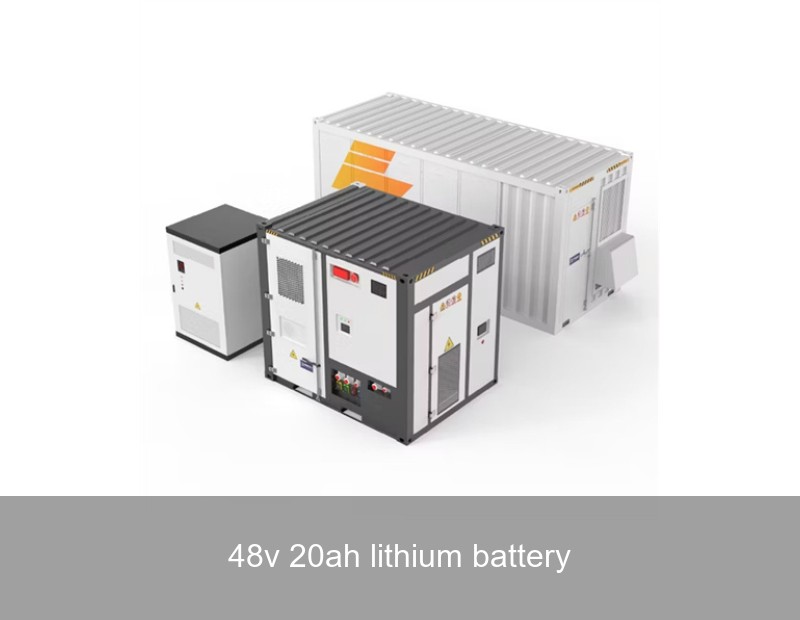
In the world of renewable energy and backup power, a quiet revolution is happening at the system's heart: the battery. While discussions often focus on massive grid-scale storage, a specific workhorse is powering efficiency and reliability in countless applications—the 48V 20Ah lithium battery. This specific voltage and capacity combination has emerged as a sweet spot, balancing power, energy density, and safety for a wide range of uses. But what makes this particular specification so pivotal for homes, businesses, and off-grid systems, especially as we transition to solar and wind? Let's delve into the technology and its transformative role.
Table of Contents
- What is a 48V 20Ah Lithium Battery?
- Why the 48V 20Ah Specification Matters
- Key Applications and Benefits
- A Real-World Case: Solar-Powered Workshop in Bavaria
- Choosing the Right 48V 20Ah Battery System
- The Future of Modular Energy Storage
What is a 48V 20Ah Lithium Battery?
At its core, a 48V 20Ah lithium battery is a rechargeable energy storage unit. The "48V" (Volts) indicates its nominal voltage, a common standard for many mid-power systems. The "20Ah" (Amp-hours) denotes its capacity—it can theoretically deliver 20 amps of current for one hour, or 10 amps for two hours, and so on. In practical terms, this equates to roughly 960 Watt-hours (48V x 20Ah = 960Wh) of usable energy, enough to power a typical home refrigerator for several hours.
The real magic lies in the "lithium" chemistry, typically Lithium Iron Phosphate (LiFePO4). This chemistry offers significant advantages over older lead-acid batteries: it's lighter, lasts 5-10 times longer, charges faster, and maintains higher efficiency. For companies like Highjoule, which specializes in advanced energy storage, leveraging LiFePO4 in modular 48V blocks allows for building intelligent, scalable systems that are both safe and sustainable.

Image Source: Unsplash - A representation of modern, modular lithium battery technology.
Why the 48V 20Ah Specification Matters
You might wonder, why this specific combination? The 48V standard is a key player. It sits high enough to minimize energy loss in cables (compared to 12V or 24V systems) while remaining under the 60V safety threshold that defines "low voltage" in many regions, simplifying installation and reducing safety risks. When paired with a 20Ah capacity, it creates a versatile building block.
Think of it like LEGO® bricks. A single 48V 20Ah lithium battery module is a powerful unit on its own for smaller applications. But its true potential is unlocked through modularity. Highjoule's design philosophy centers on this. Multiple 48V 20Ah modules can be connected in parallel to seamlessly increase total capacity (Ah) without changing the system voltage. This means a homeowner can start with a 2kWh system and later expand to 10kWh or more as their energy needs grow, protecting their initial investment.
Technical Advantages at a Glance
| Feature | Benefit | Highjoule's Implementation |
|---|---|---|
| LiFePO4 Chemistry | Superior safety, long lifespan (6000+ cycles), stable performance. | Core cell technology in all residential and commercial battery systems. |
| 48V Low-Voltage Design | Safer installations, reduced permitting complexity, high efficiency. | Standard across product lines for compatibility and safety. |
| Modular 20Ah (≈1kWh) Blocks | Easy system scaling, simplified service, and reduced downtime. | Plug-and-play expansion in the Highjoule H-Series home storage system. |
| Integrated Battery Management System (BMS) | Protects cells, optimizes performance, enables remote monitoring. | Highjoule's Smart BMS with cloud connectivity for proactive management. |
Key Applications and Benefits
The versatility of the 48V 20ah lithium battery makes it indispensable across sectors.
- Residential Solar + Storage: This is the fastest-growing segment. Homeowners pair these batteries with rooftop solar to maximize self-consumption, store excess daytime energy for use at night, and gain crucial backup power during grid outages. A system built from, say, eight 48V 20Ah modules provides a robust 8kWh solution.
- Commercial & Industrial (C&I): Businesses use them for "peak shaving"—discharging stored energy during high, expensive utility rate periods—and for ensuring uninterrupted power for critical operations. Their modular nature allows for custom-sized systems.
- Microgrids & Off-Grid Systems: In remote locations or community microgrids, 48V battery banks are the standard, often paired with diesel generators and renewables to create stable, clean power islands.
- Specialty Applications: From powering telecom equipment to electric mobility and marine uses, the reliable power profile of this battery size is a preferred choice.
A Real-World Case: Solar-Powered Workshop in Bavaria
Let's move from theory to practice. Consider a carpentry workshop in rural Bavaria, Germany. The owner, Franz, installed a 15kW solar array but faced a dilemma: his shop's power demand peaked in the early morning and evening, misaligned with solar production. He was exporting energy to the grid at low feed-in tariffs and buying it back at high rates.
The Solution: Franz integrated a Highjoule H-Series storage system, configured with ten 48V 20Ah LiFePO4 modules, creating a 10kWh usable storage capacity. The system's intelligent inverter prioritizes solar self-consumption, storing the midday surplus.
The Data-Driven Outcome (12-month period):
- Grid Independence: Increased solar self-consumption from 35% to over 80%.
- Cost Savings: Reduced annual electricity costs by approximately €2,300.
- Reliability: Provided seamless backup during two grid outages, preventing work stoppage.
- ROI: Projected payback period of under 7 years, with a battery warranty extending 10 years.
This case, mirrored across Europe and the U.S., highlights how a well-sized 48V 20Ah lithium battery system translates into tangible economic and operational resilience. Highjoule's role was not just supplying hardware but providing a complete smart energy solution, including system design, grid compliance software, and remote performance monitoring.

Image Source: Unsplash - Example of a commercial solar installation similar to the case study.
Choosing the Right 48V 20Ah Battery System
Not all batteries are created equal. When evaluating a 48V 20Ah lithium battery or a system built from them, look beyond the basic specs. Key considerations include:
- Cycle Life & Warranty: A reputable manufacturer will guarantee a certain number of cycles or years at a specified remaining capacity (e.g., 70% after 10 years).
- Depth of Discharge (DoD): Quality LiFePO4 batteries can safely discharge 90-100% of their capacity regularly, unlike lead-acid which degrades quickly if deeply discharged.
- Integrated Intelligence: A smart BMS and system software are crucial. Highjoule's platform, for instance, allows for OTA updates, energy usage analytics, and integration with smart home ecosystems.
- Safety Certifications: Ensure the product meets regional standards like UL 9540 in the U.S. or IEC 62619 in Europe. These rigorous tests cover electrical, thermal, and mechanical safety.
For deeper technical insights on lithium battery safety standards, you can refer to resources from the U.S. Department of Energy or the international International Energy Agency.
The Future of Modular Energy Storage
The trend is clear: energy storage is becoming modular, software-defined, and deeply integrated with renewable generation. The 48V 20Ah lithium battery module exemplifies this shift. As virtual power plants (VPPs) become more common, aggregated home batteries—like networks of Highjoule systems—will provide grid stability services, turning passive consumers into active grid participants.
This evolution asks us to think differently about power. It's no longer just about consumption; it's about intelligent management and participation. The battery is no longer just a container; it's the brain of a new, decentralized energy paradigm.
Is your home or business ready to transform from an energy consumer into a resilient, efficient energy manager? What would reliable, self-generated power change for you today?
 Inquiry
 Online Chat