


48V 25Ah Lithium Ion Battery: The Powerhouse for Modern Energy Independence
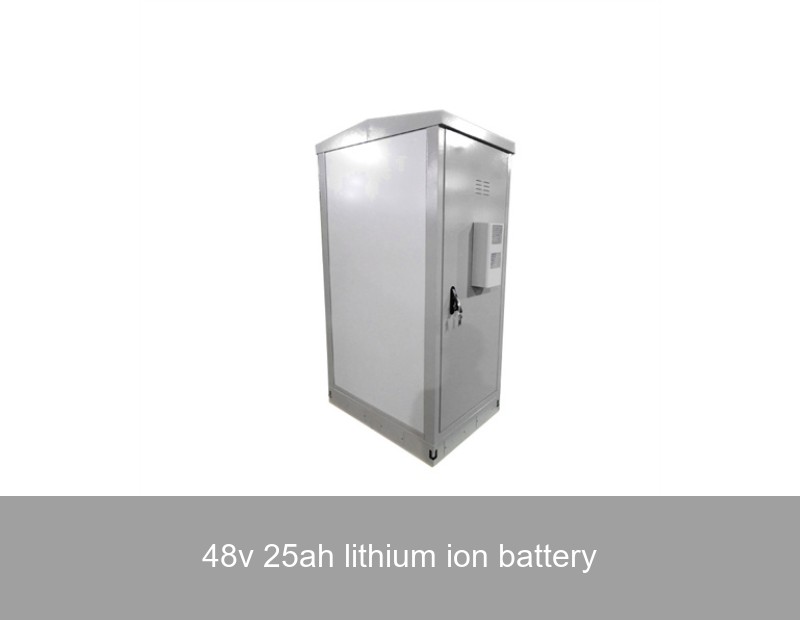
You've likely heard the buzz about lithium-ion technology, but when it comes to reliable, off-grid power for your home, business, or critical equipment, the specific specs matter. A 48V 25Ah lithium ion battery represents more than just numbers—it's a sweet spot in energy storage, balancing substantial capacity with a voltage that efficiently powers everything from solar systems to electric vehicles. In this guide, we'll demystify why this configuration is becoming a cornerstone for sustainable power, and how choosing the right one can transform your energy resilience.
Table of Contents
- Why 48V 25Ah? Decoding the Specifications
- The Real-World Impact: From Sunlight to Reliable Power
- Case Study: Powering a German Farmstead Through the Winter
- Beyond the Basics: What Truly Defines a Quality Battery?
- Highjoule's Approach: Engineered for Longevity and Safety
- Your Next Step Towards Energy Autonomy
Why 48V 25Ah? Decoding the Specifications
Let's break it down. A 48V 25Ah lithium ion battery has a nominal voltage of 48 Volts and a capacity of 25 Amp-hours. In practical terms, this means it can theoretically deliver 25 amps of current for one hour at 48 volts. More importantly, its total energy storage is about 1.2 kilowatt-hours (kWh) (48V * 25Ah = 1200Wh). This makes it a substantial building block.
Why is 48V so popular? It's a perfect balance between efficiency and safety. Higher voltages like 48V reduce current for the same power output, meaning thinner, less expensive wiring and lower energy losses—a critical factor for solar installations and microgrids. The 25Ah capacity is modular; you can connect multiple batteries in parallel to easily scale your storage to 5kWh, 10kWh, or more without overcomplicating the system design.
The Technical Sweet Spot
This configuration is not an accident. It's engineered to meet common demands:
- Residential Solar Storage: A few of these batteries can store excess daytime solar energy to power a home through the evening.
- Telecom Backup: Provides reliable, maintenance-free backup for cell towers.
- Light Electric Vehicles & Mobility: Powers larger golf carts, utility vehicles, and some marine applications with ample torque and range.
- Industrial UPS: Keeps critical machinery and servers online during grid interruptions.
The Real-World Impact: From Sunlight to Reliable Power
The phenomenon is clear: energy volatility is rising, and renewable sources are intermittent. The data is compelling. The U.S. Energy Information Administration notes that the average U.S. customer experienced just over eight hours of power interruptions in 2020. For businesses, each hour can mean significant financial loss.
This is where a robust 48V 25Ah lithium-ion battery system shifts from being an option to a necessity. It acts as the heart of a storage system, capturing clean energy and releasing it precisely when needed. Imagine your solar panels working all day, but instead of sending excess power back to the grid for minimal return, you store it. When the sun sets or the grid fails, your lights, refrigerator, and essential devices stay on seamlessly. The battery becomes your personal energy insurance policy.

Image Source: Unsplash - A modern home integrated with solar and battery storage.
Case Study: Powering a German Farmstead Through the Winter
Let's look at a concrete example from Bavaria, Germany. The Huber family runs a medium-sized dairy farm with an aging grid connection. Their goal: achieve 80% energy self-sufficiency, ensure stable power for milking and cooling systems, and leverage government incentives for renewable storage.
The Solution: A 15kW rooftop solar array was coupled with a modular battery storage system centered on Highjoule's H-Energy Cube 48V series. The system uses eight 48V 25Ah lithium iron phosphate (LFP) modules configured to create a 48V 200Ah (≈9.6kWh) bank.
The Data & Results (Over One Year):
| Metric | Result |
|---|---|
| Self-Consumption of Solar Power | Increased from 35% to 92% |
| Grid Energy Purchased | Reduced by 78% |
| Critical Backup During Grid Outages | 3 incidents, totaling 11 hours - operations uninterrupted |
| System Availability | 99.8% |
| Estimated Payback Period | 6.5 years (with KfW subsidy) |
"The system's modularity was key," explains Franz Huber. "We started with a smaller bank and expanded as our budget allowed. The 48V platform made it simple. The peace of mind during storm-related blackouts alone has been invaluable for our livestock."
Beyond the Basics: What Truly Defines a Quality Battery?
Not all 48V 25Ah batteries are created equal. The label tells you voltage and capacity, but longevity, safety, and performance depend on deeper engineering. Here’s what to scrutinize:
- Chemistry: Lithium Iron Phosphate (LFP) is now the preferred choice for stationary storage over older NMC chemistries. It offers superior thermal stability, longer cycle life (often 6000+ cycles), and avoids cobalt.
- Cycle Life & Warranty: A quality battery will be rated for thousands of full charge-discharge cycles and back it with a 10-year or 6000-cycle warranty. This translates to decades of service.
- Battery Management System (BMS): The brain of the pack. A top-tier BMS provides cell-level monitoring, balancing, and protection against overcharge, deep discharge, and temperature extremes.
- Thermal Management: Passive cooling might suffice for low-power applications, but active thermal management (heating & cooling) ensures optimal performance and lifespan in harsh climates.

Image Source: Unsplash - Close-up of advanced lithium-ion battery module engineering.
Highjoule's Approach: Engineered for Longevity and Safety
At Highjoule, with nearly two decades of experience, we've seen the evolution of energy storage firsthand. Our products, like the H-Energy Cube 48V series, are built around the principle of "right-sizing" core components like the 48V 25Ah module for maximum flexibility and reliability.
Our modules are not just commodity cells in a box. They are integrated systems featuring:
- Military-Grade LFP Cells: Sourced from tier-1 suppliers for the highest cycle life and safety margin.
- Proprietary Adaptive BMS: This system doesn't just protect; it learns usage patterns to optimize charge/discharge strategies, prolonging life expectancy beyond standard ratings.
- Scalable Architecture: Start with a single 1.2kWh (48V 25Ah) module and scale to megawatt-hour installations using the same robust platform, simplifying design and maintenance.
- Global Service Network: Whether you're in Texas or Tyrol, our remote monitoring and local technical support ensure your system operates at peak performance. We provide complete solutions from design and commissioning to ongoing maintenance.
For a commercial client in California, this meant integrating a 500kWh Highjoule system with their existing solar farm. The system, built from hundreds of our standard 48V modules, now provides peak shaving, reducing their demand charges by over 30% annually and providing backup for critical R&D labs. The modularity allowed for a phased installation with zero downtime.
Your Next Step Towards Energy Autonomy
The journey to energy independence starts with a single, informed decision. A 48V 25Ah lithium ion battery is a powerful enabler, but its true value is unlocked when it's part of a well-designed system from a trusted partner. The right technology should fade into the background, providing silent, dependable power day in and day out.
What specific energy challenge—be it rising utility costs, unreliable grid power, or a desire to maximize your solar investment—is most pressing for you right now? How could a modular, high-performance storage system change the equation for your home or business?
 Inquiry
 Online Chat