


The 5 MW Hybrid Energy Storage Cabinet: Your Foundation for Grid Resilience and Cost Savings
a solar farm at noon, producing more power than the local grid can absorb. Now, imagine that same facility at dusk, demand peaking as the sun disappears. This daily dance between renewable generation and energy demand is the central challenge of our clean energy transition. The solution? Intelligent, large-scale energy storage. And at the heart of this solution for commercial and industrial players is a powerful, standardized building block: the 5 MW hybrid energy storage cabinet. This isn't just a big battery; it's a sophisticated, all-in-one power hub designed to stabilize grids, unlock massive financial value, and accelerate decarbonization. Let's explore how this technology is reshaping energy landscapes, particularly in markets like Europe and the United States.
The Grid Challenge: Why We Need Hybrid Solutions
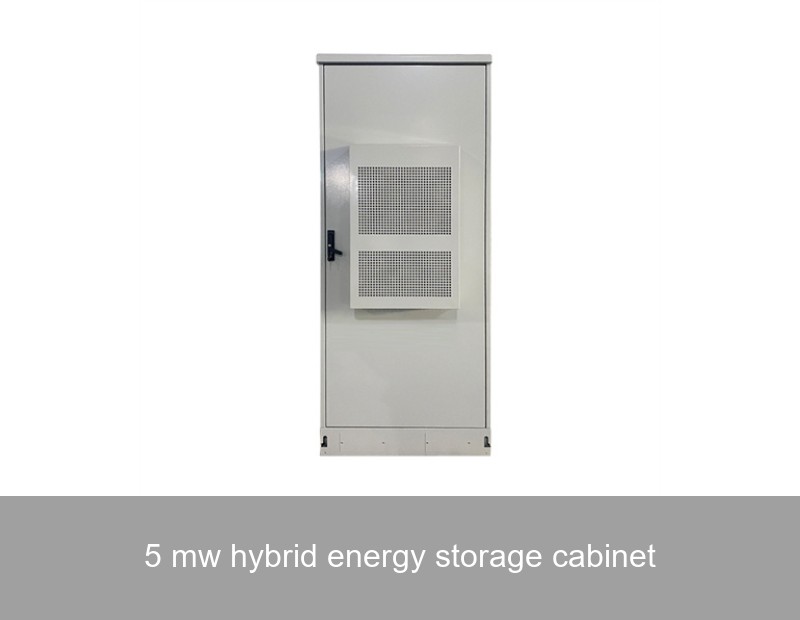
The shift to renewables is undeniable. In the U.S., solar and wind are projected to supply 44% of the nation's electricity by 2050. Europe is pushing even faster, aiming for 45% renewable energy by 2030. But this success creates a new problem: intermittency. The grid needs balance every second of the day. A 5 MW hybrid energy storage cabinet addresses this by combining two key technologies in a single, containerized unit:
- Lithium-Ion Battery: For rapid, high-power response. Perfect for frequency regulation, peak shaving, and short-duration backup (typically 2-4 hours).
- Flow Battery or Advanced Lead-Carbon: For long-duration, deep-cycle stability. Ideal for energy time-shifting (storing midday solar for evening use), capacity firming, and longer backup cycles.
The "hybrid" intelligence lies in a unified controller that dynamically decides, in milliseconds, which technology to use for each grid signal or facility need. This maximizes the system's lifespan and economic return, using each battery type for what it does best.

Image Source: Unsplash - A solar farm paired with energy storage, similar to the applications for a 5 MW hybrid system.
The Data Behind the Demand
Let's talk scale. 5 MW (Megawatts) is a significant capacity. To put it in perspective, 5 MW can:
- Power approximately 3,500-4,000 average European homes for one hour.
- Provide critical backup power for a mid-sized hospital, data center, or manufacturing plant.
- Discharge 10-20 MWh (Megawatt-hours) of energy, depending on its duration configuration (2-4 hours).
Inside the Cabinet: Technology and Innovation
A 5 MW hybrid cabinet is a feat of engineering integration. It's far more than batteries in a box. As a leading provider, Highjoule designs these systems with several core principles:
| Component | Function | Highjoule's Approach |
|---|---|---|
| Power Conversion System (PCS) | Converts DC battery power to AC grid power and vice versa. The "heart" of the system. | Integrated, bi-directional inverters with >98.5% efficiency, ensuring minimal energy loss. |
| Thermal Management | Keeps batteries at optimal temperature for safety, performance, and longevity. | Advanced liquid cooling systems that are quieter and more efficient than forced air, crucial for dense 5 MW cabinets. |
| Energy Management System (EMS) | The "brain." Makes real-time decisions on charging, discharging, and technology allocation. | Highjoule's proprietary AI-driven Helios EMS platform, which can optimize for revenue, savings, or carbon goals. |
| Safety & Monitoring | Prevents, detects, and contains any potential issues. | Multi-layer protection: cell-level fusing, gas detection, fire suppression, and 24/7 remote monitoring from Highjoule's Global Operations Center. |
Real-World Case Study: A U.S. Industrial Plant
Let's move from theory to practice. In 2023, a major automotive parts manufacturer in Ohio faced a dual challenge: volatile energy costs and a corporate mandate to reduce carbon emissions. Their facility had significant, unpredictable spikes in energy demand, leading to six-figure annual "peak demand charges" from their utility. They also had rooftop solar that was often curtailed (turned off) when production exceeded onsite use.
The Solution: Highjoule deployed a turnkey 5 MW / 15 MWh hybrid energy storage system, featuring lithium-ion for immediate peak shaving and a longer-duration technology component for shifting their solar energy. The system was integrated behind-the-meter at their main substation.
The Results (18-Month Performance):
- Cost Savings: Reduced peak demand charges by 92%, saving over $280,000 annually.
- Solar Utilization: Increased consumption of onsite solar from 68% to over 95%, reducing grid purchases.
- Grid Services: The system participates in the PJM Interconnection's frequency regulation market when not serving the facility, generating an additional revenue stream of approximately $45,000 per year.
- ROI: The project achieved a simple payback period of under 5 years.
This case exemplifies the multi-value stack a 5 MW hybrid cabinet can deliver: direct savings, increased renewable use, and new revenue. It's a model being replicated across U.S. industrial zones and European commercial parks.

Image Source: Unsplash - Engineers monitoring a large-scale battery storage control system.
Highjoule's Integrated Approach: From Cabinet to Complete Solution
At Highjoule, we understand that a 5 MW hybrid energy storage cabinet is a critical component, but success depends on the system around it. Founded in 2005, we've evolved from a component supplier to a full-solution partner for commercial, industrial, and utility-scale projects.
Our H-Series Hybrid Storage Cabinet is the physical embodiment of our expertise. It's a pre-engineered, factory-integrated unit that reduces onsite installation time and risk by up to 40%. But we provide more than hardware:
- Project Development & Financing: We help navigate incentives like the U.S. Investment Tax Credit (ITC) or European Union grants, and can connect clients with flexible financing partners.
- AI-Driven Software: Our Helios EMS doesn't just run the cabinet; it connects to weather forecasts, grid price signals, and your production schedule to autonomously maximize value.
- Lifecycle Services: We offer long-term performance guarantees, proactive maintenance, and end-of-life battery recycling programs, ensuring sustainability from cradle to cradle.
For a European supermarket chain, this meant deploying multiple 5 MW-scale systems across distribution centers to create a virtual power plant, collectively reducing their carbon footprint and generating revenue by supporting the national grid during tight periods.
The Future of Energy Management: An Open Question
The 5 MW hybrid cabinet is becoming the standard workhorse for institutional energy management. But technology continues to advance. We're now exploring integrations with hydrogen production and advanced second-life battery applications. The question for any large energy consumer or generator is no longer if to adopt storage, but how to design a system that is both future-proof and profitable today.
What specific energy challenge—be it demand charge spikes, renewable curtailment, or the need for resilient backup power—is most pressing for your operations, and how could a modular, scalable solution like a hybrid storage system be architected to address it?
 Inquiry
 Online Chat