


Why a Solar Kit with Batteries is the Smart Upgrade for Energy Independence
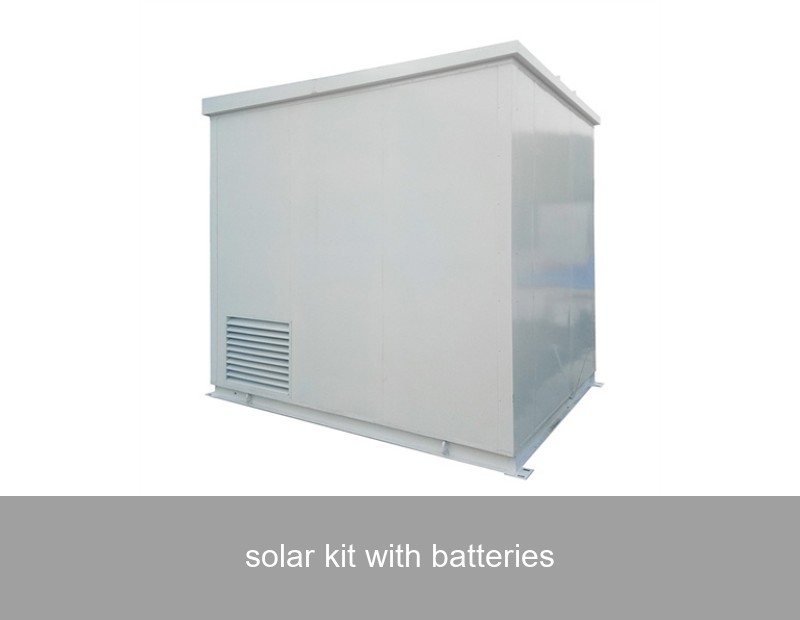
Have you ever looked at your electricity bill and wondered, "What if I could generate and store my own power?" You're not alone. Across Europe and the U.S., homeowners and businesses are moving beyond simple solar panels. They are turning to a comprehensive solar kit with batteries—an integrated system that captures, stores, and intelligently manages solar energy. This isn't just about being green; it's about gaining control, resilience, and long-term savings. As grid instability and energy costs rise, the logic of pairing solar generation with battery storage becomes undeniable. Let's explore how this powerful combination works and why it's becoming a cornerstone of modern energy strategy.
Table of Contents
- The Phenomenon: From Solar Panels to Energy Hubs
- The Data: Quantifying the Shift to Storage
- How a Modern Solar Kit with Batteries Actually Works
- Case Study: A German Bakery's Recipe for Resilience
- Choosing the Right System: Key Considerations
- The Highjoule Advantage: Intelligent Storage Solutions
- The Future is Integrated and Intelligent
The Phenomenon: From Solar Panels to Energy Hubs
For years, solar panels were a one-way street: sunlight in, AC power out, with any excess fed back to the grid. This model worked well with favorable feed-in tariffs. But the energy landscape is shifting. Grid constraints, changing incentive structures, and a growing desire for self-sufficiency are driving a new approach. The modern solar kit with batteries transforms a home or business into a self-contained energy hub. Think of it like this: solar panels are the source, but the battery is the heart of the system, pumping stored energy throughout your property day and night.

Image: A modern energy-independent home featuring a solar kit with battery storage. Source: Unsplash
The Data: Quantifying the Shift to Storage
The numbers tell a compelling story. According to the International Energy Agency (IEA), global renewable capacity additions jumped by almost 50% in 2023, with solar PV accounting for three-quarters of this growth. Crucially, the pairing of storage is accelerating. In the U.S., the Solar Energy Industries Association (SEIA) reports that the residential storage attachment rate—the percentage of new solar systems installed with batteries—has skyrocketed from under 10% a few years ago to over 30% in key markets like California and Hawaii. In Europe, driven by the energy crisis, Germany saw a record number of battery storage installations in 2022, with over 200,000 systems now operating alongside solar PV.
This trend is underpinned by a simple economic and functional logic:
- Maximized Self-Consumption: Store excess daytime solar energy to use in the evening, reducing grid purchases by up to 80%.
- Backup Power: Maintain essential power during grid outages, a feature whose value is immeasurable during storms or blackouts.
- Grid Services: In some markets, advanced systems can even provide grid support, creating potential revenue streams.
How a Modern Solar Kit with Batteries Actually Works
Let's demystify the technology. A contemporary solar kit with batteries is an elegantly integrated system, not just a collection of parts. Here’s a breakdown of the core components and their intelligent interaction:
| Component | Role | Key Feature in Modern Kits |
|---|---|---|
| Solar Panels (PV Array) | Converts sunlight into direct current (DC) electricity. | High-efficiency monocrystalline cells for maximum yield from limited roof space. |
| Inverter/Charger | The system's brain. Converts DC from panels/battery to AC for home use. Manages energy flow. | Hybrid inverters that handle both solar and battery charging/discharging seamlessly. |
| Battery Storage System | Stores excess DC electricity for later use. | Lithium-ion phosphate (LFP) chemistry for safety, longevity (6,000+ cycles), and high depth-of-discharge. |
| Energy Management System (EMS) | Software intelligence that optimizes energy flow based on weather, usage patterns, and tariff rates. | AI-driven learning algorithms that predict consumption and solar generation to optimize storage cycles. |
The magic happens in the software. A smart EMS can decide to charge your battery from solar, from the grid during off-peak low rates, or even hold a reserve for an upcoming storm predicted by a weather forecast API. This level of control is what separates a basic kit from a true smart energy asset.
Case Study: A German Bakery's Recipe for Resilience
Consider the real-world example of "Bäckerei Schmidt," a family-run bakery in Bavaria, Germany. Their challenges were common: high energy costs for refrigeration and ovens, and vulnerability to even short grid interruptions that could spoil ingredients and halt production.
The Solution: In early 2023, they installed a 45 kWp solar array paired with a 60 kWh commercial battery storage system. The system was designed not just for offsetting usage, but specifically to ensure the cold chain and production lines could run uninterrupted during a grid outage.
The Results (12-month period):
- Grid Independence: Increased solar self-consumption from 35% to 92%.
- Cost Savings: Reduced annual electricity costs by €8,500.
- ROI: Projected payback period of under 7 years, factoring in German incentive programs.
- Resilience: Successfully rode through three minor grid disturbances with zero operational impact.
This case highlights the dual value proposition: immediate financial benefit and indispensable operational insurance. For businesses, this is a CAPEX that directly protects revenue and reduces OPEX.
Choosing the Right System: Key Considerations
Not all solar kits with batteries are created equal. When evaluating options, ask these critical questions:
- Battery Chemistry & Warranty: Is it safe LFP chemistry? Does the warranty guarantee a certain capacity (e.g., 70%) after 10 years?
- System Scalability: Can you easily add more battery capacity later if your needs change?
- Software & Monitoring: Does the EMS offer intuitive, real-time monitoring and customizable control modes (e.g., self-consumption, time-of-use, backup priority)?
- Grid Services Readiness: Is the hardware capable of participating in virtual power plants (VPPs) or frequency regulation if available in your market?
- Installation & Service: Does the provider offer certified, local installation and long-term service support?
The Highjoule Advantage: Intelligent Storage Solutions
This is where Highjoule's nearly two decades of expertise comes into play. Since 2005, we have focused on advancing battery energy storage system (BESS) technology for a wide range of applications. For homeowners and businesses seeking a premium solar kit with batteries, our Highjoule HOMESERIES and COMMSERIES solutions are engineered for intelligence, durability, and seamless integration.
Our systems are built around our proprietary Adaptive Energy Operating System (AEOS). Think of AEOS as the conscious mind of your energy system. It doesn't just react; it learns and predicts. By analyzing historical consumption data, local weather patterns, and real-time grid conditions, AEOS automatically schedules your battery's charge and discharge cycles to maximize economic return and ensure backup readiness.

Image: A sleek, modern battery storage unit like those in Highjoule's product lineup. Source: Unsplash
Furthermore, Highjoule designs with the future in mind. Our modular battery cabinets allow for capacity expansion without replacing the entire system. For our commercial clients, our COMMSERIES platforms are engineered to meet the rigorous demands of C&I applications, with advanced features like demand charge management and seamless integration with existing solar arrays or generator sets for microgrid applications.
The Future is Integrated and Intelligent
The evolution of the solar kit with batteries is moving towards even greater integration. We're looking at systems that seamlessly incorporate electric vehicle charging, turning your EV into another mobile storage asset (Vehicle-to-Home or V2H). The concept of community microgrids, where clusters of homes with storage can share energy locally, is also gaining traction, as noted in research from the National Renewable Energy Laboratory (NREL).
The fundamental question is no longer "Should I get solar?" but rather "How can I build a resilient, intelligent energy system for my property?" A high-quality solar and battery kit is the foundational answer. It represents a shift from being a passive consumer to an active manager of your energy destiny.
What specific energy challenge—be it unpredictable bills, frequent outages, or a commitment to sustainability—could a smart, integrated energy system solve for you?
 Inquiry
 Online Chat