


5 MW Solar Panel Energy Storage Cabinet: The Heartbeat of Modern Renewable Power Plants
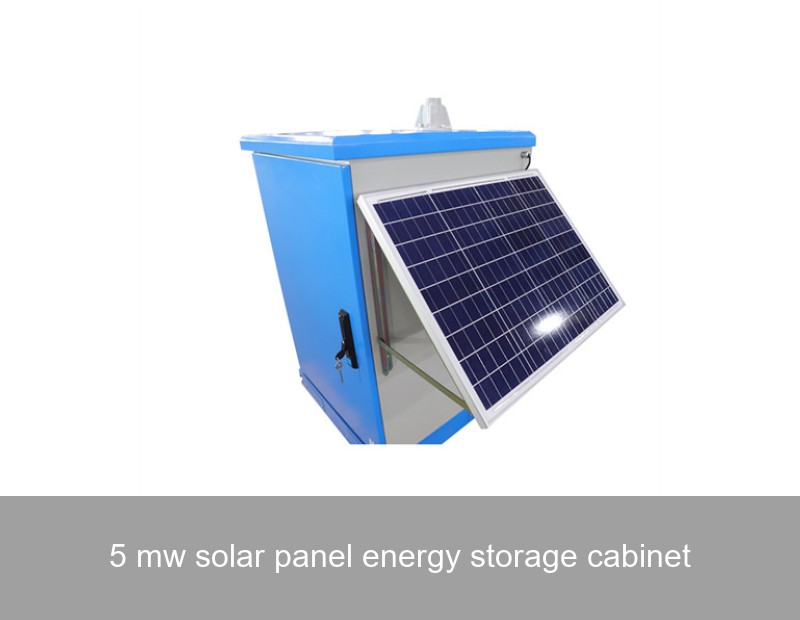
Imagine a sprawling solar farm, its panels glinting under the sun, generating enough clean energy to power thousands of homes. Now, imagine the sun setting, but the power from that farm continuing to flow seamlessly into the grid. This isn't magic; it's the critical function of a 5 MW solar panel energy storage cabinet. For project developers and asset managers in the US and Europe, these large-scale battery energy storage systems (BESS) are no longer a futuristic add-on but the central component ensuring profitability, grid stability, and true energy independence. Let's delve into why this specific scale is becoming the workhorse of commercial and utility-scale renewable integration.
The Phenomenon: From Intermittent to Dispatchable Solar
The rapid growth of solar PV has been a success story, but it introduced a fundamental challenge to grid operators: intermittency. Solar generation is inherently variable, peaking at midday and dropping to zero at night. This creates a duck curve—a deep dip in net load during the day followed by a steep ramp-up as the sun sets—straining conventional power plants and potentially leading to curtailment (wasting) of precious solar energy.
A 5 MW solar panel energy storage cabinet is the definitive solution to this problem. By pairing with a solar farm of 10-20 MW (a common ratio), this system acts as a giant "energy buffer." It stores excess solar generation during peak production hours and releases it during periods of high demand or low generation, effectively "firming" the solar output. This transforms solar from a variable resource into a predictable, dispatchable one, much like a traditional power plant.

Image: Modern solar farms increasingly integrate dedicated battery storage containers to manage output.
The Data: Why 5 MW is a Strategic Sweet Spot
The 5 MW scale isn't arbitrary. Market data and grid requirements have converged to make this capacity a highly efficient and economically viable choice for numerous applications:
- Grid Services: In markets like PJM in the US or National Grid in the UK, frequency regulation services often require bids in increments that align well with multi-MW systems. A 5 MW/10 MWh system (2-hour duration) is perfectly sized to participate effectively in these ancillary service markets, creating a significant revenue stream on top of energy arbitrage.
- Commercial & Industrial (C&I) Scale: For large factories, data centers, or university campuses with substantial solar canopies, a 5 MW storage system can manage demand charges, provide backup power, and optimize self-consumption of solar, leading to payback periods often under 7 years.
- Modular Scalability: A 5 MW cabinet often serves as a standardized building block. Projects can start at 5 MW and scale to 20, 50, or 100 MW by adding more units in parallel, simplifying design, procurement, and maintenance. According to a Wood Mackenzie report, front-of-the-meter storage deployments are increasingly dominated by these modular, containerized solutions.
| Application | Primary Value | Typical Configuration |
|---|---|---|
| Solar Firming & Time-Shift | Increase solar utilization, sell power at peak prices | 5 MW / 10-20 MWh (2-4 hour duration) |
| Commercial Peak Shaving | Reduce demand charges, provide backup | 5 MW / 5 MWh (1 hour duration) |
| Grid Frequency Regulation | Fast response to grid signals for revenue | 5 MW / 2.5 MWh (0.5 hour duration) |
| Microgrid Stabilization | Ensure islanding capability and voltage support | 5 MW / 15 MWh (3 hour duration+) |
The Case Study: Firming Solar Power in Southern Europe
Let's look at a real-world example from Spain, a country with aggressive solar targets. A 15 MWp solar farm in Andalucía was facing two issues: evening production drops coincided with local peak demand, and occasional grid congestion led to curtailment orders.
The developer integrated a 5 MW / 15 MWh energy storage system using three containerized cabinets. Here’s the impact over one year:
- Curtailment Recovery: The system captured 98% of would-be-curtailed solar energy, adding over 850 MWh of annual generation.
- Revenue Optimization: By shifting 2,100 MWh of energy from midday to high-price evening hours, the project increased its annual revenue by approximately €180,000.
- Grid Compliance: The storage system provided synthetic inertia and voltage support, helping the entire plant meet stringent new grid codes, as outlined by the European Network of Transmission System Operators (ENTSO-E).
This case demonstrates that a correctly sized storage cabinet is not a cost center but a critical revenue-protecting and enhancing asset.
The Insight: More Than Just a Battery Box
A common misconception is that a 5 MW solar panel energy storage cabinet is merely a collection of batteries. In reality, it's a sophisticated, integrated power plant component. The key differentiator lies in the power conversion system (PCS), thermal management, and, most importantly, the energy management system (EMS).
The EMS is the "brain." It must make millisecond decisions: Should it charge from the solar panels, discharge to the grid, or hold? Is it responding to a frequency event or executing a pre-scheduled market bid? A subpar EMS can lead to inefficient cycling, accelerated degradation, and missed revenue opportunities. The hardware provides the muscle, but the software provides the intelligence for profitability.

Image: Advanced Energy Management Systems are crucial for optimizing storage performance.
The Highjoule Solution: Engineered for Scale and Intelligence
At Highjoule, with nearly two decades of experience since 2005, we understand these complexities intimately. Our MegaVolt BESS Series is specifically engineered for utility and large commercial applications like pairing with 5 MW+ solar arrays.
Our 5 MW energy storage cabinet is a pre-integrated, containerized solution that delivers more than just specifications:
- High-Density, LFP Technology: We utilize Lithium Iron Phosphate (LFP) battery cells, known for their superior safety, long cycle life (over 6,000 cycles), and thermal stability—a non-negotiable for large-scale deployments.
- All-Climate Resilience: Our proprietary liquid cooling system ensures optimal cell temperature in desert heat or Scandinavian cold, maximizing performance and lifespan while minimizing auxiliary power consumption.
- AI-Powered GridOS Platform: This is where Highjoule truly shines. Our in-house developed EMS, GridOS, uses predictive algorithms and real-time market data (connecting to platforms like EPEX SPOT) to autonomously optimize the system's mode across multiple value streams—solar shifting, frequency response, and capacity markets—to deliver the highest possible ROI.
- Global Service & Monitoring: Every Highjoule system is backed by 24/7 remote monitoring from our global operations centers. We provide proactive maintenance alerts and performance reporting, giving asset owners peace of mind and maximizing uptime.
For a recent 8 MW solar + 4 MW/12 MWh Highjoule storage project in Texas, our GridOS platform enabled the operator to dynamically switch between ERCOT's energy arbitrage and frequency response markets, increasing total project revenue by an estimated 22% compared to a single-value strategy.
Key Components of a Highjoule 5 MW Cabinet
- Battery Racks: Modular LFP racks for easy serviceability.
- Bi-Directional PCS: High-efficiency (>98.5%) conversion system.
- Liquid Cooling Unit: Maintains uniform cell temperature.
- Fire Suppression: Multi-stage, aerosol-based system.
- GridOS Controller: The AI-driven brain for optimization.
- MV Transformer: Integrated for simplified grid connection.
Your Next Step: What's Your Storage Challenge?
The journey to integrating a 5 MW solar panel energy storage cabinet starts with a clear understanding of your specific goals. Are you looking to hedge against future curtailment in your solar portfolio? Are demand charges eroding your C&I facility's profits? Or are you developing a new microgrid that requires perfect reliability?
We invite you to share your scenario. What specific grid challenge or revenue opportunity are you aiming to tackle with large-scale energy storage in your market?
 Inquiry
 Online Chat