


Unlocking Portable Power: Is a 500 Watts Solar Generator Right For You?
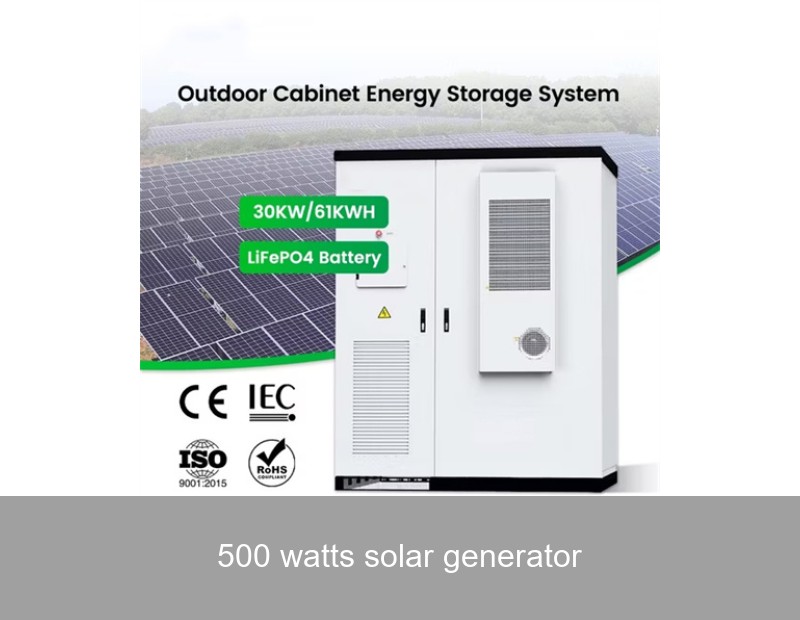
Imagine you're at a remote campsite, the sun is setting, and your phone battery is at 1%. Or, a sudden storm knocks out power to your home office, halting your critical work. In our increasingly electrified world, reliable power is no longer a luxury—it's a necessity. This is where portable solar generators, particularly versatile 500 watts solar generator units, come into play. Striking a perfect balance between portability and capability, a 500W solar generator is becoming the go-to solution for a wide range of users, from outdoor enthusiasts to homeowners seeking peace of mind. But what exactly can you power with 500 watts, and how does this technology fit into the broader landscape of energy resilience? Let's explore.
Table of Contents
What Exactly is a 500W Solar Generator?
First, let's demystify the term "solar generator." It's not a generator in the traditional, fuel-burning sense. A portable 500 watts solar generator is typically an all-in-one power station integrated with a high-capacity lithium battery (measured in watt-hours, Wh), a pure sine wave inverter (outputting 500W continuous power), and multiple ports (AC, DC, USB). It's charged via solar panels, a wall outlet, or sometimes a car charger. The "500W" rating refers to its continuous AC output power—the steady load it can handle. Think of it as a powerful, silent, and emission-free battery bank on steroids.
The Power Reality: What Can You Really Run with 500 Watts?
The true value of any power system lies in its application. A 500W capacity sits in a versatile sweet spot. To give you a clear picture, here’s a table of common devices and their typical power draw:
| Device/Appliance | Typical Power Draw (Watts) | Estimated Runtime* on a 500Wh Battery |
|---|---|---|
| Smartphone Charger | 5-10W | 50-100 hours |
| LED Camping Light | 5-15W | 33-100 hours |
| Laptop | 50-100W | 5-10 hours |
| 12V Car Cooler/Fridge | 40-60W | 8-12 hours |
| CPAP Machine (without humidifier) | 30-60W | 8-16 hours |
| Small TV (32") | 30-50W | 10-16 hours |
| Blender | 300-500W | ~1 hour |
| Small Power Tool (Drill) | 500-800W (surge) | Short bursts only |
*Runtime depends on the battery's actual capacity (e.g., 500Wh, 1000Wh). A "500W solar generator" often has a battery capacity larger than 500Wh.
The key takeaway? A 500 watts solar generator is excellent for essential electronics, lighting, communication devices, and small appliances. It handles surge power for devices like fridge compressors moderately well, but it's not designed for high-drain items like space heaters, full-sized microwaves, or air conditioners. That’s where the line between portable power and permanent home energy storage begins to blur.
Beyond Camping: Real-World Applications & A Case Study
While perfect for weekend adventures, the utility of these systems extends far into daily life. They are invaluable for:
- Home Backup for Essentials: Keeping routers, lights, and medical devices running during short outages.
- Mobile Workstations: Powering tools and laptops for contractors, photographers, or farmers in remote fields.
- Community & Microgrid Support: Providing decentralized power for small community events or as part of a resilient microgrid.
A Concrete Example: The "Urban Preparedness" Case in Berlin, Germany
Let's look at real data. In 2022, a study by the Agora Energiewende highlighted the growing concern over grid stability during peak transitions to renewables in Europe. In response, a pilot project in a Berlin apartment block equipped 20 households with portable 500-1000Wh solar generators and 200W foldable solar panels. The goal was not to power entire apartments, but to create "energy resilience pods" for core communication and safety needs during planned rolling blackouts.

Image: Portable solar setups are becoming common in urban environments for backup power. (Source: Unsplash)
The results over a 12-month period were telling:
- Adoption Rate: 95% of participants used the system during at least one short (2-4 hour) outage.
- Primary Use: 70% for internet/router power, 20% for lighting, 10% for charging medical devices.
- User Feedback: Participants reported an 80% reduction in anxiety related to power outages. The simple, off-the-shelf 500 watts solar generator system proved to be a highly effective, low-barrier entry point into personal energy independence.
This case perfectly illustrates the psychological and practical value of having immediate, controllable power, a principle that scales up to larger systems.
The Technology Evolution: From Portable to Whole-Home Systems
The same lithium-ion and solar technology that powers a portable unit is the foundation of large-scale residential and commercial energy storage. Companies like Highjoule have been at the forefront of this evolution since 2005. While a portable 500 watts solar generator addresses immediate, mobile needs, Highjoule's expertise lies in creating integrated, permanent solutions that manage a home or business's entire energy ecosystem.
For instance, Highjoule's Residential Energy Storage System (RESS) series can start at capacities of 5kW continuous output and 10kWh of storage—effectively twenty times the power of a robust portable unit. These systems are seamlessly integrated with rooftop solar, smart home energy managers, and the grid. They don't just power a few devices; they can run critical circuits (refrigeration, heating controls, security systems) for days during an outage, optimize self-consumption of solar power, and even participate in grid-balancing programs in some regions.

Image: A modern home integrated with rooftop solar and a permanent wall-mounted battery storage system. (Source: Unsplash)
The core intelligence lies in the software. Highjoule's EnergyOS™ platform allows users to monitor, control, and automate their energy flow via a smartphone app, deciding when to store solar energy, when to draw from the grid, and when to use the battery—maximizing efficiency and savings. This is the logical next step for someone who starts with a portable unit and thinks, "What if I could power my whole home this way?"
Choosing the Right System for Your Energy Needs
So, how do you decide? It's about matching the tool to the task.
- Choose a Portable 500W Solar Generator if: Your needs are mobile, temporary, or for backing up a handful of low-wattage essentials. It's your "power insurance" for trips, tailgates, and short-duration outages.
- Consider a Scalable System like Highjoule's if: You seek whole-home or business backup, want to significantly reduce your electricity bill and carbon footprint through solar self-consumption, or need reliable power for sensitive commercial equipment. Highjoule offers solutions from compact residential units to large-scale industrial and microgrid systems, all designed with the same philosophy of intelligent, sustainable power management.
Understanding your total power requirements is crucial. The U.S. Department of Energy provides excellent resources on planning for home energy systems, which can help you assess your needs beyond the portable scale.
Your Power, Your Future: What's Your Next Step?
Whether it's a trusty 500 watts solar generator for your next adventure or a consultation about a whole-home battery system, the journey toward energy resilience and independence is more accessible than ever. The Berlin case study shows us that starting small can have an immediate impact. But what happens when your energy needs grow, or you decide to make a permanent change to how your home interacts with the grid?
What is the one device or appliance you would want to keep running no matter what, and how does that single need shape your vision for a more powerful, personalized energy solution?
 Inquiry
 Online Chat