


Navigating the 50kVA Inverter Price in Nigeria: A Guide to Smart Power Solutions
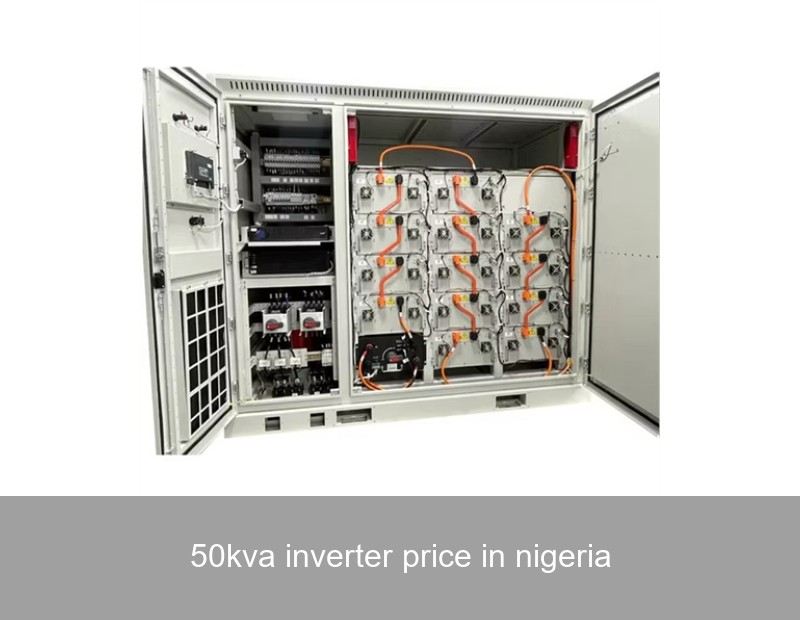
If you're operating a business, managing a critical facility, or planning a microgrid project in Nigeria, you've likely encountered a pressing question: what determines the 50kVA inverter price in Nigeria, and how do I ensure I'm investing in a solution that truly meets my needs? The frequent power outages and grid instability across the region aren't just an inconvenience; they are a significant operational and financial hurdle. But the conversation shouldn't start and end with the inverter's price tag. It should be about value, reliability, and building a resilient energy ecosystem. As a global leader in advanced energy storage, Highjoule understands that the right 50kVA system is a cornerstone for productivity and sustainability in Nigeria's challenging energy landscape.
Table of Contents
The Real Cost Beyond the Price Tag
When evaluating a 50kVA inverter, the initial purchase price is just one line item. The true total cost of ownership (TCO) encompasses installation, compatibility with batteries and solar panels, maintenance, efficiency losses, and most critically, system longevity and uptime. A cheaper, low-quality inverter might save capital upfront but lead to higher operational costs, frequent failures, and inadequate protection for your connected equipment. In a market like Nigeria, where consistent power is non-negotiable for sectors like healthcare, telecoms, and manufacturing, system reliability directly impacts revenue and safety.
Key Factors Influencing 50kVA Inverter Pricing
Understanding what you're paying for demystifies the market. Here are the core components that shape the 50kVA inverter price in Nigeria:
- Technology & Waveform: Pure sine wave inverters are essential for sensitive electronics (servers, medical devices) and are priced higher than modified sine wave models.
- Efficiency Rating: A 96% vs. 92% efficient inverter might seem close, but over years of operation, the energy savings of a high-efficiency unit like Highjoule's H-Power Pro Series significantly offset its initial cost.
- Grid Integration Features: Advanced capabilities like grid-tie functionality, seamless solar MPPT integration, and smart grid-support features add value and cost.
- Build Quality & Durability: Components designed to withstand heat, dust, and voltage fluctuations—common in Nigeria—ensure longevity. Highjoule systems use industrial-grade components tested in diverse global climates.
- Brand & Support: Established brands with local technical support, warranty, and service networks provide peace of mind that is reflected in the investment.
| Feature | Basic/Generic System | Advanced/Highjoule System |
|---|---|---|
| Core Inverter Technology | Standard IGBT, Lower Switching Frequency | Advanced IGBT/SiC, High-Frequency, Low-Loss Design |
| Peak Efficiency | 90-92% | 96-98% (H-Power Pro Series) |
| Grid & Solar Integration | Off-grid or basic hybrid | Seamless hybrid, dual MPPT for solar, smart grid interaction |
| Monitoring & Control | Local display only | Cloud-based monitoring (Highjoule EnergyOS) with remote diagnostics |
| Expected Lifespan | 5-7 years | 10+ years with proper maintenance |
Case Study: A Nigerian Hospital's Journey to Energy Independence
Let's look at a real-world application. A 120-bed private hospital in Lagos faced up to 8 hours of grid outage daily, relying on expensive, polluting diesel generators for critical operations. Their goal was to ensure 24/7 power for surgical theaters, ICUs, and refrigeration, while reducing diesel costs and carbon footprint.
The Solution: They deployed a integrated solar hybrid system built around a Highjoule 50kVA H-Power Pro inverter, paired with a 120kWh lithium-ion battery bank (also from Highjoule's H-Cell Matrix series) and 85kW of rooftop solar PV. The system was designed for intelligent energy management: solar power is prioritized, then battery storage, with the grid and generator acting only as backups.
The Data-Driven Outcome (After 12 Months):
- Diesel Consumption Reduced by 78%: From 4,500 liters/month to under 1,000 liters/month.
- Energy Cost Savings: Approximately ₦12.5 million ($15,000 USD) annually in fuel and maintenance costs.
- Uninterrupted Uptime: 100% power availability for critical wards, with zero recorded power-related incidents.
- ROI Period: The project's return on investment was calculated at just under 4 years, considering the volatile price of diesel.
This case underscores that the 50kVA inverter price in Nigeria is part of a larger economic equation. The Highjoule system's higher initial efficiency and smart management software unlocked the true value, transforming a capital expense into a long-term saving and reliability asset.

Image Source: Unsplash (Representative image of a modern energy storage system)
The Highjoule Solution: Engineered for Performance and Value
At Highjoule, we don't just sell inverters; we deliver intelligent energy platforms. Our 50kVA H-Power Pro Series inverter is the brain of a resilient power system. Designed for commercial and industrial applications, it features:
- Ultra-High Efficiency (up to 98%): Maximizing every watt from your solar panels and batteries, directly reducing operating costs.
- Native Hybrid Design: Seamlessly integrates solar PV, battery storage, grid, and generator sources without external add-ons.
- Highjoule EnergyOS: Our proprietary software provides real-time monitoring, predictive analytics, and remote system management from anywhere in the world—a crucial feature for managing assets in Nigeria from regional support hubs.
- Modular & Scalable: Start with what you need. The system can be scaled by adding more battery cabinets from our H-Cell Matrix line, allowing your power backup capacity to grow with your business.
Our global experience since 2005, with deployments across Europe, North America, and now actively supporting partners in Africa, means our products are built for rigorous, real-world conditions. We back this with comprehensive training and support for our local Nigerian partners, ensuring they can provide installation and maintenance to the highest standards.
Making the Right Choice for Your Needs
So, how should you approach your decision? First, move beyond a simple price comparison. Conduct a detailed load audit. What equipment must run, and for how long during an outage? Do you have, or plan to install, solar panels? Engage with reputable suppliers who ask these questions and can provide a full system design, not just a component quote.
Ask potential suppliers about their local service capability, warranty terms, and request case studies or references from similar projects. The right partner will help you analyze the total cost of ownership, not just the upfront invoice.

Image Source: Unsplash (Representative image of commercial solar installation)
For authoritative information on solar and storage technology trends, you can refer to resources like the International Energy Agency (IEA) or the National Renewable Energy Laboratory (NREL).
Ready to Calculate Your Specific Solution's Value?
While the 50kVA inverter price in Nigeria is a key data point, the optimal system for your hospital, factory, or office building is unique. What specific operational challenge is unreliable power creating for you today, and how would quantifying the true total cost of ownership change your investment perspective?
 Inquiry
 Online Chat