


Demystifying the 50kW Solar Battery Price in Australia: A Guide to Value and ROI
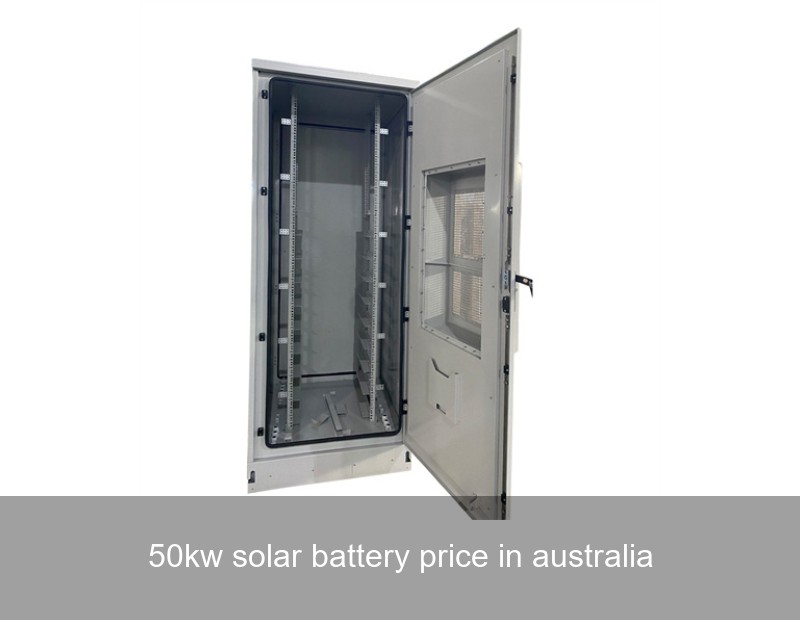
If you're a business owner, farm operator, or managing a sizeable community facility in Australia, you've likely heard the buzz about solar batteries. And when you start researching systems powerful enough to make a real dent in your operational costs, the term "50kW solar battery" quickly comes into focus. But here's the first thing to understand: asking for the 50kW solar battery price in Australia is a bit like asking for the price of a "family car." The range is vast because the value, capabilities, and long-term impact vary enormously. This article will cut through the confusion, moving beyond the initial quote to explore what truly defines the cost and worth of a commercial-scale energy storage solution.
Understanding the 50kW Solar Battery Price Puzzle
Let's address the core question directly. A 50kW solar battery system in Australia is a significant investment, with prices typically starting from AUD $40,000 to well over $100,000 fully installed. Why such a wide band? It's because the battery unit itself is just one piece of the puzzle. The total price encompasses the battery modules, the critical inverter/technology that manages energy flow, sophisticated management systems, installation complexity, and ongoing software intelligence. For businesses, this isn't a commodity purchase; it's a capital investment in energy resilience and cost predictability.

Image Source: Unsplash - A commercial solar installation, the first step towards adding a 50kW battery.
Breaking Down the Cost of a 50kW Solar Battery System
To make an informed decision, you need to know what you're paying for. Here’s a detailed breakdown of the key cost components:
| Cost Component | Description | Impact on Price & Performance |
|---|---|---|
| 1. Battery Cells & Chemistry | The core energy storage technology (e.g., Lithium Iron Phosphate - LFP, NMC). | LFP chemistry, known for its safety and long cycle life, is dominant in commercial applications. Premium cells with higher cycle longevity command a higher price but offer lower lifetime cost. |
| 2. Power Conversion System (PCS) | The inverter(s) that convert DC battery power to AC for your building. | A high-quality, efficient inverter is crucial for system performance and reliability. Hybrid inverters that integrate solar and battery are often a key part of a 50kW system. |
| 3. Battery Management System (BMS) | The "brain" that monitors cell voltage, temperature, and health. | An advanced BMS is non-negotiable for safety and maximizing battery life. It's a critical value differentiator between brands. |
| 4. Energy Management System (EMS) | The software that intelligently controls when to charge, discharge, or hold energy. | This is where smart ROI is generated. A good EMS can automate energy arbitrage (buying low, using high) and provide detailed analytics. |
| 5. Installation & Balance of System | Racking, cabling, switchgear, engineering, and labour. | Site-specific factors like distance to switchboard, existing infrastructure, and regulatory compliance can significantly affect this portion. |
Looking Beyond the Sticker Price: The True Value Drivers
For a commercial entity, the cheapest upfront option can be the most expensive long-term choice. Here are the factors that truly determine your return on investment:
- Cycle Life & Warranty: A battery rated for 6,000 cycles will outlast one rated for 3,000 cycles, effectively halving its "cost per cycle." Look for a performance warranty that guarantees a high percentage of original capacity (e.g., 70%) after 10 years.
- Round-Trip Efficiency (RTE): This measures how much energy you get back vs. what you put in. A 94% RTE system means you lose only 6% of your solar energy to storage, making your self-consumption strategy far more effective.
- Scalability & Modularity: Can you easily add more capacity later if your needs grow? Modular systems from leading providers like Highjoule protect your investment by allowing cost-effective future expansion.
- Grid Services & Software Intelligence: In some regions, batteries can generate revenue by providing grid stability services. The value of your system is increasingly defined by its software's ability to optimize for multiple value streams automatically.
A Real-World Case: The Australian Commercial Retrofit
Let's ground this in a local example. A medium-sized manufacturing plant in Newcastle, NSW, was facing demand charges of over $1,500 per month and volatile daytime energy rates. They had an existing 100kW solar array but were exporting excess energy at low feed-in tariffs. Their goal was to increase self-consumption and shave peak demand.
The Solution & Data: They installed a 50kW/110kWh Highjoule H-Cube Commercial battery system. The system's intelligent EMS was programmed to charge from excess solar and strategically discharge during their operational peak (1 pm - 4 pm) and the grid's peak period (5 pm - 9 pm).
- Result in 12 Months: They reduced their grid energy consumption during peak periods by 82%.
- Their monthly demand charges fell by an average of 65%.
- Overall annual electricity costs were reduced by AUD $28,500.
- The system's analytics also identified a previously unnoticed equipment inefficiency, leading to further savings.
This case shows that the 50kW solar battery price was not an expense but an investment with a clear, quantifiable payback period, enhanced further by operational insights. For deeper insights into Australia's energy storage trends, the Australian Renewable Energy Agency (ARENA) provides excellent market analysis.

Image Source: Unsplash - Real-time monitoring is key to maximizing battery ROI.
The Highjoule Approach: Engineering Value Beyond the Kilowatt
At Highjoule, with nearly two decades of experience, we view a 50kW battery as more than hardware; it's the physical heart of an intelligent energy ecosystem. Our H-Cube Commercial Series is engineered for the Australian climate and market dynamics. Built with ultra-safe LFP chemistry and featuring a industry-leading cycle life, the system is designed for maximum durability. What truly sets it apart is the Highjoule Neuron™ EMS platform. This AI-driven software doesn't just react—it learns your load patterns, forecasts weather and energy prices, and autonomously optimizes dispatch to protect you from price spikes and outages, ensuring you extract the maximum financial and operational value from day one.
Our global experience in microgrid and C&I applications means we understand that every business has a unique energy fingerprint. We don't just sell a box; we provide a complete, tailored power solution that includes in-depth feasibility analysis, seamless integration with existing solar, and ongoing performance support. Understanding battery technology fundamentals is key; resources like the U.S. Department of Energy's Battery FAQs offer a solid technical foundation.
Making the Right Decision for Your Business
So, how should you proceed? Start by shifting the conversation from "price" to "total cost of ownership and return." Request detailed financial modelling from your provider, showing projected savings based on your actual electricity bills. Insist on a clarity on warranty terms and projected degradation. Most importantly, choose a partner with proven expertise, not just a supplier. The right partner will act as an extension of your team, ensuring your system delivers value for its entire lifespan.
Given the rapid evolution of energy markets and technology, what specific operational challenge in your business—be it unpredictable costs, reliability concerns, or sustainability goals—do you believe a smart energy storage system could solve most effectively?
 Inquiry
 Online Chat