


Energy Management for Telecom Towers: Powering Connectivity Sustainably
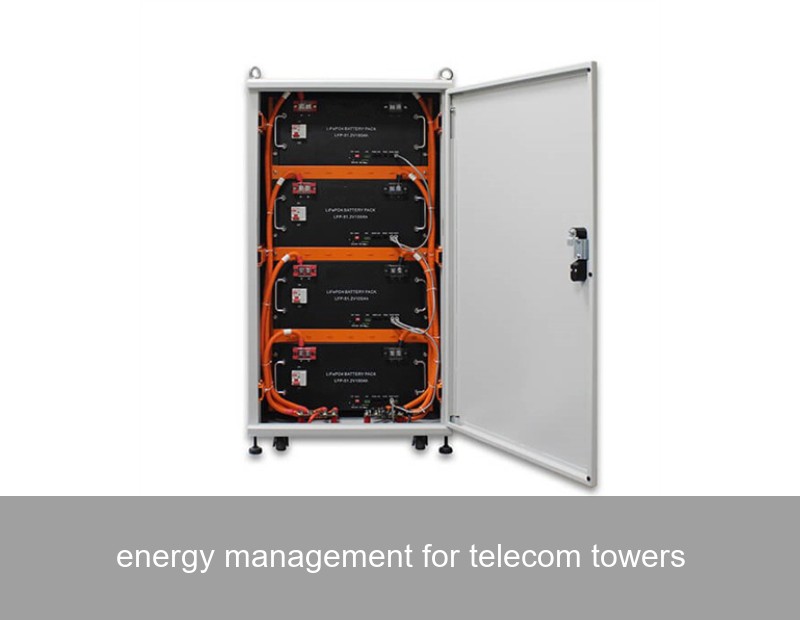
In our hyper-connected world, telecom towers are the silent sentinels of modern life. Yet, these critical nodes face a relentless challenge: ensuring an absolutely reliable power supply 24/7, often in remote or grid-unstable locations. The traditional answer—diesel generators—is becoming increasingly untenable. This is where intelligent energy management for telecom towers emerges as the game-changer, transforming a cost center into a model of efficiency and sustainability. For network operators across Europe and the U.S., mastering this isn't just technical; it's a strategic imperative for resilience and growth.
Table of Contents
- The Silent Drain: The High Cost of Unmanaged Tower Power
- By the Numbers: The Staggering Impact of Tower Energy Use
- Intelligent Energy Management: The Core Components
- Highjoule's Tailored Solutions for Telecom Resilience
- Case Study: A European Operator's Path to 85% Diesel Reduction
- The Future of Tower Power: Beyond Reliability to Revenue
The Silent Drain: The High Cost of Unmanaged Tower Power
Let's paint a familiar picture. A telecom tower in a rural area. The grid power is erratic, cutting out multiple times a day. Each time it does, a diesel generator roars to life. Fuel has to be trucked in weekly at significant cost and carbon footprint. Maintenance crews are dispatched frequently to service these generators. The operational expenditure (OPEX) is enormous, and the environmental impact is substantial. This scenario, repeated across hundreds of thousands of towers globally, represents the old paradigm—a reactive, wasteful, and expensive approach to power management.

Operators know this pain all too well. The quest for universal coverage and 5G densification is only intensifying the power problem. New sites need power, and existing sites are consuming more. Simply put, the traditional model is broken.
By the Numbers: The Staggering Impact of Tower Energy Use
The data behind this challenge is compelling. The telecom industry is a massive energy consumer. According to a GSMA report, the information and communications technology (ICT) sector accounts for approximately 1.4% of global carbon emissions, with mobile networks making up a significant portion. Digging deeper:
- OPEX Dominance: Energy costs can constitute up to 40-50% of a tower's operational expenses in off-grid and bad-grid areas.
- Diesel Dependency: In many regions, over 60% of off-grid towers are primarily powered by diesel gensets.
- Inefficiency: Generators often run at low-load conditions, leading to fuel wastage and accelerated engine wear.
- Carbon Footprint: A single tower site with a diesel generator can emit over 20 tons of CO2 annually.
This isn't just an expense line item; it's a vulnerability. Volatile fuel prices, supply chain risks for diesel, and tightening environmental regulations, especially in Europe and California, are forcing a fundamental rethink.
Intelligent Energy Management: The Core Components
So, what is the modern solution? Intelligent energy management for telecom towers is a holistic system. It's not just about adding batteries or solar panels. It's about integrating and orchestrating multiple power sources through a brain—an advanced controller. Here’s how it works:
| Component | Role | Benefit |
|---|---|---|
| Advanced Power Controller | The system's "brain." It continuously monitors load, state of charge, and source availability. | Makes real-time decisions to optimize for cost, efficiency, and battery health. |
| Lithium-Ion Battery Storage | Provides backup power and can be used for daily cycling to offset grid/generator use. | Fast response, long lifespan, high efficiency, and lower maintenance vs. lead-acid. |
| Renewable Integration (Solar/Wind) | Primary or supplementary power source, reducing reliance on fossil fuels. | Lowers fuel costs and emissions to near zero for captured energy. |
| Grid & Generator Interface | Intelligently blends grid power (when stable/cheap) and uses generator as last resort. | Minimizes generator runtime, saving fuel and maintenance. |
| Remote Monitoring & Management (RMM) | Cloud-based platform for real-time visibility, control, and predictive analytics. | Enables proactive maintenance, reduces truck rolls, and provides actionable insights. |
Think of it as a sophisticated energy concierge for your tower. Its primary goal is to keep the site online at the lowest possible cost and environmental impact, seamlessly switching between the best available resources.
Highjoule's Tailored Solutions for Telecom Resilience
This is precisely where Highjoule's nearly two decades of expertise comes into play. We understand that no two tower sites are identical. A site in sunny Southern Europe has different potential than one in frequently cloudy Northern Germany. That's why we don't offer one-size-fits-all products; we deliver customized, intelligent power solutions.
For telecom operators, Highjoule provides integrated systems built around our high-efficiency, long-lifecycle lithium-ion battery cabinets and our proprietary H-IQ Energy Manager. This advanced controller is the heart of the system, programmed with algorithms that prioritize solar consumption, schedule battery discharge during peak tariff periods, and ensure the generator only runs when absolutely necessary and at its most efficient load.

Our H-Vision Cloud Platform completes the picture, giving network managers a dashboard view of hundreds of sites. They can see real-time power flow, state of charge, fuel levels, and projected savings. This transforms energy from a blind cost into a managed, optimized asset. From new hybrid power systems for off-grid towers to grid-assist solutions for urban sites facing peak demand charges, Highjoule's technology is designed to deliver unwavering reliability while slashing OPEX and carbon emissions.
Case Study: A European Operator's Path to 85% Diesel Reduction
Let's look at a real-world application. A major mobile network operator in Southern Europe faced rising costs and regulatory pressure across its portfolio of several hundred remote mountain and rural sites. These sites were 90% dependent on diesel, with high fuel transportation costs and frequent maintenance issues.
The Challenge: Reduce diesel consumption and OPEX while maintaining 99.99% site availability.
The Highjoule Solution: A phased rollout of integrated Solar-Battery-Generator systems. Each site received:
- A scalable solar PV array sized for the local irradiance.
- A Highjoule 20kWh lithium-ion battery cabinet.
- The H-IQ Energy Manager for intelligent dispatch.
- Integration with the existing diesel generator as a backup.
The Results (after 18 months for the first 100 sites):
- 85% Average Reduction in Diesel Consumption: Many sites now run for weeks without a single generator start.
- €1.2M Annual OPEX Savings: From lowered fuel and maintenance costs.
- Payback Period: Achieved in under 4 years due to energy savings and avoided costs.
- Carbon Reduction: Over 2,500 tons of CO2 emissions eliminated annually.
The operator not only met its sustainability targets but also significantly improved network reliability, as the battery provides instant backup during grid or generator transitions—something diesel gensets alone cannot do. This case, verified by independent audit, exemplifies the tangible power of modern energy management. You can read more about the global push for green telecom in this IEA analysis.
The Future of Tower Power: Beyond Reliability to Revenue
The evolution of energy management for telecom towers doesn't stop at cost savings. We're entering an era where the tower site itself becomes a smart grid asset. Imagine a tower's battery system, charged by solar, providing grid stabilization services or selling stored power back to the utility during periods of high demand—a concept known as Virtual Power Plants (VPPs).
With the right intelligent system, telecom operators could unlock new revenue streams. This transforms the tower from a passive load into an active, revenue-generating node in the broader energy ecosystem. The technology to do this is available today; it requires a forward-thinking partner to implement it.

Furthermore, as 5G networks expand, their density will require more small cells, each needing power. Decentralized, intelligent micro-solutions from Highjoule are perfectly suited for this next wave of infrastructure, ensuring the network's growth is both powerful and sustainable.
Your Network's Next Power Move
The question for telecom operators in Europe and the U.S. is no longer *if* they should upgrade their tower power management, but *how quickly* they can do it. The financial, operational, and environmental benefits are too significant to ignore. With partners like Highjoule, the path is clear and proven.
Is your network ready to turn its energy challenge into its greatest competitive advantage? What would an 85% reduction in fuel costs do for your bottom line and your sustainability goals this year?
 Inquiry
 Online Chat