


Unlocking Grid Stability: The Strategic Role of the 5.5 MW Energy Storage Cabinet
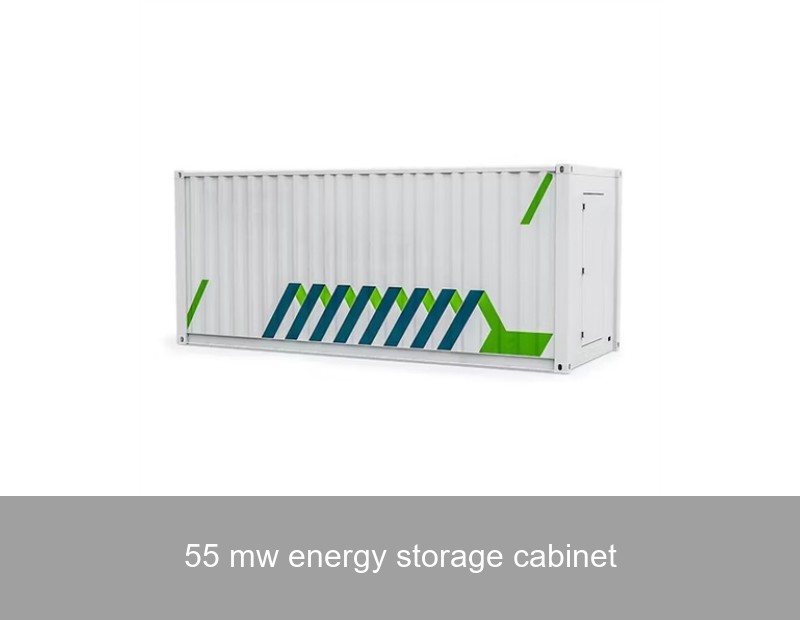
Imagine a power grid under strain. The sun sets, solar generation plummets, but demand remains high. Traditionally, this meant firing up fossil-fuel peaker plants—a costly and carbon-intensive process. Today, a powerful, modular solution is changing this dynamic: the 5.5 MW energy storage cabinet. This isn't just a battery box; it's a sophisticated, grid-scale power plant in a containerized form, designed to deliver massive amounts of power precisely when and where it's needed. For utilities, developers, and large commercial entities, understanding this technology is key to building a resilient, efficient, and sustainable energy future.
Table of Contents
The Phenomenon: Grids in Transition Need Flexible Power
Our energy landscape is undergoing a seismic shift. The rapid integration of variable renewable energy (VRE) sources like wind and solar is decarbonizing our grids—a fantastic development. However, it introduces a fundamental challenge: intermittency. The grid must balance supply and demand in real-time, but the sun isn't always shining, and the wind isn't always blowing. This creates volatility, frequency fluctuations, and periods where backup power is essential.
This is where utility-scale battery energy storage systems (BESS) enter the picture. They act as a shock absorber for the grid. And within this category, the 5.5 MW energy storage cabinet has emerged as a preferred building block. Why 5.5 MW? It represents a sweet spot—a unit powerful enough to make a meaningful impact on the grid (it can power thousands of homes for several hours) yet standardized and modular enough to be deployed, scaled, and interconnected efficiently. Think of it as a high-capacity "Lego brick" for building grid stability.
The Data: Quantifying the Need for Megawatt-Scale Storage
The numbers paint a clear picture of urgency and growth. According to the U.S. Energy Information Administration (EIA), battery storage capacity in the United States has been growing at a breakneck pace, nearly doubling in 2023 alone. In Europe, the European Association for Storage of Energy (EASE) estimates that to meet the EU's 2030 climate and energy targets, energy storage deployment needs to scale up to 200 GW by 2030, a significant leap from current levels.
This demand is driven by concrete economic and reliability factors:
- Frequency Regulation: The grid must maintain a stable frequency (e.g., 60 Hz in the US, 50 Hz in Europe). A single 5.5 MW cabinet can respond to frequency deviations in milliseconds, a service that is increasingly valuable.
- Capacity Deferral: Utilities can install storage to meet peak demand, avoiding or delaying the billion-dollar cost of upgrading transmission lines or building new peaker plants.
- Renewable Firming: Storage smooths out the "duck curve"—the steep evening ramp-up in demand as solar generation fades. A 5.5 MW system can store excess solar from the day and dispatch it during this critical window.

Image Source: Unsplash - A solar farm at sunset, illustrating the critical need for energy storage to bridge the gap when generation drops.
The 5.5 MW Cabinet: Anatomy of a Power Hub
So, what exactly is inside this critical piece of infrastructure? A 5.5 MW energy storage cabinet is a fully integrated, containerized system. It's far more than just batteries.
| Core Component | Function | Why It Matters |
|---|---|---|
| Lithium-Ion Battery Racks | Energy storage medium (typically LFP chemistry for safety & longevity). | Provides the energy density and cycle life required for daily grid services. |
| Power Conversion System (PCS) | Converts DC battery power to AC grid power and vice versa. | The "heart" of the system; its speed and efficiency dictate performance. |
| Thermal Management System | Precise liquid or air cooling to maintain optimal battery temperature. | Critical for safety, performance, and maximizing battery lifespan (often 15-20 years). |
| Energy Management System (EMS) | The "brain" that controls charging/discharging based on grid signals and market optimization. | Transforms raw storage into an intelligent, revenue-generating asset. |
| Safety & Grid Interconnection | Includes fire suppression, HVAC, switchgear, and protective relays. | Ensures safe, compliant, and reliable connection to the medium-voltage grid. |
The beauty of the cabinet design is its scalability. Multiple 5.5 MW units can be combined to form a 20 MW, 50 MW, or even 100+ MW storage plant, all managed as a single, cohesive asset.
Case Study: Firming Renewable Power in Texas, USA
Let's look at a real-world application. In West Texas, a major renewable energy developer was facing curtailment issues—their solar farm was sometimes producing more power than the local grid could absorb, forcing them to waste clean energy. Their goal was to "firm" their output, providing a more predictable and dispatchable power profile to the ERCOT market.
The Solution: They deployed a 22 MW / 44 MWh battery energy storage system, effectively built from four 5.5 MW energy storage cabinet units. Each cabinet was a self-contained powerhouse.
- Capacity: 22 MW of instantaneous power (4 x 5.5 MW cabinets).
- Storage: 44 MWh of energy (2-hour duration system).
- Function: The system charges during midday solar peaks and discharges during the evening demand ramp (6 PM - 9 PM).
- Result: In its first year of operation, the system reduced solar curtailment at the site by over 85% and successfully participated in ERCOT's ancillary services market, generating significant additional revenue streams. The modular cabinet design allowed for phased commissioning and simplified maintenance.

Image Source: Unsplash - Technicians monitoring utility-scale battery storage cabinets, representing the hands-on implementation of this technology.
Highjoule's Approach: Intelligent 5.5 MW Solutions
At Highjoule, with nearly two decades of experience since 2005, we've refined the art and science of the megawatt-scale storage cabinet. Our H-Cube 5500 platform embodies the next generation of the 5.5 MW energy storage cabinet.
What sets the H-Cube 5500 apart is its deeply integrated intelligence and safety-by-design philosophy. We don't just assemble components; we engineer a unified system:
- Prognostic Battery Management: Our proprietary BMS goes beyond monitoring. It uses AI-driven algorithms to predict cell-level performance and degradation, allowing for proactive maintenance and optimizing cycle life.
- Grid-Forming Inverter Ready: As grids evolve, the ability to provide "black start" capability and inherent stability becomes crucial. Our cabinet architecture is designed to integrate with advanced, grid-forming inverters, future-proofing your investment.
- Cybersecurity from the Ground Up: From the EMS down to the individual sensor, our systems are built with secure communication protocols, a non-negotiable for critical grid infrastructure.
For our clients—be it a utility in Germany seeking frequency regulation, an industrial plant in Italy aiming for peak shaving, or a microgrid developer in California—the Highjoule H-Cube 5500 provides a reliable, high-performance, and intelligent building block. Our global service network ensures this performance is sustained over the system's entire lifespan.
The Future: Beyond Simple Storage
The role of the 5.5 MW energy storage cabinet is expanding. It's becoming a multi-functional asset. In the near future, we see these units not just storing energy, but actively providing synthetic inertia to grids with high renewable penetration, participating in virtual power plants (VPPs) that aggregate distributed resources, and even providing backup power for critical infrastructure during extreme weather events.
The question is no longer if large-scale storage is needed, but how to implement it most effectively. The modular, powerful, and intelligent 5.5 MW cabinet offers a compelling answer.
 Inquiry
 Online Chat