


Unlocking Grid Stability and Energy Independence: The Power of a 6 MW Hybrid Energy Storage Cabinet
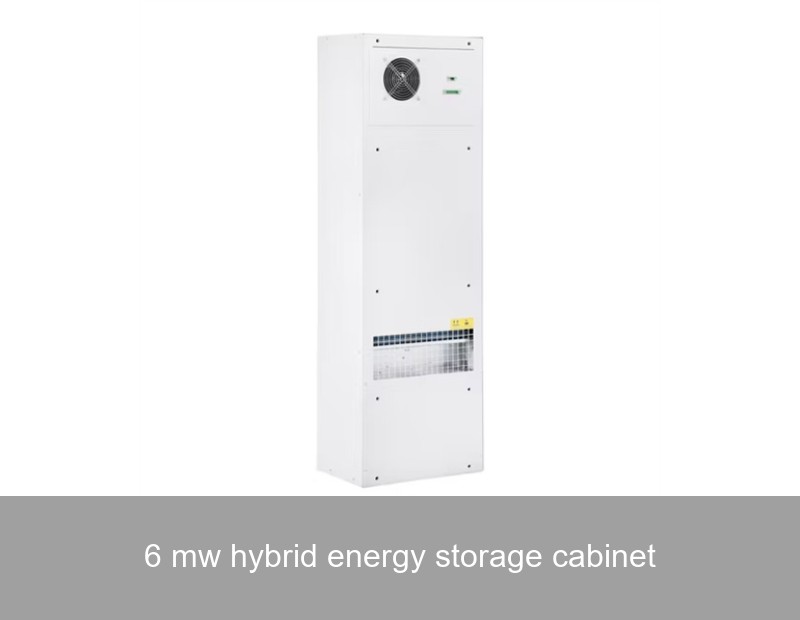
Imagine a power plant that can switch from zero to full output in milliseconds, store cheap solar energy for the evening peak, and provide critical backup during an outage—all within a single, streamlined footprint. This isn't a vision of the distant future; it's the reality enabled by today's advanced 6 MW hybrid energy storage cabinet systems. For facility managers, energy developers, and municipalities, these integrated power hubs are becoming the cornerstone of a resilient, cost-effective, and sustainable energy strategy. But what exactly makes this specific scale so transformative? Let's delve into the technology that is reshaping how we generate, store, and consume power.
Table of Contents
- The Challenge: Intermittency Meets Rising Demand
- The Solution: Anatomy of a 6 MW Hybrid Energy Storage Cabinet
- The Data: Why Scale and Integration Matter
- Case Study: A U.S. Industrial Plant's Journey to Resilience
- Highjoule's Expertise: Engineering Intelligent Hybrid Solutions
- The Future of Energy Management
The Challenge: Intermittency Meets Rising Demand
Our energy landscape is undergoing a seismic shift. Renewable sources like solar and wind are surging, a trend supported by ambitious targets like the EU's 2030 Climate Target Plan and the U.S. Inflation Reduction Act. However, this green revolution comes with a core challenge: variability. The sun doesn't always shine, and the wind doesn't always blow, creating gaps between generation and consumption. Conversely, during periods of low demand or high production, valuable clean energy is often curtailed—essentially, wasted.
Simultaneously, commercial and industrial (C&I) facilities face escalating energy costs, grid instability, and increasing pressure to meet corporate sustainability goals. The traditional grid, built for one-way power flow, is straining under this new paradigm. This is the precise pain point where large-scale, integrated storage steps in, not just as a backup, but as an active grid asset and economic engine.
The Solution: Anatomy of a 6 MW Hybrid Energy Storage Cabinet
So, what is a 6 MW hybrid energy storage cabinet? Think of it as a sophisticated, containerized energy brain and battery. The "6 MW" refers to its power rating—its ability to instantaneously deliver (or absorb) 6 megawatts of electricity, enough to power thousands of homes or a mid-sized manufacturing plant. "Hybrid" signifies its intelligent coupling of two core technologies within a unified system:
- Lithium-Ion Battery Energy Storage System (BESS): The workhorse for high-power, shorter-duration cycles (typically 2-4 hours). It excels at frequency regulation, peak shaving, and rapid response.
- Advanced Power Conversion System (PCS): The intelligent gateway that manages the flow of electricity between the grid, the battery, and any on-site generation (like solar PV). It's the maestro conducting the energy symphony.
Housed in a robust, weatherproof cabinet or containerized enclosure, this system is a plug-and-play solution for significant energy users. Its scale is particularly strategic: 6 MW is often the sweet spot for large C&I applications, microgrids, and small utility substations, offering substantial impact without the extreme complexity of utility-scale projects.

This integrated approach is far more than the sum of its parts. By combining generation, storage, and smart controls in one package, it maximizes efficiency, reduces balance-of-system costs, and simplifies installation and maintenance.
Key Components and Their Roles
| Component | Primary Function | Benefit in a 6 MW Hybrid System |
|---|---|---|
| Battery Racks | Energy storage medium | Provides the energy capacity (in MWh) for load shifting and backup. |
| Bi-Directional PCS | Converts AC to DC and vice versa | Enables charging from the grid/solar and discharging to the facility/grid. |
| Energy Management System (EMS) | Brain of the operation | Uses algorithms to optimize dispatch for cost savings and grid services. |
| Thermal Management | Cooling and heating control | Ensures battery safety, longevity, and consistent performance in all climates. |
| Grid Connection Interface | Safe interconnection to the local network | Allows for participation in demand response programs and grid support. |
The Data: Why Scale and Integration Matter
The economic and operational argument for a system of this caliber is compelling. Let's talk numbers. According to analysis by the U.S. National Renewable Energy Laboratory (NREL), hybrid systems that pair solar PV with storage can increase the value of the solar energy by up to 40% by enabling time-shifting and ancillary services. For a 6 MW system, this isn't just marginal savings; it translates to hundreds of thousands of dollars in annualized value.
Consider peak shaving: many utilities charge "demand charges" based on the highest 15-minute power draw in a month. A 6 MW hybrid cabinet can seamlessly discharge during these short peak periods, potentially cutting this portion of the electricity bill by 30% or more. Furthermore, in markets like CAISO (California) or ERCOT (Texas), such a system can participate in frequency regulation markets, generating revenue by helping stabilize the grid—a task it performs with precision no traditional power plant can match.
Case Study: A U.S. Industrial Plant's Journey to Resilience
Let's make this concrete with a real-world scenario. A major automotive parts manufacturer in Ohio faced volatile energy prices and an unreliable local grid that threatened costly production stoppages. Their goals were clear: reduce energy costs, ensure production continuity, and lower their carbon footprint.
The Solution Deployed: A turnkey hybrid energy system centered on a 6 MW / 24 MWh hybrid energy storage cabinet, integrated with an existing 5 MW rooftop solar array. The system was designed to perform multiple functions autonomously: store excess solar generation, discharge during peak rate periods, and provide seamless backup power to critical assembly lines for up to four hours.
The Results (18 Months Post-Installation):
- Cost Savings: Achieved a 28% reduction in overall electricity costs through demand charge management and solar self-consumption optimization.
- Reliability: Successfully prevented three potential outage events, saving an estimated $750,000 in lost production and downtime.
- Sustainability: Increased the facility's consumption of self-generated renewable energy from 35% to over 60%.
This case underscores how a correctly scaled hybrid system isn't an expense but a high-return infrastructure investment that addresses financial, operational, and environmental priorities simultaneously.
Highjoule's Expertise: Engineering Intelligent Hybrid Solutions
At Highjoule, we've been at the forefront of this energy transition since 2005. We understand that deploying a 6 MW hybrid energy storage cabinet is a significant decision, and it requires more than just hardware—it demands deep system integration expertise and intelligent software. Our HPS Series Hybrid Power Stations are engineered specifically for this scale and complexity.
What sets a Highjoule solution apart is our proprietary JouleMind AI EMS. This platform doesn't just react; it predicts. By analyzing weather forecasts, historical load patterns, and real-time market signals, JouleMind optimizes every kilowatt-hour for maximum economic return. Whether it's deciding when to charge from the grid, when to sell back, or when to hold reserve for backup, the system makes decisions that a static controller simply cannot.

Our global service network provides end-to-end support, from initial feasibility studies and financial modeling to grid compliance, installation, and 24/7 remote monitoring. For a commercial or industrial client, this means a single point of accountability and peace of mind, knowing your critical power infrastructure is in expert hands.
Highjoule Services for Your Project
- Custom Feasibility & Design: Tailoring system specifications (power, capacity, PCS configuration) to your specific load profile and goals.
- Turnkey Delivery: Managing the entire project lifecycle, including permitting, grid interconnection approval, and commissioning.
- Performance Guarantee & O&M: Offering long-term service agreements with guaranteed system availability and performance metrics.
- Grid Services Monetization: Assisting clients in registering and operating their system in local energy markets to create new revenue streams.
The Future of Energy Management
The evolution of the 6 MW hybrid energy storage cabinet is moving towards even greater intelligence and grid interactivity. As virtual power plants (VPPs) become more prevalent, these distributed assets will be aggregated to act as a single, flexible resource for the grid, providing stability and deferring the need for costly traditional infrastructure upgrades. The technology is also advancing rapidly; for instance, the integration of different battery chemistries for longer-duration storage is an active area of innovation, as noted by research from U.S. Department of Energy's Office of Energy Storage.
The question is no longer if large-scale energy storage is viable, but how to best implement it to future-proof your operations. As you evaluate your facility's energy strategy, what single constraint—be it cost volatility, reliability concerns, or sustainability targets—would be most impactful to solve with a self-contained, intelligent power hub?
 Inquiry
 Online Chat