


Unlocking Energy Independence: The Critical Role of a Supplier of Deep Power
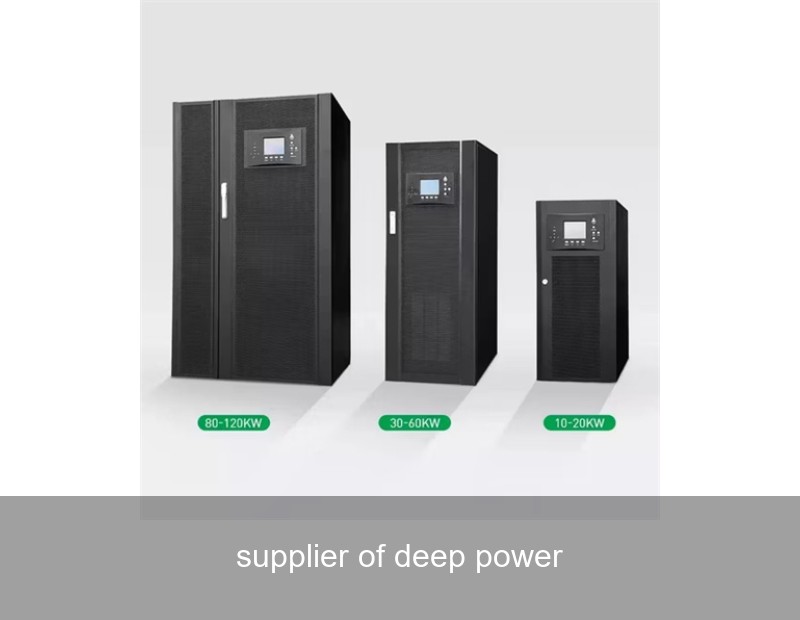
Have you ever watched the lights flicker during a storm, or wondered how your business would cope during an extended grid outage? For facility managers, homeowners, and communities across Europe and the US, these aren't just hypotheticals. The growing frequency of extreme weather events and the pressing need for grid modernization have created a new energy imperative: the need for resilient, long-duration power. This is where the concept of a true supplier of deep power becomes essential. Unlike standard battery systems designed for short bursts, deep power solutions are engineered for sustained energy delivery, acting as a bedrock of stability. In this article, we'll explore why this capability is no longer a luxury but a necessity for energy security.
Table of Contents
- The Phenomenon: From Intermittency to Resilience
- The Data: Quantifying the Need for Depth
- Case Study: A German Manufacturing Plant's Journey
- The Solution: What Makes a True Supplier of Deep Power?
- Highjoule: Engineering Depth into Every System
The Phenomenon: From Intermittency to Resilience
Our energy landscape is undergoing a radical shift. The rapid adoption of renewable sources like solar and wind is fantastic for decarbonization, but it introduces variability. The sun doesn't always shine, and the wind doesn't always blow. This intermittency creates gaps—sometimes for hours, sometimes for days. Concurrently, aging grid infrastructure in both North America and Europe is proving increasingly vulnerable to wildfires, storms, and heatwaves. The result? Businesses face operational downtime, data centers risk catastrophic outages, and homeowners are left in the dark. The old model of relying solely on the centralized grid is showing its cracks. The solution isn't just any backup power; it's about having a deep, reliable reservoir of energy that can bridge these ever-widening gaps seamlessly.
The Data: Quantifying the Need for Depth
Let's talk numbers, because they tell a compelling story. A U.S. Department of Energy report highlights that power outages cost the American economy tens of billions of dollars annually. In Europe, the European Commission's analysis of grid stress points to similar vulnerabilities, especially during peak demand periods in winter and summer.
But here's the key insight from industry data: the majority of critical outages last longer than the 1-4 hour runtime typical of many standard lithium-ion battery systems. To truly ensure continuity, facilities need 6, 8, 12 hours or more of sustained power. This "duration deficit" is the precise problem a dedicated supplier of deep power is designed to solve. It's not just about peak shaving for a few minutes; it's about providing a foundational layer of energy autonomy that can last through a long night or a multi-day grid disturbance.

Image Source: Unsplash - A modern battery energy storage system, the heart of a deep power solution.
Case Study: A German Manufacturing Plant's Transformation
Consider the real-world example of a mid-sized automotive parts manufacturer near Stuttgart, Germany. This facility operated on a high-precision, 24/7 schedule, where even a two-hour power dip would scrap an entire production batch and cost over €50,000 in lost revenue and materials. Their existing backup system was a diesel generator—noisy, polluting, and slow to respond.
Their goal was threefold: achieve energy cost stability, contribute to corporate sustainability targets, and build unshakeable resilience. They partnered with a supplier of deep power to implement a tailored 1.2 MWh battery energy storage system (BESS) integrated with their existing rooftop solar PV. The system was designed not for minutes, but for 10 hours of critical process load at full capacity.
The Results (18 Months Post-Installation):
- Resilience: Successfully navigated 4 grid voltage sags and 1 planned 8-hour regional outage with zero production impact.
- Cost Savings: Achieved 40% reduction in peak demand charges and increased solar self-consumption by 70%, yielding a projected ROI in under 5 years.
- Sustainability: Eliminated 95% of diesel generator test runs, cutting annual CO2 emissions by an estimated 12 tonnes.
This case underscores that deep power is an operational and financial asset, not just an insurance policy.
The Solution: What Makes a True Supplier of Deep Power?
So, what should you look for when choosing a partner for such a critical infrastructure investment? It goes beyond just selling battery racks. A genuine supplier of deep power differentiates itself through three core pillars:
| Pillar | Description | Why It Matters |
|---|---|---|
| 1. System Architecture & Chemistry | Expertise in selecting and integrating battery chemistries (like LFP - Lithium Iron Phosphate) and system designs optimized for long-duration cycling, not just peak power. | Ensures the system can deliver sustained output over many hours without degrading prematurely. LFP chemistry, for instance, offers superior cycle life and safety for deep discharge applications. |
| 2. Advanced Energy Management (EMS) | Intelligent software that dynamically manages energy flow between solar, storage, grid, and loads based on weather, tariffs, and consumption patterns. | Maximizes the economic and resilience value of every stored kilowatt-hour, automatically switching between cost-saving and backup modes. |
| 3. Full Lifecycle Partnership | Provides comprehensive services from initial feasibility and design to installation, grid compliance, remote monitoring, and long-term performance guarantees. | Deep power systems are long-term investments. A partner that stands by the system's performance for 10+ years is crucial for peace of mind and ROI. |
Highjoule: Engineering Depth into Every System
At Highjoule, with nearly two decades of experience since 2005, we embody this holistic definition of a supplier of deep power. We don't just provide components; we deliver intelligent, integrated energy resilience. Our approach starts with understanding your unique load profiles, risk tolerance, and financial goals.
Our flagship product line, the H-Series Commercial & Industrial BESS, is engineered from the ground up for long-duration applications. Utilizing thermally managed, UL-certified LFP battery modules and our proprietary JouleMind AI energy management platform, these systems are designed to perform thousands of deep cycles over their lifetime. For microgrid and utility-scale applications, our GridMax solutions offer modular, containerized power blocks that can be scaled to provide 4, 8, or even 12+ hours of discharge time, stabilizing grids and enabling higher renewable penetration.
Our services are the backbone of our offering. From the initial site assessment and financial modeling to navigating complex grid interconnection agreements in the US or EU, and providing 24/7 system monitoring—Highjoule acts as a single point of accountability. We ensure your deep power system is not only installed but optimized for its entire operational life.

Image Source: Unsplash - Intelligent energy management software is key to unlocking deep power value.
The Future of Deep Power: Beyond the Battery
The evolution of deep power is already underway. We are moving towards hybrid systems that intelligently couple lithium-ion batteries with other long-duration storage technologies for specific applications. Furthermore, the role of a supplier of deep power is expanding into virtual power plants (VPPs), where aggregated residential and commercial systems can provide grid services, creating a new revenue stream for system owners while enhancing community-wide resilience. The future is adaptive, software-defined, and deeply integrated.
Ready to Explore Your Deep Power Potential?
What would uninterrupted power for a full workday mean for your business's bottom line and operational confidence? How could your community benefit from a resilient hub powered by its own renewable resources? As you consider the path to true energy independence, we invite you to reflect on the depth of your current solution. Is it built for the brief interruption, or for the profound challenges of our new energy era?
 Inquiry
 Online Chat