


Unlocking Grid Stability: The Power of an 80 MW Solar Energy Storage Cabinet
Imagine a power plant that generates abundant clean energy when the sun shines, but falls silent at night. Now, imagine a solution that captures that daytime bounty and delivers it precisely when demand peaks. This is the critical challenge—and opportunity—that large-scale solar farms face today. The answer increasingly lies in integrating massive battery storage. In this context, an 80 MW solar energy storage cabinet isn't just a piece of equipment; it's the cornerstone of a reliable, dispatchable renewable energy asset. For developers and grid operators in Europe and the US, deploying such systems is transforming solar from an intermittent source into a firm, grid-supportive power provider.
Table of Contents
- The Intermittency Challenge: More Than Just Sunshine
- What Exactly is an 80 MW Solar Energy Storage Cabinet?
- The Data Driving Large-Scale Adoption
- Case Study: Grid Stability in California, USA
- Beyond the Basics: Advanced Features for Modern Grids
- The Highjoule Approach: Engineering for Scale and Intelligence
- The Future Outlook for Utility-Scale Storage
The Intermittency Challenge: More Than Just Sunshine
Solar energy's variability is its most cited drawback. The famous "duck curve"—a graph first identified in California—visually depicts the problem: a deep midday dip in net load as solar floods the grid, followed by a steep evening ramp-up as the sun sets and demand remains. This creates immense strain on conventional power plants, requiring them to cycle rapidly, which is inefficient, costly, and increases emissions. The phenomenon is not unique to California; grids across Europe are experiencing similar stresses as renewable penetration grows. The core issue is a misalignment between generation and consumption patterns.
What Exactly is an 80 MW Solar Energy Storage Cabinet?
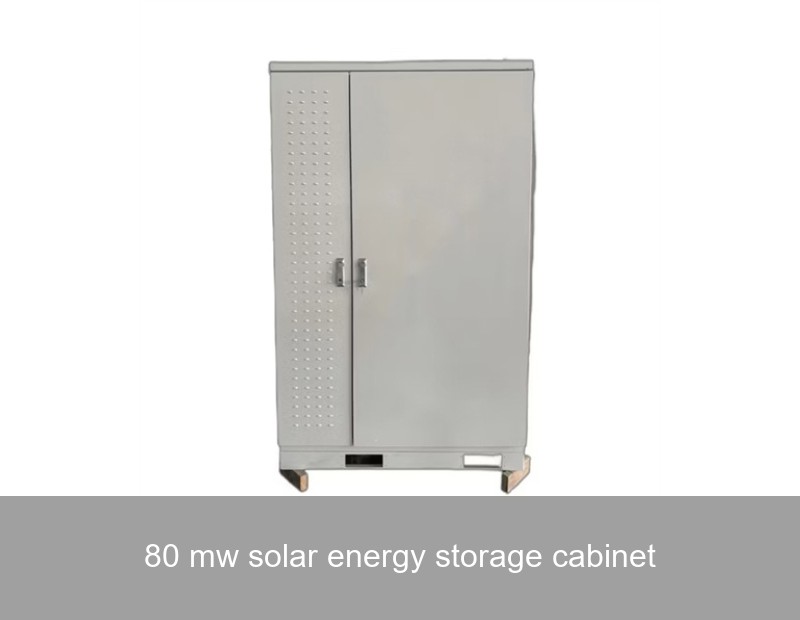
Let's demystify the term. An 80 MW solar energy storage cabinet refers to a modular, containerized unit that forms the building block of a much larger battery energy storage system (BESS). Here’s a breakdown:
- 80 MW (Megawatts): This is the power rating, indicating how much electricity the system can instantaneously discharge (or charge). It defines the system's ability to meet peak power demands.
- MWh (Megawatt-hours): Crucially, storage capacity is measured in MWh. A typical 80 MW cabinet might be paired with 160 MWh, 240 MWh, or more, defining the duration it can deliver that power (e.g., 2 hours, 3 hours).
- Cabinet/Container: These are pre-engineered, factory-assembled units housing lithium-ion battery racks, thermal management systems, fire suppression, and power conversion systems. They are shipped to site for rapid deployment.
Think of it this way: if the solar farm is a prolific water pump, the 80 MW storage cabinet is a massive reservoir and a powerful water cannon, allowing you to store the water and release it with force when needed.

Image: A utility-scale solar farm integrated with battery storage containers. (Source: Unsplash, licensed for commercial use)
The Data Driving Large-Scale Adoption
The business and grid necessity for this scale of storage is backed by compelling numbers. According to the International Energy Agency (IEA), global grid-scale battery storage capacity is set to multiply over 15 times by 2030. In the US, the Inflation Reduction Act (IRA) has created unprecedented investment tax credits (ITC) for standalone storage, accelerating project economics. In Europe, ambitious REPowerEU targets and the need for energy security are pushing massive deployment. An 80 MW/160 MWh system can:
- Provide enough power for approximately 50,000 homes for 2 hours during an evening peak.
- Offset the need to build and cycle a natural gas "peaker" plant, avoiding thousands of tons of CO2 annually.
- Provide essential grid services like frequency regulation, reducing the risk of blackouts.
Case Study: Grid Stability in California, USA
A real-world example underscores the value. In 2022, California's grid operator faced a severe heatwave threatening rolling blackouts. The state's large-scale battery fleet, including numerous systems in the 80-100 MW range, played a pivotal role. On September 6, 2022, batteries discharged a record 3.36 GWh to the grid during the critical evening hours, effectively filling the "duck curve" belly and preventing outages. This wasn't a small demonstration; it was a fleet of precisely engineered storage cabinets delivering when the grid was most vulnerable. The performance validated the technology as a reliable grid asset, not just an experiment.
Beyond the Basics: Advanced Features for Modern Grids
Today's leading 80 MW solar energy storage cabinets are far more than simple batteries. They are intelligent grid assets. Key advanced features include:
| Feature | Function | Benefit |
|---|---|---|
| Advanced Battery Management System (BMS) | Monitors cell-level voltage, temperature, and health in real-time. | Maximizes safety, lifespan, and performance of the asset. |
| Grid-Forming Inverter Capability | Can "create" a stable grid voltage and frequency without relying on traditional power plants. | Enhances grid resilience and supports higher renewable penetration. |
| AI-Powered Energy Management System (EMS) | Forecasts energy prices, solar generation, and load to optimize charge/discharge cycles. | Maximizes revenue from energy arbitrage and grid service markets. |
| Modular & Scalable Design | Allows for capacity expansion by adding more cabinets or increasing battery density. | Future-proofs investment and allows for phased deployment. |
The Highjoule Approach: Engineering for Scale and Intelligence
At Highjoule, with nearly two decades of experience since 2005, we understand that deploying an 80 MW system requires flawless integration of hardware, software, and grid expertise. Our H-Series Utility Storage Cabinet is engineered specifically for this scale of challenge.
Each H-Series cabinet is a self-contained powerhouse featuring our proprietary NeuralCore BMS, which goes beyond monitoring to predict cell behavior and optimize performance. For solar farm integration, our GridSynch EMS platform seamlessly coordinates the solar inverters and storage cabinets, making the entire facility operate as a single, intelligent power plant. We don't just provide containers; we provide a complete turnkey solution—from feasibility studies and system design to grid compliance support, installation, and long-term performance monitoring. This holistic approach de-risks projects for our commercial, industrial, and utility partners across Europe and North America.

Image: Technician overseeing a utility battery storage system control interface. (Source: Unsplash, licensed for commercial use)
The Future Outlook for Utility-Scale Storage
The trajectory is clear. As solar and wind become dominant generation sources, large-scale storage like the 80 MW cabinet will be the enabling technology for a stable, decarbonized grid. We are moving towards longer-duration storage (8-12 hours), hybridization with other renewable sources, and the creation of virtual power plants (VPPs) that aggregate distributed storage resources. The next frontier is making these assets not just grid-supportive, but actively grid-forming—a role Highjoule's technology is already pioneering.
As you contemplate the future of your solar asset or grid portfolio, consider this: Is your storage strategy designed merely to store energy, or is it engineered to intelligently adapt to the evolving demands and revenue opportunities of the modern power grid?
 Inquiry
 Online Chat