


Understanding Whole House Generator Cost: A Smart Investment for Energy Independence
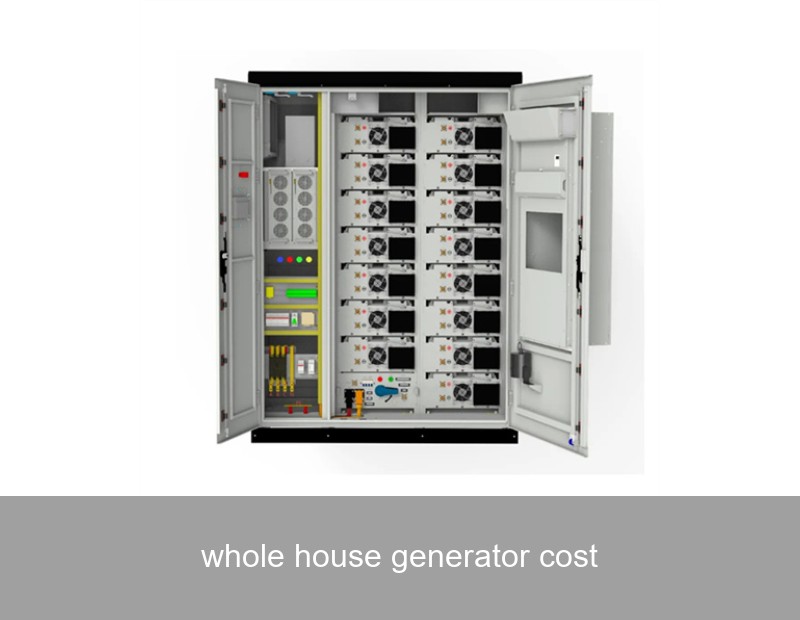
If you've ever sat in the dark during a storm, listening to the food in your fridge slowly warm up, you've likely asked yourself: "What would a whole house backup power system cost?" It's a crucial question for homeowners in Europe and the US facing increasing grid instability and extreme weather. The term "whole house generator cost" often brings to mind noisy, fuel-guzzling diesel units. But the landscape of home backup power has evolved dramatically. Today, the true cost isn't just the price tag of the hardware; it's about long-term value, energy independence, and integrating with modern renewable solutions. Let's break down the real investment behind keeping your lights on.
Table of Contents
- The True Cost Phenomenon: More Than a Price Tag
- Breaking Down the Expenses: A Comparative Table
- A Real-World Case Study: The Schmidt Residence, Hamburg
- Beyond Generators: The Integrated Energy Storage Solution
- The Highjoule Approach: Intelligent, Future-Proof Power
- Making Your Decision: Key Questions to Ask
The True Cost Phenomenon: More Than a Price Tag
When we talk about "whole house generator cost," the initial purchase is just the tip of the iceberg. A traditional fossil-fuel standby generator might have a lower upfront cost, but its lifetime expenses are a different story. Think about ongoing fuel procurement (which can be challenging during widespread outages), regular maintenance schedules, potential noise pollution fines in some municipalities, and of course, carbon emissions. The phenomenon we're seeing now is a shift from viewing this as a simple emergency purchase to seeing it as a strategic home energy investment. The real cost encompasses installation complexity, operational expenses over 10-15 years, and the opportunity cost of not integrating with solar panels, for instance.
Breaking Down the Expenses: A Comparative Table
To make an informed decision, you need a clear comparison. Let's look at the cost components of three main whole-house backup options for a typical 3,000 sq. ft. home.
| Cost Component | Traditional Standby Generator (Propane) | Basic Battery Storage (Powering Essentials) | Integrated Solar + Storage System (e.g., Highjoule HES Series) |
|---|---|---|---|
| Average Equipment & Installation | $10,000 - $15,000 | $12,000 - $20,000 | $25,000 - $35,000+ |
| Fuel / "Recharge" Cost (10-year estimate) | $5,000 - $10,000+ | Depends on grid/solar charging | Minimal (solar-powered) |
| Maintenance (10-year estimate) | $2,000 - $4,000 | Minimal | Minimal |
| Operational Noise & Emissions | High | None | None |
| Potential for Bill Savings & ROI | None | Moderate (load shifting) | High (solar self-consumption, grid services) |
As you can see, the higher initial investment in an integrated system can be offset over time, transforming a cost center into a value-generating asset for your home. For authoritative information on energy storage costs, the U.S. Department of Energy provides excellent resources.
A Real-World Case Study: The Schmidt Residence, Hamburg
Let's move from theory to practice. The Schmidt family in Hamburg, Germany, faced frequent short outages and wanted to maximize their existing rooftop solar. In 2022, they evaluated a 20kW propane generator (quoted at €13,500 installed) against a Highjoule Home Energy System (HES) with 15 kWh of lithium-iron-phosphate (LFP) battery storage.
- Choice: They chose the Highjoule HES system for €28,000, inclusive of an upgraded inverter and smart energy manager.
- Performance Data: In its first year, the system provided seamless backup during 7 grid outages totaling 22 hours. Crucially, by storing excess solar energy, their grid electricity purchases fell by 68%.
- Financial Impact: Their calculated payback period, factoring in the German EEG incentive and energy savings, is under 9 years. After that, the system's "fuel" is free sunshine. The generator option would have incurred continuous fuel costs with zero bill savings.
This case highlights how redefining "cost" to include long-term savings and resilience can lead to a different, more beneficial investment. Data on European energy trends can be found via the European Environment Agency.

Image Source: Unsplash (Representative image of a modern home energy system)
Beyond Generators: The Integrated Energy Storage Solution
This brings us to the core modern alternative: the home battery storage system. Unlike a generator that sits idle 99% of the time, a battery system like those from Highjoule works for you daily. It performs "load shifting" – storing cheap, off-peak or solar energy and using it during expensive peak hours. This daily cycle delivers tangible utility savings that actively chip away at the initial investment. During an outage, it automatically isolates your home (a process called islanding) and powers critical or entire home circuits silently and instantly. There's no fuel, no fumes, and minimal maintenance.
The Highjoule Approach: Intelligent, Future-Proof Power
At Highjoule, we believe the discussion about "whole house generator cost" is outdated. Our focus is on providing intelligent, sustainable power solutions that offer true energy independence. Our HES (Home Energy System) product line is designed not just as a backup, but as the heart of a modern home's energy ecosystem.
- Scalable LFP Battery Architecture: Start with 10 kWh and expand as your needs grow. Our Lithium Iron Phosphate chemistry is renowned for safety, longevity (over 6000 cycles), and stable performance.
- AI-Powered Energy Manager: This is the brain of the system. It learns your consumption patterns, forecasts weather, and optimizes energy flow between solar panels, the battery, the grid, and your home to maximize economics and resilience.
- Whole-Home & Critical Load Backup: Whether you want to keep your entire home running or just safeguard essential circuits (refrigeration, heating, medical equipment), our systems can be configured to your budget and needs.
- Grid Services Ready: In some regions, our systems can participate in utility virtual power plant (VPP) programs, earning you revenue by providing grid stability services—turning your storage asset into an income generator.
By integrating with solar, smart home devices, and even electric vehicle chargers, a Highjoule system transforms the one-dimensional "generator cost" into a multi-faceted value proposition for your property.

Image Source: Unsplash (Representative image of a wall-mounted battery system)
Making Your Decision: Key Questions to Ask
So, how do you navigate this decision? Move beyond asking "What does a whole house generator cost?" and start asking:
- What is my total budget for equipment, installation, AND 15 years of operation?
- Do I have or plan to install solar panels?
- What are my critical loads during an outage (sump pump, furnace, medical equipment)?
- How important are quiet operation and zero local emissions to me and my community?
- Does my utility offer incentives for battery storage or have time-of-use rates I can avoid?
Consulting with a certified installer who can analyze your energy usage is crucial. For understanding backup power needs, Ready.gov offers a good starting checklist.
Your Home's Energy Future
The conversation about power resilience is no longer just about weathering a storm. It's about taking control of your energy costs, reducing your carbon footprint, and investing in the smart infrastructure of your home. While the upfront number for a comprehensive solar and storage system is higher, its ability to pay back over time and provide silent, clean, and automated protection makes it a fundamentally different category of product. The question isn't simply "Can I afford a backup generator?" but rather "What is the value of true energy independence for my home and family?"
 Inquiry
 Online Chat