


About Solar Energy Systems: Your Guide to Powering a Sustainable Future
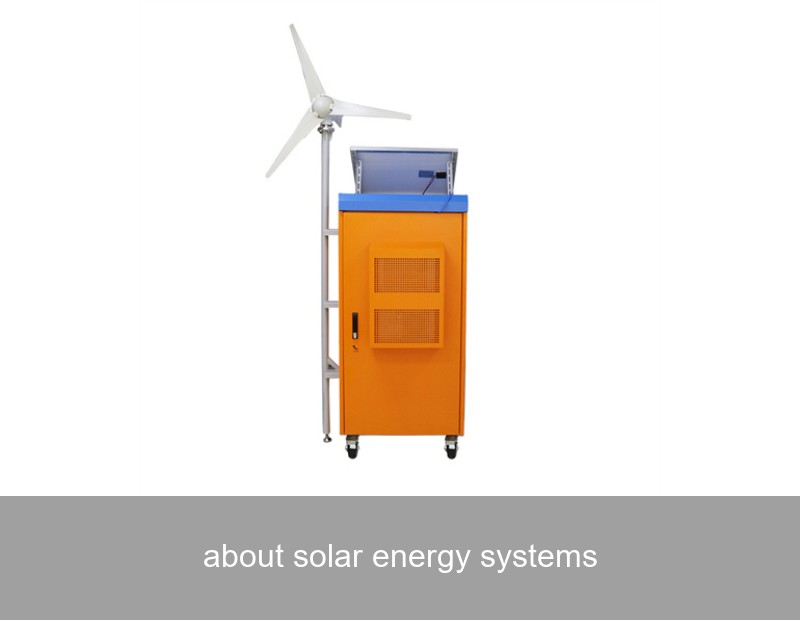
You've likely seen the shimmer of solar panels on rooftops in your neighborhood or read headlines about record-breaking solar installations. But have you ever stopped to wonder what it's really about solar energy systems that makes them the cornerstone of the global clean energy transition? It's more than just panels on a roof; it's a sophisticated, intelligent ecosystem for generating, managing, and storing power. As energy costs fluctuate and climate concerns grow, understanding these systems is the first step toward energy independence and sustainability. For over 18 years, Highjoule has been at the forefront of this revolution, engineering advanced battery storage solutions that transform solar from an intermittent source into a reliable, 24/7 power supply for homes, businesses, and communities.
The Core Components: More Than Just Panels
A fully functional solar energy system is an elegant symphony of components, each playing a vital role:
- Solar Photovoltaic (PV) Panels: These are the most visible part, converting sunlight directly into direct current (DC) electricity.
- Inverter: The brain of the power conversion. It transforms the DC electricity from the panels into the alternating current (AC) that powers your home and appliances.
- Mounting System & Hardware: The secure physical foundation that holds the panels in place on your roof or on the ground.
- Monitoring System: Provides real-time and historical data on your system's energy production and consumption.
However, a system with only these elements is incomplete in today's energy landscape. It's like having a world-class water collection system with no storage tank—you can use the water only when it rains. This is where the fifth, and arguably most transformative, component comes in: the energy storage system (ESS).

Image Source: Unsplash (Licensed for commercial use)
The Data Behind the Boom: Solar's Unstoppable Rise
The adoption of solar is not just a trend; it's a fundamental shift backed by compelling economics and policy. In the United States, solar is the fastest-growing electricity source. According to the Solar Energy Industries Association (SEIA), the solar market is expected to quadruple in capacity by 2030, with installations happening every 100 seconds. In Europe, driven by the REPowerEU plan and energy security needs, solar PV generation saw a staggering increase of nearly 20% in 2023, helping to displace costly fossil fuels.
This growth is fueled by a virtuous cycle: technological improvements increase panel efficiency, which lowers costs, which in turn drives more adoption. The levelized cost of solar electricity is now among the lowest of any power source in history.
The Critical Challenge: What Happens When the Sun Sets?
Here's the fundamental phenomenon every solar owner encounters: solar generation is inherently intermittent. Production peaks around midday and falls to zero at night. This creates a mismatch with typical energy demand, which often spikes in the early morning and evening.
Without a solution, this leads to two issues: 1) You export excess midday power to the grid, often for minimal credit, and 2) You import expensive power from the grid at night. You're left with a system that saves money, but doesn't unlock true energy independence or maximize your financial return. This is the core problem that modern solar energy systems are now designed to solve.
The Modern Solution: Intelligent Solar + Storage Systems
The integration of a high-performance battery storage system is what transforms a simple solar array into a resilient, smart energy asset. This is where Highjoule's expertise becomes critical. Our H-Series Commercial & Industrial (C&I) and H-Residential battery systems are engineered to seamlessly integrate with solar installations.
Think of Highjoule's storage system as the "energy bank" for your solar power. Instead of sending surplus energy away, you store it locally in our high-density, long-life lithium iron phosphate (LiFePO4) batteries. When your panels stop producing, your home or business automatically draws from this stored reserve. The benefits are profound:
- Maximized Self-Consumption: Use 70-90% of the solar energy you produce, dramatically reducing grid reliance.
- Bill Savings & Peak Shaving: Avoid drawing power during expensive utility peak-rate hours, slashing demand charges for businesses.
- Backup Power: Maintain essential power during grid outages—a feature becoming increasingly valuable.
- Grid Support: Advanced systems can provide services to stabilize the local grid, a key feature of Highjoule's microgrid-ready solutions.
Highjoule's Role in Your Solar Ecosystem
At Highjoule, we don't just manufacture batteries; we provide complete, intelligent storage solutions. Our systems come with the Highjoule Energy Management Platform (HEMP), an AI-driven software that learns your energy patterns and automatically optimizes when to charge, discharge, or hold energy to meet your specific financial and resilience goals. Whether it's a single-family home in California, a factory in Germany, or an off-grid community project, our technology ensures the solar energy system operates at its absolute potential.
Case Study: A U.S. Manufacturing Plant's Success Story
Let's look at a real-world example from the American Midwest. A mid-sized automotive parts manufacturer faced crippling monthly demand charges from their utility, often making up over 40% of their electricity bill. They installed a 500 kW solar array, which helped, but the midday solar peak didn't align with their constant, high-energy load.
They partnered with Highjoule to integrate a 750 kWh H-Series C&I battery storage system. The results, monitored over 12 months, were significant:
| Metric | Before Solar+Storage | After Highjoule Integration | Change |
|---|---|---|---|
| Monthly Demand Charge | ~$18,000 | ~$6,500 | 64% Reduction |
| Grid Energy Consumption | 100% | 35% | 65% Reduction |
| ROI Period | N/A | Estimated 4.2 years | Strong Financial Return |
The Highjoule system was programmed to discharge strategically during the plant's short periods of highest power draw, "shaving" the peak demand that triggers the punitive charges. This case, echoed by findings from the National Renewable Energy Laboratory (NREL), demonstrates that solar paired with smart storage isn't just about clean energy—it's a powerful financial asset.

Image Source: Unsplash (Licensed for commercial use)
Choosing and Optimizing Your System
When considering a system, it's not just about the number of panels. Key questions to ask your provider include:
- Storage Chemistry: Does the battery use safe, long-life chemistry like LiFePO4?
- System Intelligence: Does it have smart software for optimization, or is it a simple "dumb" battery?
- Scalability: Can you easily add more storage capacity later?
- Warranty & Support: What is the guaranteed throughput and duration of the warranty?
Highjoule's solutions are designed with these very questions in mind, offering modular, scalable systems backed by a 10-year performance warranty and global technical support.
The Future Powered by Solar and Storage
The conversation about solar energy systems has decisively shifted from "if" to "how" they are integrated with storage. As virtual power plants (VPPs) and dynamic energy markets evolve, like those emerging in the European Union and parts of the U.S., these aggregated home and business systems will play a crucial role in balancing the wider grid.
So, as you contemplate the potential of solar for your property, we leave you with this question to discuss with your energy advisor: How will you plan not just for generating clean energy, but for intelligently controlling and leveraging it 24 hours a day to meet your specific goals for savings, resilience, and sustainability?
 Inquiry
 Online Chat