


How Much Does Home Solar Energy Cost? A Realistic Breakdown for 2024
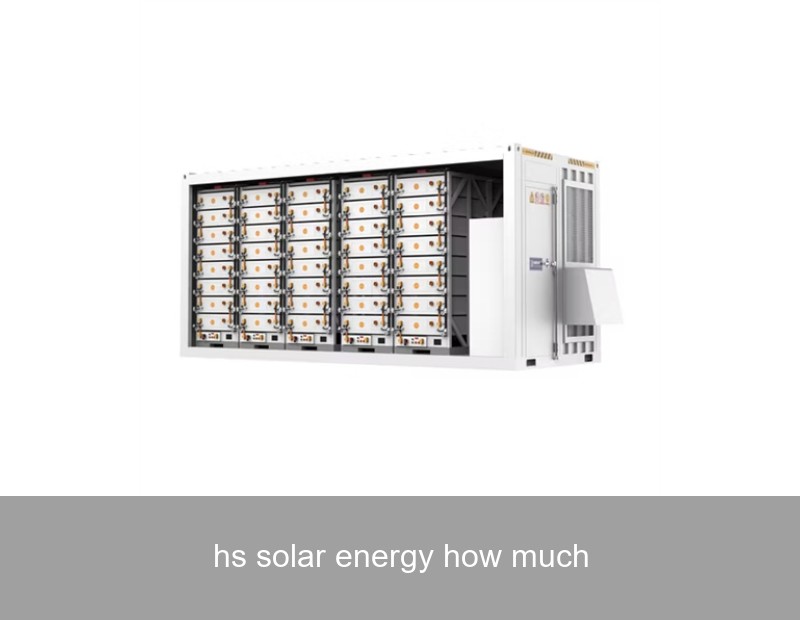
If you're a homeowner considering solar panels, the first question that likely comes to mind is, "How much does home solar energy cost?" It's a simple question with a complex answer, as the final price tag is influenced by everything from your roof's orientation to local utility rates. But beyond the initial sticker shock lies a more compelling story: solar is a long-term investment in energy independence, financial savings, and a sustainable future. In this guide, we'll move past the generic estimates and break down the real costs, savings, and factors you need to consider, while exploring how modern energy storage is transforming the value proposition of solar power.
Table of Contents
Breaking Down the Cost of a Home Solar System
The national average for a residential solar panel system in the U.S. hovers around $20,000 to $30,000 before incentives, or roughly $2.50 to $3.50 per watt. However, presenting an average is like quoting the average price of a house—location and specifics are everything. Let's deconstruct the main components:
- Equipment (Solar Panels & Inverters): This accounts for about 25-30% of the cost. Premium, high-efficiency panels cost more but may produce more energy in limited space. The inverter, which converts DC solar power to AC household electricity, is a crucial component. Options include string inverters or microinverters (one per panel), with the latter often offering better performance in shaded conditions.
- Installation & Labor: This is a significant portion, encompassing permitting, design, roof work, electrical wiring, and connection to the grid. Labor costs vary widely by region and installer.
- Balance of System (BOS): This includes mounting hardware, wiring, conduits, and the electrical panel. Quality here ensures safety and longevity.
- Permits & Inspection Fees: Your installer typically handles this, but the cost is passed on to you. These fees depend on your local municipality's requirements.
| System Size | Average Cost Range | Suitable For |
|---|---|---|
| 6 kW | $15,000 - $21,000 | Smaller homes, low electricity usage |
| 8 kW | $20,000 - $28,000 | Average-sized family home |
| 10 kW | $25,000 - $35,000 | Larger homes, higher usage, or electric vehicle charging |
The game-changer is the federal Investment Tax Credit (ITC), which currently allows you to deduct 30% of your system's cost from your federal taxes. Many states and utilities offer additional rebates, which can dramatically reduce the net price. For an accurate picture, you must calculate the cost after these incentives.
Beyond Panels: The Critical Role of Energy Storage
For years, the standard solar setup sent excess power to the grid in exchange for credits—a process called net metering. But the energy landscape is shifting. Utility rates are becoming more complex, net metering policies are changing in some regions, and grid reliability is a growing concern for many. This is where adding a battery energy storage system (BESS) transforms your solar from a simple cost-saver into a resilient home energy solution.
Think of it this way: solar panels are your power generators, but they only work when the sun shines. A home battery is your power bank. It stores the excess energy you produce during the day for use at night, during peak rate periods, or during a grid outage. This capability, often called "solar self-consumption," is key to maximizing your financial return and achieving true energy independence.

Image: A modern home equipped with solar and battery storage. Source: Unsplash
This is where Highjoule expertise becomes pivotal. As a leader in advanced energy storage since 2005, we understand that a battery isn't just an add-on; it's the intelligent core of a modern home energy system. Our HES (Home Energy Solution) series is designed specifically for residential integration. It features high-cyclerating lithium iron phosphate (LFP) batteries for safety and longevity, scalable capacity to match your needs, and an intelligent energy management system. This system doesn't just store power—it learns your usage patterns, automatically decides when to charge from solar or the grid (based on cost), and ensures critical loads stay on during an outage, all managed seamlessly through a user-friendly app.
A Real-World Case Study: The Johnson Family in California
Let's move from theory to practice with a real example. The Johnson family in Sacramento, California, installed a 9.6 kW solar array in early 2023. Facing frequent Public Safety Power Shutoffs (PSPS) due to wildfire risk and time-of-use (TOU) rates from their utility, they paired their system with a Highjoule HES-10 battery (10 kWh usable capacity).
- System Cost (After 30% ITC): Solar + Battery system: $38,000 | ITC: $11,400 | Net Cost: $26,600
- Energy Bill Impact: Their average monthly bill dropped from ~$220 to a minimum service charge of ~$10 for 10 months of the year. In summer, they pay about $40-$50.
- Resilience Benefit: During a 36-hour grid outage in October 2023, the Highjoule system automatically switched to backup power. The family maintained refrigeration, lighting, internet, and essential outlets without interruption, while their non-battery neighbors experienced disruption.
- Financial Payback: Combining bill savings with the state's SGIP (Self-Generation Incentive Program) rebate for storage, their estimated payback period is 7-8 years. For them, the peace of mind was an immediate, invaluable return.
This case highlights that the "cost" question is evolving into a "value" question. The Johnsons paid more upfront than for solar alone, but they purchased predictable energy costs, reliability, and security—a combination increasingly valuable in today's climate.
Maximizing Your Solar Investment: Key Considerations
So, how do you ensure you're getting the best value? Focus on these factors:
- Your Local Climate & Sun Exposure: More annual sunlight means more energy production. A reputable installer will use tools like NREL's PVWatts Calculator to model your specific roof's potential.
- Current & Future Electricity Rates: Are rates rising? Do you have time-of-use pricing? Higher and more complex rates increase the savings potential of solar + storage.
- Local Incentives & Net Metering Policy: Research state tax credits, rebates, and the current net metering rules from your utility. Some regions are moving to less favorable compensation, making storage more attractive.
- Your Energy Consumption Patterns: Review your past year's bills. When do you use the most power? A system sized for your actual usage, with storage to shift that usage, yields the highest return.
- Product Quality & Warranty: Opt for established brands with strong performance warranties (25 years for panels is standard) and battery warranties that guarantee a certain capacity after 10 years. Highjoule systems, for instance, come with a comprehensive 10-year warranty and robust performance guarantees, ensuring your investment is protected.

Image: Professional monitoring and maintenance ensure system longevity. Source: Unsplash
What Does the Future Hold for Home Energy?
The conversation is rapidly moving from "solar vs. grid" to "smart, integrated home energy ecosystems." Imagine a system where your solar panels, battery storage, electric vehicle charger, and smart appliances are all coordinated by an intelligent hub. This hub would optimize every kilowatt-hour—charging your car with midday solar excess, powering your home from the battery during the evening peak, and even participating in virtual power plant (VPP) programs where you can earn money by allowing your utility to draw from your battery during times of extreme grid demand.
This isn't science fiction; it's the direction of the industry. Companies like Highjoule are at the forefront, developing solutions not just for single homes, but for entire communities and microgrids. Our GridSynergy platform enables aggregated residential storage systems to provide grid services, turning a neighborhood of homes into a decentralized, resilient power resource. The initial investment in solar and storage is, in this light, the foundation for participating in the future of energy.
So, when you ask "how much does home solar energy cost?", perhaps the more forward-looking question is: What is the cost of *not* taking control of your energy future, given rising prices, evolving policies, and a climate that demands cleaner choices?
Are you ready to calculate what your personalized path to energy independence could look like?
 Inquiry
 Online Chat