


Accumulateur d'Électricité: The Cornerstone of Modern Energy Independence
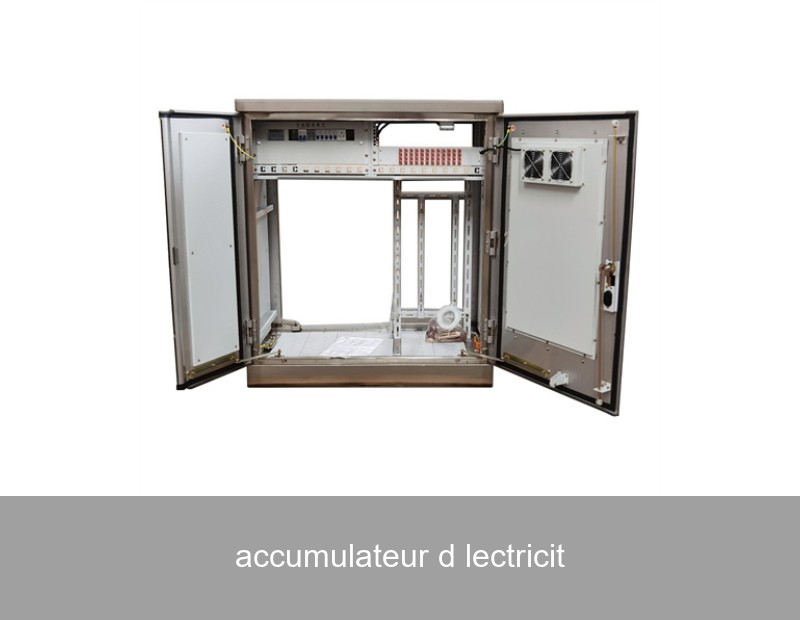
You've likely heard the term accumulateur d'électricité, or electricity accumulator, more frequently in recent years. But what exactly is it? Simply put, it's the sophisticated heart of a modern energy storage system—a high-capacity battery that doesn't just store power but intelligently manages it. For homeowners and businesses across Europe and the US, this technology is transforming from a niche concept into an essential tool for managing energy costs, increasing self-sufficiency, and supporting the broader integration of renewables. As grid instability and energy prices rise, the ability to store electricity for when you truly need it is no longer a luxury; it's a strategic advantage.
Table of Contents
- What is an Accumulateur d'Électricité?
- The Urgent Need: Why Energy Storage is Exploding Now
- How a Modern Battery Energy Storage System (BESS) Works
- A Real-World Case Study: Peak Shaving in German Manufacturing
- Choosing the Right System: Key Considerations
- Highjoule's Intelligent Solutions for Every Need
- The Future of Energy is Stored
What is an Accumulateur d'Électricité? Beyond the Basic Battery
While the term translates to "electricity accumulator," it's crucial to distinguish it from a simple AA battery. A modern accumulateur d'électricité refers to a complete Battery Energy Storage System (BESS). This integrated system includes the battery cells (often Lithium Iron Phosphate or LFP for safety and longevity), a sophisticated battery management system (BMS) for safety and health, power conversion systems (inverters/converters), and intelligent software that decides when to charge and discharge based on your habits, electricity rates, or grid conditions.

Image Source: Unsplash - Representative image of a residential energy storage unit.
The Urgent Need: Why Energy Storage is Exploding Now
The demand for energy storage isn't happening in a vacuum. It's a direct response to three converging global trends:
- The Renewable Energy Surge: Solar and wind are intermittent. The sun doesn't always shine, and the wind doesn't always blow. An accumulateur d'électricité captures surplus solar generation during the day for use at night, making renewables truly reliable.
- Grid Volatility and High Costs: In many parts of Europe and California, time-of-use (TOU) rates mean electricity is far more expensive during peak evening hours. Storage allows you to avoid buying from the grid at these peak prices.
- Desire for Resilience: From extreme weather events in the US to geopolitical pressures affecting energy supply in Europe, backup power is a growing concern for families and businesses alike.
According to the International Energy Agency (IEA), global grid-scale battery storage capacity is set to multiply over 15-fold by 2030, a clear indicator of this technology's central role in the energy transition.
How a Modern Battery Energy Storage System (BESS) Works
Think of a BESS as a high-tech, automated energy bank. Here's the typical workflow:
- Charge Cycle: The system charges with low-cost or excess electricity. This could be from your solar panels at midday, or from the grid during off-peak hours (e.g., overnight).
- Management & Monitoring: The Battery Management System (BMS) constantly monitors cell voltage, temperature, and health, ensuring safety and maximizing the battery's lifespan.
- Discharge Cycle: The intelligent controller discharges power when it's most valuable—during a grid outage for backup, during high-price peak hours to save money, or when solar production drops.
| Application | Primary Benefit | Typical User |
|---|---|---|
| Solar Self-Consumption | Maximizes use of self-generated solar energy, reducing grid dependence. | Homeowners, Commercial Buildings |
| Peak Shaving / Load Shifting | Cuts electricity bills by avoiding grid power during expensive peak tariffs. | Businesses, Industrial Facilities |
| Backup Power & Resilience | Provides seamless power during grid outages, ensuring continuity. | All Sectors, especially critical operations |
| Grid Services & Microgrids | Stabilizes the local grid, supports renewable integration, enables energy communities. | Utilities, Community Projects, Industrial Campuses |
A Real-World Case Study: Peak Shaving in German Manufacturing
Let's look at a concrete example from Bavaria, Germany. A mid-sized automotive parts factory faced significant "peak demand charges"—a fee based on their highest 15-minute power draw each month. These charges made up nearly 30% of their total electricity bill.
The Solution: The factory installed a containerized, high-power accumulateur d'électricité system, specifically a Highjoule Industrial HPS Series unit with 500 kWh capacity and 250 kW power output. The system's AI-driven software predicted the factory's operational load and proactively discharged the battery during short periods of peak machinery usage, effectively "shaving" the peak demand drawn from the grid.
The Data-Driven Result: Within the first year, the system reduced the factory's peak demand charges by over 40%, leading to annual electricity cost savings of approximately €68,000. Furthermore, the system provided backup power for critical control rooms, adding a layer of operational resilience. The project's payback period was calculated at under 5 years, a compelling financial and operational decision. (Case study data based on aggregated, anonymized Highjoule project performance).

Image Source: Unsplash - Representative image of an engineer checking an industrial energy storage unit.
Choosing the Right System: Key Considerations
Not all storage systems are created equal. When evaluating an accumulateur d'électricité, consider these factors:
- Chemistry & Safety: LFP (Lithium Iron Phosphate) chemistry is now the benchmark for residential and commercial storage due to its long cycle life, thermal stability, and absence of cobalt.
- Power (kW) vs. Capacity (kWh): Power determines how many appliances you can run at once (e.g., for backup), while capacity determines how long you can run them.
- Depth of Discharge (DoD) & Warranty: A higher usable DoD (like 90%+) and a long warranty (e.g., 10 years) ensure you get the most value over the system's lifetime.
- System Intelligence: The software's ability to learn patterns, integrate with weather forecasts, and adapt to changing tariff structures is what unlocks true savings and ROI.
Highjoule's Intelligent Solutions for Every Need
At Highjoule, with nearly two decades of experience since 2005, we design our accumulateur d'électricité solutions with these precise considerations in mind. Our product portfolio is engineered for intelligence, safety, and seamless integration.
For residential users, our Home Energy Hub is an all-in-one unit that combines storage, inverter, and smart management. It seamlessly pairs with new or existing solar arrays, allowing homeowners to increase self-consumption to 80% or more and gain peace-of-mind backup power.
For commercial and industrial (C&I) applications, our modular HPS Series provides scalable power and capacity. Its advanced software platform is designed explicitly for peak shaving, demand charge management, and participation in grid flexibility programs, delivering a clear and rapid return on investment.
For larger-scale microgrid and utility projects, Highjoule offers fully integrated, containerized solutions that provide grid stability, renewable firming, and deferred infrastructure investment. Our systems are designed to meet the rigorous standards and certifications required in both the European and North American markets.
The Future of Energy is Stored
The evolution of the accumulateur d'électricité is moving towards even smarter, more integrated ecosystems. We're seeing the rise of virtual power plants (VPPs), where thousands of distributed home storage systems are aggregated to act as a single, large power plant, supporting the grid during times of stress. Vehicle-to-Grid (V2G) technology, where electric car batteries can feed power back into a home or the grid, is another exciting frontier.
The fundamental truth is this: as our world electrifies and relies more on variable renewable sources, the ability to store electricity intelligently becomes the linchpin of a sustainable, resilient, and cost-effective energy system. It empowers you to take control of your energy destiny.
What would energy independence look like for your home or business? Could a detailed analysis of your energy consumption patterns reveal a significant opportunity for savings and resilience that you haven't yet explored?
 Inquiry
 Online Chat