


Beyond the Meter: How Advanced Energy Services Like ACME Energy Services Ltd. Are Redefining Business Resilience
For decades, the relationship between a business and its energy provider was simple: consume power, pay the bill. The meter was the only point of contact. But in today's world, where operational continuity, sustainability goals, and energy costs are under intense scrutiny, this passive model is becoming a relic. A new paradigm is emerging, led by forward-thinking energy service companies. So, what exactly are these modern ACME Energy Services Ltd.-style solutions, and why are they becoming indispensable for commercial and industrial operations across Europe and the US?
What Are Modern Energy Services, and Why Do They Matter?
Modern energy services transcend simple supply. They encompass a holistic strategy for managing, optimizing, and generating power on-site. Think of it as moving from being a passive tenant on the grid to an active manager of your own energy ecosystem. This involves a combination of technologies like solar PV, advanced battery storage, and smart energy management software, all integrated to achieve specific goals: slashing energy costs, ensuring operational resilience against outages, and achieving measurable sustainability targets. Companies pioneering this approach provide not just hardware, but a long-term partnership for energy intelligence.
The Grid Pressure Phenomenon: More Than Just Blackouts
The driving force behind this shift is undeniable. Our grids, many built in the last century, are facing unprecedented stress. The transition to renewable sources like wind and solar, while crucial, introduces intermittency. A cloud cover or a calm day can suddenly reduce supply. Simultaneously, electrification of transport and heating is increasing demand. This volatility manifests in two critical ways for businesses: increasing frequency of grid instability events and skyrocketing peak demand charges.
Let's talk about those demand charges. For many commercial users, a significant portion of their electricity bill isn't just for how much they use (kWh), but for their highest rate of use (kW) in a billing period—often a brief, 15-minute spike. It’s like being charged for the highest speed you drove all month, not the total distance. This makes energy costs unpredictable and often unnecessarily high.

Credit: Photo by American Public Power Association on Unsplash. Modern facilities are turning their rooftops and land into active energy assets.
The Data: The Financial and Operational Case for Proactive Energy Management
The numbers paint a compelling picture. According to the U.S. Department of Energy, power outages cost the U.S. economy an estimated $150 billion annually. In the EU, the European Commission's reporting on infrastructure resilience highlights similar concerns for critical industries. Financially, a well-designed battery energy storage system (BESS) can reduce peak demand charges by 20-40%, delivering a return on investment often within 4-7 years. When coupled with solar PV, which tackles the volume-based energy charges, the savings compound. The business case has evolved from pure risk mitigation to a strategic financial play.
A Real-World Blueprint: How ACME Energy Services Ltd. Transformed a Manufacturing Plant
Consider this anonymized case study based on a real project in Germany, similar to what a leader like ACME Energy Services Ltd. would execute. A mid-sized automotive parts manufacturer faced volatile energy bills, with nearly 35% of costs from demand charges, and feared production halts due to grid warnings.
Their energy service partner implemented a turnkey solution:
- Solar PV Array: A 500 kW rooftop system to generate clean, low-cost daytime power.
- Battery Storage: A 750 kWh / 375 kW Highjoule H-Cube commercial BESS.
- Energy Management System (EMS): Intelligent software to orchestrate everything.
The results after one year were transformative:
| Metric | Before | After | Change |
|---|---|---|---|
| Annual Energy Costs | €285,000 | €189,000 | -33.7% |
| Peak Demand from Grid | 850 kW | 520 kW | -38.8% |
| Grid Dependency During Peak Hours | 100% | <30% | Dramatic Reduction |
| Carbon Footprint | Base Level | -62 tonnes CO2e/year | Significant Drop |
The BESS was programmed for "peak shaving": the EMS predicted the facility's typical load patterns and seamlessly discharged the battery during the short periods of highest consumption, clipping the demand spike before it hit the utility meter. The solar PV covered base loads, charging the batteries and further offsetting grid purchases. The system also provided seamless backup for critical lines, turning a cost center into a source of resilience and savings.
Beyond Backup: The Highjoule Approach to Intelligent Energy Services
This is where global providers like Highjoule elevate the concept. Founded in 2005, Highjoule doesn't just sell battery boxes; it delivers integrated, intelligent energy sovereignty. For commercial and industrial clients, our services mirror the comprehensive approach of top-tier energy service companies. We start with a deep energy audit, then design a system around your specific load profile, tariff structure, and resilience needs.
Our flagship H-Cube commercial BESS is engineered for this multi-faceted role. Its modular design allows for scalable power and capacity, while its advanced lithium-iron-phosphate (LFP) chemistry ensures safety and long cycle life. Crucially, it's governed by our Helios Energy Management Platform—the brain of the operation. Helios doesn't just react; it learns from your consumption patterns, integrates weather forecasts for solar production, and can even respond to grid signals for demand response programs, creating an additional revenue stream.

Credit: Photo by ThisisEngineering RAEng on Unsplash. Advanced battery storage systems are designed for safe, seamless integration into industrial environments.
Key Components of a Modern Energy Resilience System
When partnering with a provider for such a service, you should expect a solution built on these pillars:
- On-Site Generation (e.g., Solar PV): The primary fuel source, reducing energy purchases and carbon footprint.
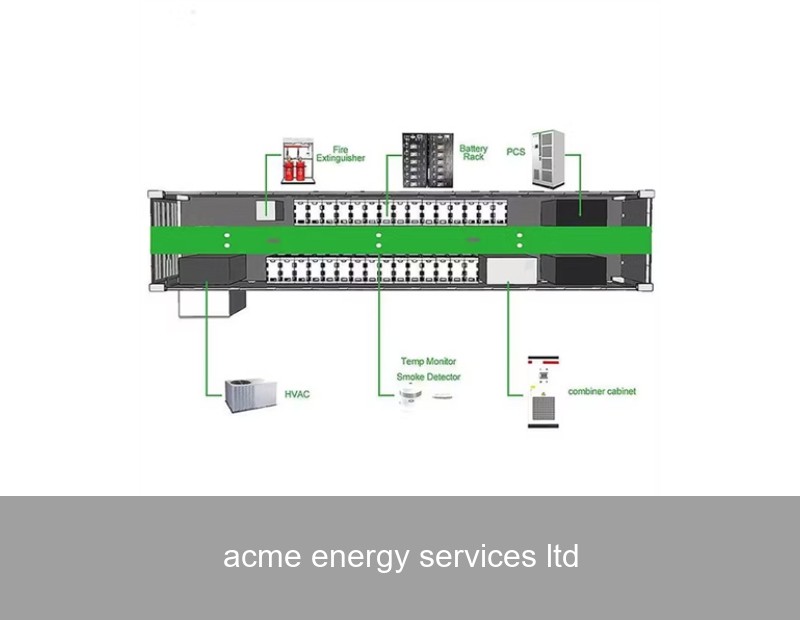
- Advanced Battery Storage (BESS): The heart of flexibility. It time-shifts solar energy, performs peak shaving, and provides backup.
- Intelligent Energy Management System (EMS): The central nervous system that optimizes every kilowatt-hour for economic and operational goals.
- Ongoing Service & Monitoring: True partnership includes remote monitoring, performance analytics, and proactive maintenance to ensure the system delivers for decades.
This integrated approach is what separates a modern energy service from a simple equipment purchase. It's a performance contract for your power.
What Does Your Energy Future Look Like?
The story of ACME Energy Services Ltd. and similar innovators is a template for the future. The question is no longer if businesses need to manage their energy actively, but how and when. With volatile energy markets, increasing grid pressures, and stringent corporate sustainability mandates, the passive approach is a growing liability.
Is your organization ready to analyze its last 12 months of utility bills to uncover the hidden savings trapped in your demand charges? Could your critical operations withstand a 4-hour grid outage without loss? The journey toward energy resilience and intelligence begins with asking these questions. What will your first step be?
 Inquiry
 Online Chat