


How Much Can an E-Smart Company Really Save? The ROI of Intelligent Energy Management
Let's face it, the energy landscape for businesses has become a complex puzzle of volatile prices, regulatory pressures, and growing sustainability mandates. For commercial and industrial leaders across Europe and the US, a simple question is moving from the backroom to the boardroom: How much can an e-smart company save? The answer isn't just about shaving a percentage off your utility bill. It's about a fundamental shift—transforming energy from a fixed, opaque cost into a dynamic, manageable asset. This is the core of becoming an e-smart company: leveraging intelligent technology to gain visibility, control, and ultimately, resilience.
The Rising Cost of Stagnation: Why Energy Intelligence is No Longer Optional
For decades, energy was treated as a passive overhead. The bill arrived, it was paid, and that was that. This passive approach is now a significant liability. According to the International Energy Agency (IEA), global electricity prices for businesses have seen dramatic fluctuations, with European industrial prices experiencing spikes of over 100% in recent years. This volatility isn't a blip; it's the new normal, driven by geopolitical factors, grid modernization costs, and the transition to renewables. Without intelligent systems, your company is essentially flying blind, exposed to every market surge and unable to optimize your own consumption patterns in real-time. The cost of stagnation is measured not only in euros or dollars but in lost competitive advantage and operational rigidity.
The E-Smart Imperative: From Passive Consumer to Proactive Manager
So, what defines an e-smart company? It's an organization that deploys an integrated ecosystem of hardware and software to autonomously manage its energy flow. At its heart are three key components:
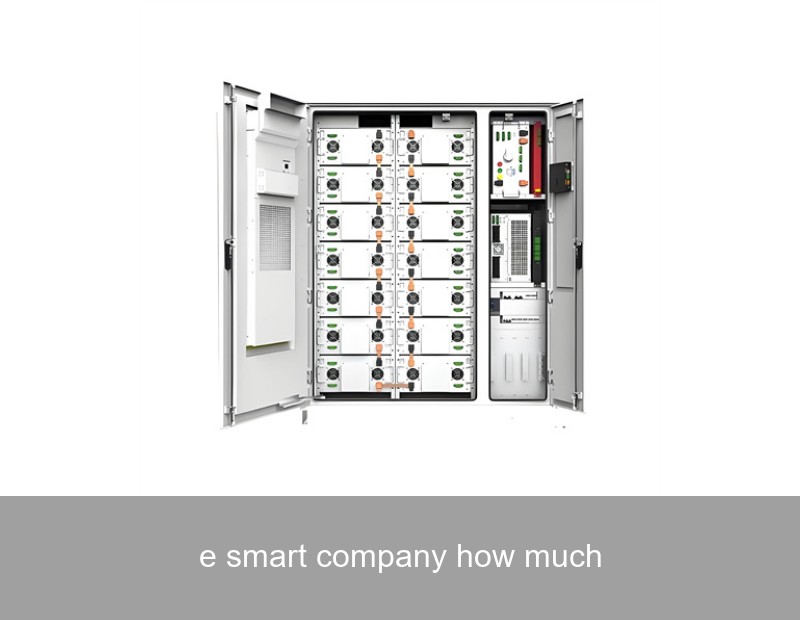
- Advanced Energy Storage (BESS): The physical backbone. A Battery Energy Storage System acts as a buffer, storing energy when it's cheap or abundant (from the grid or your solar panels) and discharging it during expensive peak periods.
- Intelligent Energy Management System (EMS): The "brain." This software platform uses AI and real-time data to make predictive decisions—when to charge, when to discharge, when to draw from the grid, and when to self-consume solar generation.
- On-Site Generation (e.g., Solar PV): The primary fuel source. Solar panels transform your site into a mini power plant, reducing grid dependence and providing clean, low-cost energy for your storage system to manage.
When these elements work in concert, your business stops being a price-taker and starts playing an active, profitable role in the energy market.
Calculating the True Value: How Much Can an E-Smart Company Save?
The financial return is multi-layered. Let's break down the tangible savings an e-smart strategy unlocks:
| Savings Lever | How It Works | Typical Impact |
|---|---|---|
| Peak Shaving / Demand Charge Reduction | Using stored energy to cap power draw from the grid during short, high-demand periods, which often determine a large portion of your bill. | Can reduce demand charges by 20-40%, often the quickest ROI. |
| Arbitrage (Time-of-Use Optimization) | Charging batteries when grid electricity is cheap (e.g., overnight) and using it when prices are high (e.g., evening peak). | Direct savings on energy consumption costs, magnified in regions with high price differentials. |
| Increased Solar Self-Consumption | Storing excess solar energy produced at midday for use in the evening, instead of selling it back to the grid at low rates. | Can increase the value of your solar investment by 30-50%, maximizing self-reliance. |
| Backup Power & Resilience | Providing seamless, instantaneous power during grid outages, avoiding costly downtime and data/process loss. | Value of avoided downtime. For a data center or factory, this can be millions per hour. |
For a typical mid-sized manufacturing plant in Germany or California with a significant load profile, the combined annual savings from these levers can easily reach 25-35% of total electricity costs. The question evolves from "How much does the system cost?" to "How much is inaction costing us?"

Image Source: Unsplash - A modern industrial site combining solar generation and battery storage, the hallmark of an e-smart operation.
Beyond Bills: The Strategic Dividends of Being an E-Smart Company
The financial savings are compelling, but the true transformation lies in the strategic advantages:
- Decarbonization & ESG Leadership: You directly reduce your carbon footprint by maximizing green energy use and providing grid-stabilizing services. This strengthens your brand and meets stakeholder demands.
- Regulatory Future-Proofing: As governments implement carbon taxes and stricter emissions reporting, your e-smart infrastructure positions you ahead of the curve, avoiding future penalties.
- Operational Predictability: You lock in a significant portion of your energy costs, shielding your business from market volatility and improving financial forecasting.
The Highjoule Advantage: Building Your E-Smart Foundation
The journey to becoming an e-smart company requires a partner with deep technological expertise and proven reliability. This is where Highjoule's 18+ years of experience comes into play. We don't just sell components; we deliver integrated, intelligent power solutions designed for the specific demands of commercial and industrial applications.
Our H-Series Commercial & Industrial Battery Storage Systems are engineered for high-cycle, high-power performance, built with tier-1 LiFePO4 cells for safety and longevity. They seamlessly integrate with new or existing solar PV arrays. The true intelligence is unlocked by our Neuron Energy Management Platform, a proprietary AI-driven software that continuously analyzes weather, pricing, consumption patterns, and grid signals to execute the most economical and efficient energy strategy automatically. For businesses looking to start their journey, our E-Smart Audit service provides a detailed analysis of your energy profile, projecting precise savings and ROI from a tailored Highjoule system.
A Real-World Transformation: Case Study from Bavaria
Consider the case of a food processing plant in Bavaria, Germany. Facing steep demand charges and volatile day-ahead prices, they partnered with Highjoule to deploy a 500 kWh / 750 kWh battery storage system integrated with their existing 400 kWp rooftop solar. The Highjoule Neuron EMS was configured to prioritize peak shaving and solar self-consumption optimization.
The results after the first year were clear:
- Demand Charges Reduced by 32%: The system consistently capped peak grid draw during critical processing periods.
- Solar Self-Consumption Increased from 55% to 89%: Nearly all daytime solar production was used on-site, drastically reducing purchases from the grid.
- Overall Energy Cost Savings: €68,000 annually.
- ROI Period: Achieved in under 5 years, with a system lifespan exceeding 15 years.
Beyond the numbers, the plant manager noted the newfound peace of mind: "We've turned a unpredictable cost into a controlled line item. We're not just saving money; we're in control." This tangible example underscores the concrete answer to "how much can an e-smart company save?"

Image Source: Unsplash - An energy management dashboard providing the visibility and control that defines an e-smart company.
Your Energy Future: A Question of Strategy
The transition to an e-smart enterprise is not merely a procurement decision; it's a strategic upgrade to your operational resilience and financial health. The technology is proven, the economics are clear, and the market forces demanding it are only intensifying. With partners like Highjoule providing the foundational technology and intelligence, the path is accessible.
So, as you review your next quarterly energy invoice, what specific cost line item would you most want to transform from a liability into a managed asset?
 Inquiry
 Online Chat