


Powering Mumbai's Skyline: A Practical Guide to Solar Panels for Flats
Imagine this: you live in a vibrant Mumbai apartment, the city's energy hums around you, but your monthly electricity bill brings a jolt of reality. You're keen to go green and save money with solar power, but you share a roof with dozens of other families. Is it even possible? Absolutely. The quest for solar panels for flats in Mumbai is not just a dream; it's an emerging and vital solution for urban sustainability. This guide cuts through the complexity, showing how modern technology and smart planning can harness the abundant Maharashtra sun, even from the 15th floor.
Table of Contents
The Challenge: Shared Rooftops, Shared Bills
The phenomenon is clear across South Mumbai to the suburbs: high-rise residential buildings have limited, contested rooftop space. Unlike standalone villas, installing solar panels for flats in Mumbai requires collective decision-making, equitable benefit sharing, and navigating the physical constraints of a building designed for living, not for power generation.
Let's look at the data. Mumbai receives about 5.5 to 6.0 kWh/m² of solar irradiance per day—a fantastic resource. However, a typical society with 50 flats might have only 500-800 sq. ft. of usable rooftop. A standard setup might only generate enough for common area lighting, leaving individual flat owners' high-consumption appliances (ACs, geysers) untouched. The initial perception? High cost, logistical nightmares, and minimal individual benefit.
The Solution Unlocked: From Policy to Technology
The good news is that the framework for change exists. Maharashtra's net metering and gross metering policies allow residential societies to become prosumers—both consuming and supplying energy to the grid. The key is moving beyond thinking of just "panels on the roof" to considering an integrated solar energy system.
- Virtual Net Metering (VNM): This is a game-changer. It allows a single solar plant installed on a society's roof to allocate generated energy to multiple flats' electricity accounts virtually. The credit appears directly on individual bills.
- High-Efficiency Panels: With space at a premium, using monocrystalline or advanced bifacial panels that generate more power per square foot is crucial.
- The Heart of the System: Intelligent Storage. This is where the real transformation happens. Solar generation peaks at noon, but Mumbai flats draw heavy power in the evenings. Without storage, you're sending cheap solar to the grid only to buy back expensive power at night.
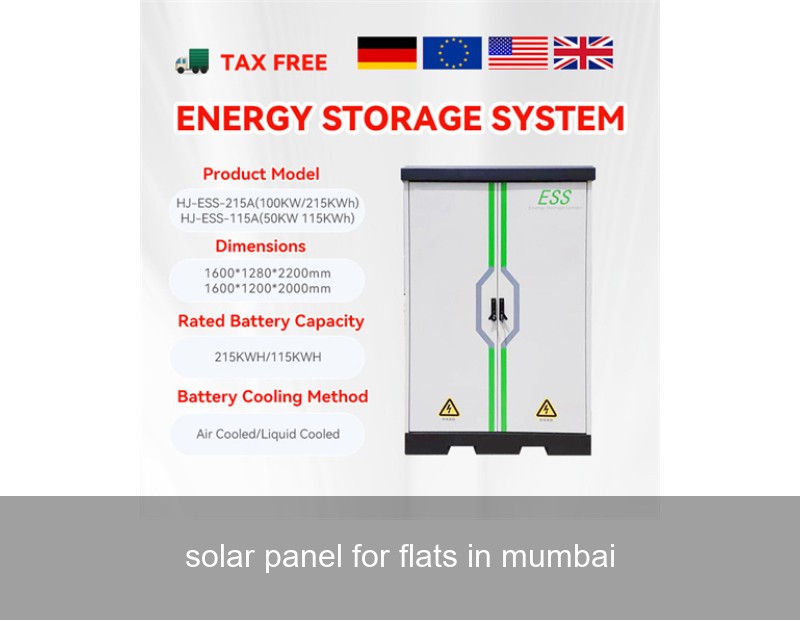
An advanced Battery Energy Storage System (BESS) solves this mismatch. It stores excess daytime solar for use during peak evening hours, maximizing self-consumption and savings. This turns a partial solution into a comprehensive one.
Case Study: A Bandra Cooperative Society's Transformation
Let's ground this in reality. A 40-flat cooperative housing society in Bandra West decided to tackle their rising bills and frequent power backup issues. Their goal was to power common areas and provide backup for lifts and lobby lighting, with future plans for VNM.
| Parameter | Details |
|---|---|
| System Type | Rooftop Solar + Integrated Battery Storage |
| Solar Capacity | 25 kWp |
| Battery Capacity | 30 kWh |
| Key Challenge | Limited roof space, need for dusk-to-dawn backup for essential services |
| Solution Implemented | A compact, high-efficiency solar array paired with a modular, wall-mounted battery system. |
The results after one year were compelling: a 70% reduction in electricity costs for common areas and seamless backup during grid outages. The society's secretary noted, "The initial investment was a discussion, but seeing the bills drop month on month, especially during the summer, united everyone. The system now powers all common lights, water pumps, and lift banks, and we're exploring the next phase for individual flat benefits." This case exemplifies the tangible potential of solar panels for flats in Mumbai when paired with the right technology.

Image: A modern urban rooftop solar installation. Source: Unsplash (Representative image)
How Highjoule Powers Smarter Urban Solar
This is where global expertise meets local needs. At Highjoule, with nearly two decades of experience in advanced energy storage, we understand that a Mumbai apartment building's needs differ from a German industrial site. Our solutions for multi-family residences focus on intelligence, safety, and space efficiency.
For projects like solar panels for flats in Mumbai, our HES-I Series Integrated Storage Systems are ideal. These aren't just battery cabinets; they are all-in-one units combining the battery, inverter, and smart management system. Their modular design allows societies to start with a base capacity and expand as needed, perfect for phased retrofits. The system's AI-driven software learns the building's consumption patterns, optimizing when to store solar energy, power the building, or interact with the grid, ensuring every rupee of investment works hardest.
Moreover, safety is non-negotiable in dense urban settings. Our systems feature built-in, multi-layered protection against overcharge, thermal events, and electrical faults, providing peace of mind for managing committees and residents alike. We partner with trusted local solar installers, providing them with the technological backbone to deliver reliable, high-performance projects for Mumbai's unique landscape. Learn more about grid-interactive solutions from the International Energy Agency.

Image: Technician monitoring an advanced energy storage system. Source: Unsplash (Representative image)
Getting Started in Your Society: A Stepwise Approach
So, how does your housing society begin this journey? It's a logical progression.
- Form a Green Committee: Gather interested residents to champion the cause and research.
- Professional Energy Audit: Engage a consultant to assess your roof's potential, structural capacity, and current consumption patterns. The Maharashtra Energy Development Agency (MEDA) portal is a useful resource for policy details.
- Request Proposals: Invite quotes from reputable installers who can design a system encompassing both solar and storage, explaining the ROI clearly.
- Pilot Project: Consider starting with a system for common areas. The tangible savings and performance build trust for broader adoption.
- Explore Financing: Many banks offer green loans for such projects. The collective savings often result in a payback period of 4-6 years.
Beyond Savings: The Bigger Picture
Choosing solar panels for flats in Mumbai transcends bill reduction. It's about energy independence during monsoons, contributing to a greener city by reducing the load on an often-strained grid, and increasing the sustainability quotient—and potentially the value—of your property. It's a statement that modern urban living and environmental responsibility can go hand in hand.
What's the first question your housing society should ask a solar installer to separate generic proposals from truly tailored, long-term solutions for high-rise living?
 Inquiry
 Online Chat